
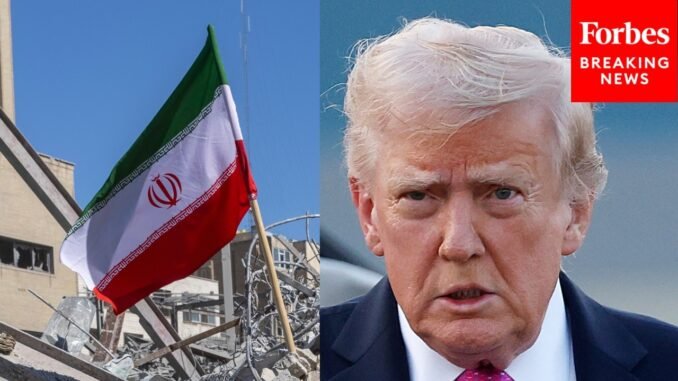

Summary: The US Senate has reversed course on limiting President Trump’s military authority over Iran just one day after voting to constrain his war powers. Here’s what this means for global security.
In a dramatic about-face that has left many political observers stunned, the United States Senate has essentially withdrawn its criticism of President Donald Trump’s approach to the escalating conflict with Iran. This reversal came barely 24 hours after lawmakers voted to limit American military involvement in the region.
A Quick Change of Heart
The Senate’s swift reversal represents a significant political victory for the Trump administration. On one day, senators appeared ready to assert their constitutional authority over matters of war and peace. By the next day, that resolve had seemingly evaporated.
This kind of political flip-flopping is not entirely unfamiliar to Nigerians, who have witnessed similar scenarios in our own National Assembly. The incident highlights how legislative bodies worldwide can sometimes struggle to maintain consistent positions when faced with executive pressure.
What Was at Stake?
The original resolution sought to remove US military forces from potential conflict with Iran—a move that would have represented a rare congressional check on presidential war powers. Such limitations matter not just to Americans, but to countries like Nigeria that could feel the ripple effects of Middle Eastern instability through oil prices, regional security, and global economic conditions.
Why Nigerians Should Pay Attention
For Naija, American military actions in the Middle East are never just “their problem.” When tensions rise in Iran, oil prices fluctuate, affecting our national revenue. Global instability impacts investment flows into African markets. And precedents set for how democracies handle war powers have implications for democratic governance everywhere.
The Senate’s inability to maintain its position also raises questions about institutional strength—something we in Nigeria understand deeply as we continue building stronger democratic institutions of our own.
The Bigger Picture
This episode reveals the complex dance between America’s executive and legislative branches during times of potential military conflict. While President Trump maintains he has the authority to act decisively against Iran without prolonged congressional approval, critics argue this undermines the constitutional balance of power.
As Nigeria continues to navigate its own security challenges—from Boko Haram in the Northeast to banditry in the Northwest—the question of who holds ultimate authority over military action remains relevant in every democracy.
The world watches as America’s Senate decides whether to truly check presidential power or fall in line behind the commander-in-chief. For those of us observing from Lagos, Abuja, or anywhere else in Nigeria, it’s a reminder that even the oldest democracies still struggle with the fundamental question: who really controls the power to go to war?
What do you think about the Senate’s reversal? Should legislative bodies have more control over military decisions? Share your thoughts in the comments below.
For more information, check buzzUp9ja
Be the first to comment