
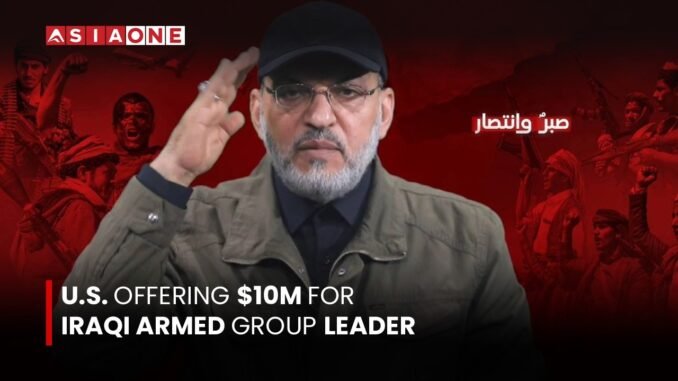

Summary: The United States has placed a massive $10 million reward on information leading to a key Iraqi armed group leader. Here’s what Nigerians need to know about this developing international security story.
The United States government has announced a substantial $10 million reward for credible information that could lead to the identification or location of Abu Alaa al-Walae, the leader of Kataeb Sayyid al-Shuhada (KSS), an Iraqi armed group with alleged ties to Iran.
Understanding the $10 Million Reward
The US State Department’s Rewards for Justice program—which has previously offered similar bounties for high-profile targets including terrorist leaders—is now focusing attention on al-Walae and his organization. For context, $10 million is approximately ₦16 billion at current exchange rates, making this one of the most significant international bounties currently active.
Who is Kataeb Sayyid al-Shuhada?
Kataeb Sayyid al-Shuhada, whose name translates to “Master of Martyrs Brigades,” is an Iraqi paramilitary group that Washington formally designated as a terrorist organization. According to US intelligence assessments, the group maintains close operational and ideological alignment with Iran’s Islamic Revolutionary Guard Corps (IRGC).
The organization has been accused of:
– Conducting attacks against US personnel and facilities in Iraq
– Threatening regional stability in the Middle East
– Engaging in militia activities that undermine the Iraqi government’s authority
Why This Matters to Nigeria
While this may seem like a distant Middle Eastern issue, Nigeria has significant interests in international security developments:
Oil Market Implications: Any escalation in Middle East tensions typically affects global oil prices, which directly impacts Nigeria’s economy as a major oil producer. Instability in Iraq, OPEC’s second-largest producer, can influence the revenue Nigeria earns from petroleum exports.
Counter-Terrorism Lessons: Nigeria’s own struggles with insurgent groups like Boko Haram and bandits in the North mean that international counter-terrorism strategies and bounty programs offer valuable lessons for our security agencies.
Diaspora Connections: Thousands of Nigerians work in the Middle East, particularly in the Gulf states. Regional security developments can affect their safety and employment prospects.
The Broader Context
This reward announcement comes amid ongoing tensions between the United States and Iran-backed militia groups across Iraq and Syria. These groups have periodically targeted American diplomatic and military installations, leading to a cat-and-mouse game of strikes and counter-strikes.
The US maintains a military presence in Iraq officially focused on combating ISIS remnants and supporting Iraqi security forces. However, Iran-aligned militias view this presence as occupation and have vowed to force American troops from the region.
How the Rewards Program Works
The US Rewards for Justice program has successfully used financial incentives to gather intelligence on wanted individuals for decades. Tipsters can submit information securely through various channels, including:
– Encrypted messaging apps
– Dedicated websites with anonymity protections
– US embassy contacts worldwide
The program has paid out over $250 million (approximately ₦400 billion) to informants who provided actionable intelligence leading to the capture or neutralization of major threats.
International Law and Sovereignty Questions
The announcement raises familiar questions about sovereignty and international law that resonate with many Nigerians. Just as Nigeria guards its territorial integrity and opposes external interference, Iraq’s government must balance its relationship with both the United States and Iran while maintaining national sovereignty.
Some critics argue that such bounty programs can be seen as interference in other nations’ internal affairs, while supporters maintain they’re legitimate tools for combating groups that threaten international peace and security.
What Happens Next?
The bounty announcement signals that Washington considers al-Walae and KSS significant threats worth substantial resources to address. Whether this leads to actionable intelligence remains to be seen, but it clearly intensifies pressure on the militia leader and his network.
For Iraq, already struggling with economic challenges, political instability, and the aftermath of decades of conflict, this development adds another layer of complexity to an already difficult security situation.
As this story develops, the international community will be watching to see whether economic incentives prove effective in disrupting Iran-aligned militia networks in Iraq—a question with implications for counter-insurgency strategies worldwide, including in Nigeria.
What do you think about bounty programs as counter-terrorism tools? Should Nigeria adopt similar approaches for wanted insurgent leaders? Share your thoughts in the comments below.
For more information, check buzzUp9ja
Be the first to comment