
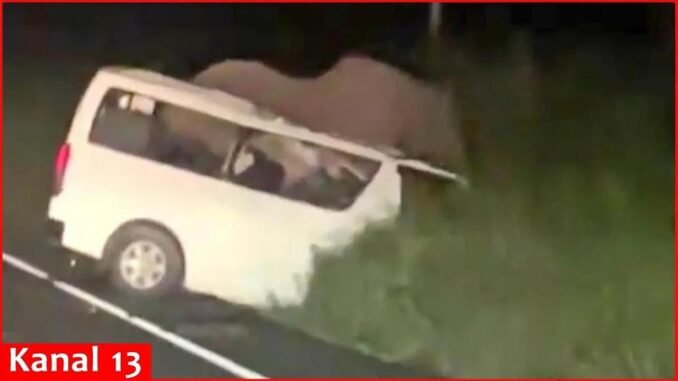

Summary: Three people died and four injured after a minibus collided with an elephant crossing a road in Uganda’s national park. Learn about this tragic wildlife-vehicle accident.
A devastating accident in northwestern Uganda serves as a stark reminder of the dangers of wildlife encounters on African roads
In a heartbreaking incident that highlights the sometimes deadly intersection between human travel and wildlife habitats, three people have lost their lives after a minibus crashed into an elephant crossing a road in northwestern Uganda.
The tragic accident occurred in one of Uganda’s national parks, with Ugandan police confirming the incident on Monday, May 25. Four other passengers sustained injuries in the collision.
The Growing Challenge of Wildlife Encounters
This devastating event brings to the forefront a challenge familiar to many African nations, including Nigeria, where expanding human settlements increasingly overlap with wildlife territories. As our roads cut through natural habitats, encounters between vehicles and large animals have become more frequent.
Uganda, like Nigeria, boasts rich biodiversity and several protected wildlife areas. However, as this incident demonstrates, sharing space with majestic creatures like elephants comes with significant risks.
Understanding the Risks
Elephants, the largest land animals on Earth, can weigh up to 6,000 kilograms. When a vehicle traveling at even moderate speed collides with such a massive animal, the results are often catastrophic for both the animal and the vehicle’s occupants.
In many African national parks, roads pass directly through wildlife corridors where animals traditionally migrate and move. While these routes provide access for tourists and locals alike, they also create dangerous situations, especially during:
– Dawn and dusk hours when elephants are most active
– Rainy seasons when animals move more frequently
– Nighttime, when visibility is severely limited
Similar Concerns in Nigeria
Nigerian motorists traveling through areas near wildlife reserves, particularly in states like Taraba, Cross River, and parts of the North, face similar challenges. Though elephant populations in Nigeria are smaller than those in East African nations, encounters with wildlife remain a concern in certain regions.
Safety Measures for Drivers
Authorities typically advise drivers in national park areas to:
1. Reduce speed significantly when traveling through wildlife zones
2. Remain alert and scan the roadside constantly
3. Never honk at or attempt to hurry wild animals
4. Maintain distance and wait patiently for animals to cross
5. Avoid night driving in wildlife areas whenever possible
6. Follow park regulations and speed limits strictly
Our Thoughts and Prayers
Our hearts go out to the families of the three victims who lost their lives in this terrible accident, as well as to those recovering from injuries. May the souls of the departed rest in perfect peace.
This incident serves as a sobering reminder that while Africa’s wildlife is a treasure to be celebrated and protected, we must also respect the power of nature and take appropriate precautions when traveling through areas where humans and wild animals share space.
Have you ever had a close encounter with wildlife while traveling? Share your experiences in the comments below, and let’s learn from each other about staying safe on our roads.
Check buzzUp9ja for more stories
Be the first to comment