
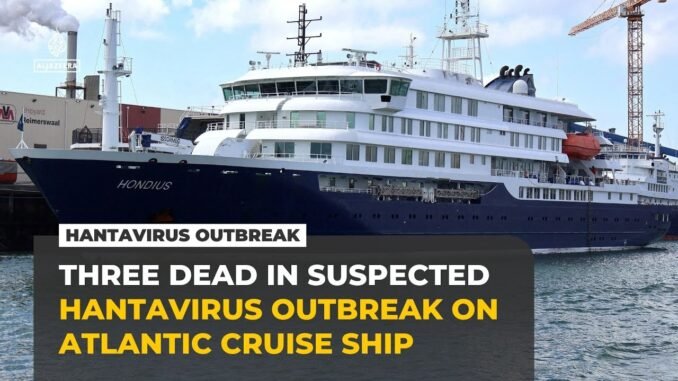

Summary: Three passengers have died from a suspected rare hantavirus outbreak aboard an Atlantic Ocean cruise ship. Health authorities investigate as concerns grow about the deadly infection spreading among travelers.
A luxury cruise vacation has turned into a nightmare after three passengers died and several others fell critically ill from what health authorities suspect is a rare hantavirus outbreak aboard a cruise ship sailing in the Atlantic Ocean.
According to the World Health Organization (WHO), the deceased include an elderly couple and another passenger, with at least three more people showing symptoms of the potentially deadly virus. The incident has sparked urgent health investigations and raised serious concerns about disease outbreaks in confined spaces like cruise ships.
What is Hantavirus?
For those unfamiliar with this rare disease, hantavirus is a severe infection typically transmitted to humans through contact with infected rodents or their droppings, urine, or saliva. The virus can cause serious respiratory problems and, in severe cases, prove fatal if not treated quickly.
Unlike COVID-19 or other airborne diseases Nigerians have become familiar with in recent years, hantavirus does not usually spread from person to person. This makes the cruise ship outbreak particularly concerning for health experts trying to trace the source of the infection.
How Did It Happen?
Health investigators are currently working to determine how the virus found its way onto the cruise ship. Possible scenarios include:
– Contaminated food or water supplies
– Rodent infestation in cargo or storage areas
– Infected items brought aboard by passengers or crew
The confined environment of a cruise ship, where hundreds or thousands of people share common spaces, dining areas, and ventilation systems, can accelerate the spread of illnesses—making quick identification and response crucial.
Warning Signs and Symptoms
Medical experts advise that hantavirus symptoms can appear anywhere from one to eight weeks after exposure and may include:
– High fever and severe headaches
– Muscle aches and fatigue
– Difficulty breathing
– Nausea and vomiting
– Dizziness
Anyone who has recently traveled on a cruise and experiences these symptoms should seek immediate medical attention and inform healthcare providers about their travel history.
What This Means for Nigerian Travelers
As more Nigerians embrace international travel and cruise vacations for holidays and honeymoons, this incident serves as a sobering reminder of the health risks that can accompany such trips. Travel insurance, proper research into cruise line safety records, and awareness of potential health hazards are essential considerations.
The cruise industry, worth billions of dollars globally, has faced increased scrutiny over health and safety protocols, especially following the COVID-19 pandemic that saw multiple ships stranded at sea with infected passengers.
Ongoing Investigation
WHO officials and local maritime health authorities are working closely with the cruise line to:
– Quarantine affected passengers and crew
– Conduct thorough inspections of the vessel
– Trace all possible sources of contamination
– Monitor the health of remaining passengers and crew
– Determine if additional cases may emerge
The name of the cruise line and specific location of the ship have not been publicly released as investigations continue.
Lessons for Travelers
This tragic incident highlights the importance of:
1. Purchasing comprehensive travel insurance that covers medical emergencies and evacuation
2. Researching cruise lines’ health and safety records before booking
3. Staying vigilant about hygiene even in seemingly luxurious settings
4. Reporting any unusual symptoms immediately to ship medical staff
5. Being aware of rare diseases that may not be common in Nigeria but exist in other parts of the world
As the investigation unfolds, health authorities worldwide are monitoring the situation closely to prevent further spread and ensure the safety of maritime travelers.
Our thoughts and prayers are with the families of those who lost their lives and those still fighting the infection. This serves as a reminder that while travel opens our eyes to the beauty of the world, we must never take our health and safety for granted.
Stay tuned for updates as more information becomes available from WHO and maritime health authorities.
For more details, check buzzUp9ja
Be the first to comment