
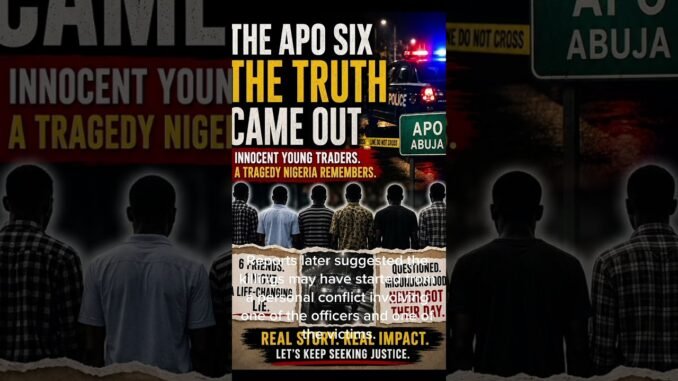

The tragic murder of six innocent Nigerians in Apo, Abuja on June 7, 2005 shook the nation to its core — and eventually inspired a powerful film that brought their story to the screen.
On the night of June 7th, 2005, five young Igbo traders — Ifeanyi Ozor, Chinedu Meniru, Anthony Nwokike, Paulinus Ogbonna, and Ekene Isaac Mgbe* — along with their female companion, *Augustina Arebu, were gruesomely murdered in Apo, Abuja, in what became one of the most chilling cases of extrajudicial killing in Nigeria’s recent history.
These were not criminals. These were ordinary Nigerians — market people, hustlers trying to make ends meet in the Federal Capital Territory, the same way millions of our brothers and sisters do every single day across this country.
What Happened That Night?
The six victims were killed by policemen who later claimed — falsely — that they were armed robbers who had been neutralized in a shootout. But the facts on the ground told a completely different story. The victims were unarmed traders. There was no robbery. There was no shootout.
What there was, was cold-blooded murder carried out by officers of the Nigerian Police Force who believed they could kill ordinary citizens and walk away free.
The graphic real-life photograph of the six victims lying lifeless where they fell remains one of the most haunting images in Nigeria’s human rights history — a brutal reminder of what state-sponsored impunity looks like when it goes unchecked.
From Tragedy to Film: The Night of June 7th
The weight of this injustice was so heavy that it eventually found its way onto the big screen. A film titled “The Night of June 7th” was produced to dramatize the events of that terrible night, bringing the story of the Apo Six to a wider audience and ensuring that their deaths would not simply be swept under the carpet of Nigeria’s long history of forgotten victims.
The film’s still images bear a striking and deeply uncomfortable resemblance to the real-life photographs from the scene — a testament to just how faithfully the production sought to honour the truth of what happened.
Justice — But At What Cost?
Following massive public outcry, civil society pressure, and media attention, some of the police officers involved were eventually tried and convicted. It was a rare moment of accountability in a system where the powerful often escape consequences.
But for the families of Ifeanyi, Chinedu, Anthony, Paulinus, Ekene, and Augustina — no courtroom verdict can truly fill the void left behind. Six lives. Six families torn apart. Six futures stolen.
Why This Story Still Matters Today
Nearly two decades later, the story of the Apo Six remains painfully relevant. Cases of police brutality, extrajudicial killings, and abuse of power continue to plague communities across Nigeria. The #EndSARS protests of 2020 showed the world that Nigerians — especially young Nigerians — have not forgotten, and will not stay silent.
The Apo Six are not just names in a court file. They are symbols of every Nigerian who has ever been failed by the very institutions sworn to protect them.
Their names deserve to be remembered: Ifeanyi Ozor. Chinedu Meniru. Anthony Nwokike. Paulinus Ogbonna. Ekene Isaac Mgbe. Augustina Arebu. May their souls rest in perfect peace.
Explore more top stories on buzzUp9ja
Be the first to comment