
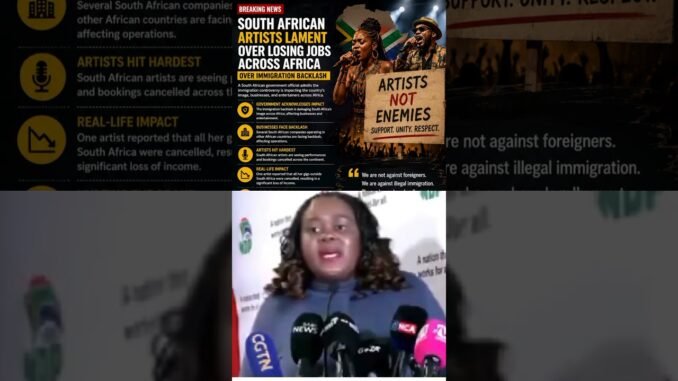

The heat is getting too much for South African artists and businesses operating across the African continent. As xenophobic tensions continue to simmer in the Rainbow Nation, the backlash is hitting where it hurts most – in their pockets and career opportunities.
South Africa’s Justice Minister has finally broken his silence, admitting what many observers have been saying for weeks: the country’s controversial immigration policies and the violent attacks on foreign nationals are seriously damaging its reputation across Africa. And now, South African entertainers, content creators, and business people are paying the price as they face growing hostility in other African countries.
The Chickens Come Home to Roost
For years, South African xenophobia has been a recurring nightmare for African immigrants, particularly Nigerians, Zimbabweans, and other nationals seeking better opportunities in Africa’s most industrialized economy. The ugly incidents of shop looting, physical attacks, and inflammatory rhetoric against “foreigners” have been well-documented.
Now, the tables are turning. South African artists who once enjoyed red carpet treatment across the continent are finding doors firmly shut in their faces. Show promoters are canceling bookings, collaboration opportunities are drying up, and the warm African hospitality that South Africans once enjoyed is turning ice cold.
Nigerians Lead the Pushback
Nigeria, Africa’s most populous nation and entertainment powerhouse, has been at the forefront of this continental response. Nigerian fans and promoters have made it clear: if South Africans don’t want Africans in their country, then South African artists shouldn’t expect to make money in ours.
This is hitting South African entertainers particularly hard because Nigeria represents one of the biggest markets for African entertainment. From music to comedy, film to fashion, the Nigerian market has been a goldmine for South African creatives looking to expand beyond their borders.
A Wake-Up Call for South Africa
The Justice Minister’s admission is significant because it shows that the South African government is finally recognizing the economic consequences of xenophobia. When your artists can’t tour, your businesses face boycotts, and your national brand becomes toxic across a continent of 1.4 billion people, the cost becomes impossible to ignore.
South African brands that once dominated African markets are now being viewed with suspicion. The goodwill that Nelson Mandela’s rainbow nation once enjoyed across Africa is evaporating faster than morning dew in the Lagos sun.
The Bigger Picture
This situation serves as a powerful reminder that in today’s interconnected Africa, what happens in Johannesburg doesn’t stay in Johannesburg. African nations are increasingly willing to defend their citizens and hold each other accountable.
For South African artists and businesses suffering from this backlash, the message from the rest of Africa is clear: you cannot eat your cake and have it. You cannot treat African immigrants with contempt at home while expecting to be welcomed with open arms across the continent.
As South Africa grapples with its immigration crisis, perhaps this economic and cultural isolation will force a much-needed conversation about Pan-African solidarity and the true meaning of Ubuntu – the South African philosophy that says “I am because we are.”
The question now is: will South Africa learn from this costly lesson, or will the cycle of xenophobia and retaliation continue? Only time will tell.
—
What do you think about this situation? Should African countries continue to boycott South African artists and businesses until xenophobia ends? Drop your comments below.
Get more details on buzzUp9ja
Be the first to comment