
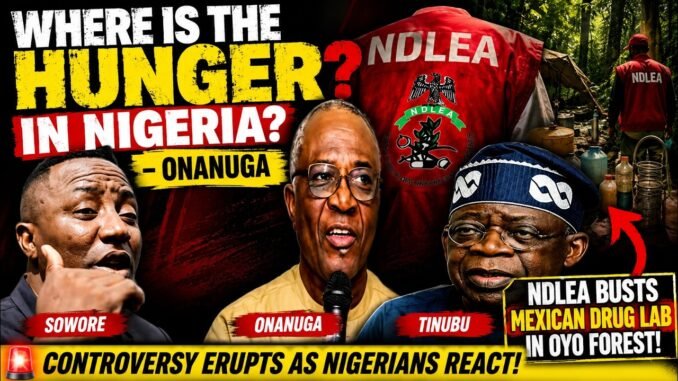

Summary: Special Adviser Bayo Onanuga claims he doesn’t understand Nigerian hunger complaints, sparking nationwide reactions. Read the full story and what this means for ordinary citizens.
In a statement that has sent shockwaves across social media and sparked intense debate among Nigerians, Bayo Onanuga, Special Adviser to President Bola Tinubu on Information and Strategy, has declared that he does not see the level of hunger that Nigerians are complaining about.
The presidential aide made this controversial remark while discussing the current economic situation in the country, a topic that has dominated conversations in homes, markets, and streets across Nigeria.
A Statement That Has Left Many Nigerians Stunned
Onanuga’s comment comes at a time when millions of Nigerian families are grappling with unprecedented economic challenges. From the removal of fuel subsidies to the floating of the naira, the Tinubu administration’s economic policies have significantly impacted the cost of living for the average Nigerian.
Market women in Lagos, Kano, and Port Harcourt have watched helplessly as the prices of basic food items like rice, beans, garri, and vegetable oil have skyrocketed beyond the reach of many households. Transportation costs have more than doubled in some areas, and small businesses are folding up daily due to the harsh economic climate.
The Reality on Nigerian Streets
Walk through any Nigerian market today, and you’ll hear a different story from what the presidential aide appears to be seeing. A bag of rice that sold for ₦30,000 before President Tinubu assumed office now goes for upwards of ₦80,000 in many parts of the country. A paint bucket of garri that once cost ₦500 now sells for ₦2,000 or more.
Taxi drivers, traders, civil servants, and even middle-class professionals are feeling the pinch. Many families have had to adjust their meal patterns, with some reducing from three meals a day to two, or even one for the less fortunate.
Social Media Erupts in Response
As expected, Nigerians on Twitter (X), Facebook, and other social media platforms have not taken the statement lightly. Many have shared photos of empty pots, receipts from market purchases showing exorbitant prices, and personal stories of how difficult it has become to feed their families.
Some users pointed out the disconnect between government officials who live in comfort and the ordinary Nigerian struggling to survive. Others wondered if the presidential aide ever visits local markets or interacts with regular citizens outside his official circles.
The Growing Disconnect
This statement highlights what many observers see as a worrying gap between government officials and the citizens they serve. While those in power enjoy subsidized lifestyles, official quarters, and other privileges, the average Nigerian faces the full brunt of economic policies.
Critics argue that such statements demonstrate a lack of empathy and understanding of the people’s struggles. They question how effective policy-making can be when those crafting and defending these policies appear disconnected from the reality on the ground.
What the Statistics Show
Official data from the National Bureau of Statistics (NBS) paints a grim picture. Inflation rates have remained stubbornly high, with food inflation reaching levels not seen in decades. The World Bank and other international organizations have warned about increasing poverty levels in Nigeria.
International agencies estimate that millions more Nigerians have fallen below the poverty line since the current administration’s economic reforms began. Food insecurity has become a major concern, with humanitarian organizations raising alarms about potential crises.
The Government’s Position
Supporters of the administration argue that the current economic difficulties are necessary pains for long-term gain. They point to the unsustainability of fuel subsidies and the need for economic restructuring to create a viable future for Nigeria.
Government officials have repeatedly stated that relief measures are being put in place, including plans for cash transfers to vulnerable households and agricultural interventions to boost food production.
However, many Nigerians feel these measures are either insufficient or not reaching the intended beneficiaries.
A Call for Empathy and Action
As the debate rages on, what remains clear is that millions of Nigerians are genuinely suffering. Whether government officials acknowledge it or not, the hunger is real, the struggles are tangible, and the cries for help are getting louder.
For many Nigerians, what they need is not denial of their reality but acknowledgment, empathy, and concrete action to address their challenges. They need policies that consider their immediate survival, not just long-term economic theories.
As this story continues to develop, one thing is certain: the gap between the governors and the governed in Nigeria needs urgent bridging. Leadership must not only make policies but must also feel the pulse of the people, understand their pain, and work genuinely toward alleviating their suffering.
The question on many lips remains: How can those who don’t see the hunger effectively fight it?
What are your thoughts on this development? Have you personally experienced the economic hardship being discussed? Share your experiences in the comments below.
Visit buzzUp9ja for more headlines
Be the first to comment