
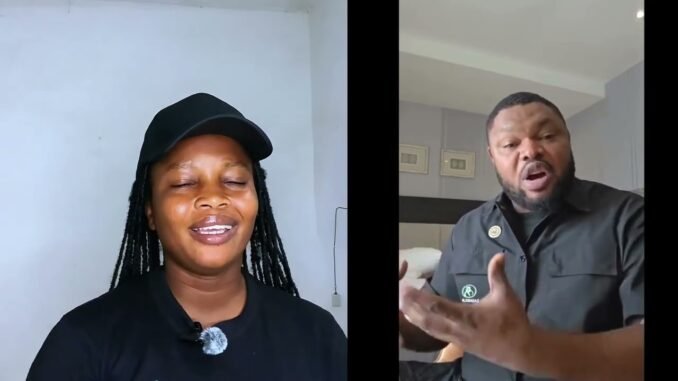

In a revelation that has sparked widespread conversation across Nigerian social media, renowned human rights activist Harrison Gwamnishu has disclosed troubling details about the case of 18-year-old Chisom, who was recently rescued from a severely abusive relationship in Lagos.
According to Gwamnishu, despite being subjected to horrific abuse under the guise of marriage, young Chisom was never legally married to the man she called her “husband.” This shocking discovery raises serious questions about forced cohabitation, underage relationships, and the manipulation of vulnerable young women in our society.
The Disturbing Reality Behind the “Marriage”
The activist’s investigation into Chisom’s situation revealed that what many assumed was a legitimate marriage was, in fact, an illegal arrangement that trapped the teenager in a cycle of abuse. Without proper marriage documentation or legal recognition, Chisom had been living with her abuser in what can only be described as captivity masked as matrimony.
This case highlights a troubling pattern seen across many Nigerian communities where young girls are pushed into informal “marriages” without proper legal procedures, leaving them vulnerable to exploitation and abuse with little legal recourse.
Why This Matters for Every Nigerian Family
Chisom’s ordeal serves as a wake-up call for parents, guardians, and communities across Nigeria. The absence of legal marriage documentation meant that:
– The young woman had no legal protection
– There was no official record of the union
– Traditional safeguards that come with formal marriage were absent
– The abuser faced fewer legal consequences
Harrison Gwamnishu’s intervention and subsequent rescue operation demonstrate the critical role that human rights advocates play in protecting vulnerable Nigerians, particularly young women who find themselves trapped in dangerous situations.
The Broader Conversation
This case has reignited discussions about:
1. Child protection laws and their enforcement in Nigeria
2. The minimum age for marriage and cultural practices that circumvent these laws
3. Domestic violence and the resources available to victims
4. Community responsibility in safeguarding young people
As Nigerians, we must ask ourselves: How many more young girls like Chisom are suffering in silence, trapped in abusive situations under the pretense of marriage?
Moving Forward
Gwamnishu’s revelation about Chisom’s case underscores the importance of:
– Proper legal documentation for all marriages
– Increased awareness about the rights of young women
– Stronger enforcement of existing child protection laws
– Community vigilance and willingness to intervene
While Chisom has been rescued and is receiving necessary support, her story should serve as a catalyst for change in how we protect our young people from exploitation disguised as tradition or marriage.
This developing story continues to generate reactions across Nigeria as citizens demand better protection for vulnerable young people and stricter enforcement of marriage and child protection laws.
For more information, check buzzUp9ja
Be the first to comment