
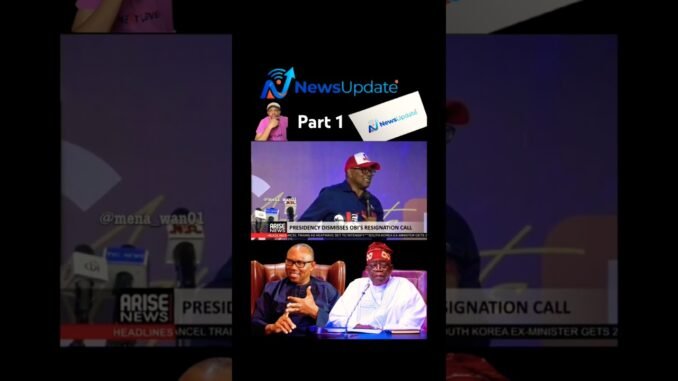

The Nigerian Presidency has come out swinging in response to former Labour Party presidential candidate Peter Obi’s recent call for President Bola Ahmed Tinubu to resign from office. In a strongly-worded statement, the administration dismissed Obi’s demand as “childish,” “hollow,” and an unnecessary distraction from the serious business of governing Africa’s most populous nation.
The Background of the Controversy
Peter Obi, who captured the imagination of millions of Nigerian youth during the 2023 presidential election with his “Obidient” movement, has remained a vocal critic of the Tinubu administration since the elections concluded. His latest salvo—calling for the President’s resignation—has now drawn a sharp rebuke from the seat of power in Aso Rock.
The former Anambra State governor has consistently pointed to what he describes as failed economic policies, rising insecurity, and deteriorating living conditions for ordinary Nigerians as justification for his stance. However, the Presidency is having none of it.
Presidency’s Firm Response
According to presidential spokespersons, Obi’s call for resignation lacks both constitutional basis and practical merit. They argue that the demand represents a fundamental misunderstanding of democratic processes and the mandate given to President Tinubu by Nigerian voters.
“This is nothing more than political grandstanding,” one source close to the Presidency stated. “Democracy does not work by one candidate who lost an election simply demanding that the winner step down. There are constitutional processes for addressing grievances, and Mr. Obi knows this.”
The administration further characterized the resignation call as a distraction from the government’s efforts to implement its “Renewed Hope” agenda, which includes economic reforms, security initiatives, and infrastructure development across the country.
The Political Context
The tension between Obi and the Tinubu administration reflects the broader political divisions that have characterized Nigeria since the hotly contested 2023 elections. Obi’s Labour Party finished third in the official results, though his supporters maintain the election was flawed.
Since then, Obi has positioned himself as the voice of accountability, regularly critiquing government policies on social media and in public appearances. His supporters, particularly among Nigeria’s youth and middle class, remain fiercely loyal and continue to amplify his messages across digital platforms.
What This Means for Nigerian Politics
This latest exchange highlights the ongoing struggle for political relevance in Nigeria’s complex democratic landscape. While Obi maintains significant grassroots support, particularly in the Southeast and among urban professionals, the Presidency’s dismissive response suggests they view his influence as limited.
Political analysts suggest that both sides are playing to their respective bases. Obi reinforces his image as a fearless opposition voice, while the Presidency demonstrates it will not be cowed by criticism, no matter how popular the critic.
The Constitutional Reality
It’s worth noting that under Nigeria’s 1999 Constitution (as amended), a sitting President cannot be compelled to resign simply due to political pressure or opposition demands. The only constitutional mechanisms for removing a President include:
– Impeachment by the National Assembly for gross misconduct
– Incapacitation due to ill health
– Death in office
– Voluntary resignation
Without pursuing any of these formal channels, calls for resignation remain largely symbolic political statements rather than actionable demands.
Public Reaction
As expected, reactions to both Obi’s call and the Presidency’s response have split along familiar political lines on Nigerian social media. The “Obidients” have rallied behind their leader, trending hashtags in support of his stance, while supporters of the current administration have defended the President’s mandate.
Many neutral observers, however, are calling for both sides to focus less on political point-scoring and more on practical solutions to Nigeria’s pressing challenges—from inflation and unemployment to insecurity and infrastructure deficits.
Looking Ahead
As Nigeria navigates its current economic and security challenges, the political class would do well to remember that ordinary citizens are more interested in solutions than in political drama. Whether through constructive opposition or responsive governance, the focus should remain on improving the lives of everyday Nigerians.
The resignation call and the presidency’s response represent just the latest chapter in what promises to be a long four years of political engagement between the administration and its critics. How this dynamic evolves will significantly shape Nigeria’s democratic journey and the 2027 electoral landscape.
For now, one thing is certain: President Tinubu is not going anywhere, and Peter Obi is not going silent. The stage is set for continued political theater, even as the Nigerian people wait for the real performance that matters—effective governance that delivers tangible results.
Visit buzzUp9ja for more details
Be the first to comment