
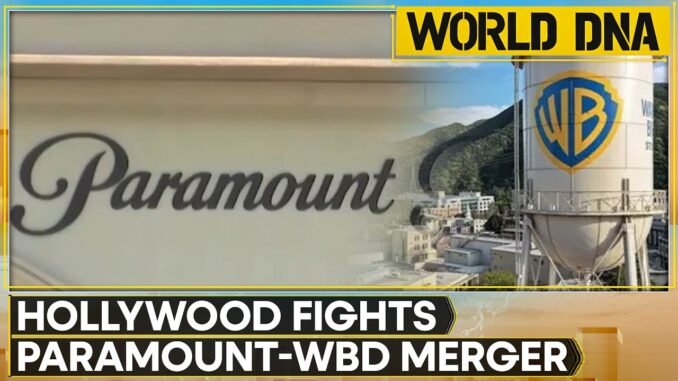

Summary: Hollywood’s biggest names are fighting back against a massive $110 billion merger deal between Warner Bros Discovery and Paramount. Find out why Nollywood should pay attention to this power move.
The entertainment industry is witnessing a major showdown as more than 1,000 filmmakers, actors, and industry professionals have come together to challenge what could be one of the biggest corporate takeovers in Hollywood history—a staggering $110 billion merger between Warner Bros Discovery and Paramount.
Why This Matters—Even for Naija
Before you think “na oyibo wahala be that,” let’s break down why this Hollywood drama should concern everyone who loves movies, series, and entertainment—including us here in Nigeria. When big studios merge like this, it affects what content gets made, how much creative freedom artists have, and ultimately, what we watch on our screens.
Think about it: these are the same studios behind major franchises and shows that dominate our streaming platforms and cinemas. From Mission Impossible* to DC Comics movies, from *Game of Thrones* to *SpongeBob—this merger would put unprecedented control in the hands of one massive corporation.
The Numbers Are Eye-Watering
At $110 billion (that’s approximately ₦170 trillion in today’s exchange rate—oya do the mathematics!), this proposed merger would create an entertainment behemoth with:
– Control over legendary film studios including Warner Bros, Paramount Pictures, and their subsidiaries
– Massive streaming platforms combining HBO Max and Paramount+
– Extensive film and TV libraries spanning decades of content
– Dominant market position in production and distribution
What the Critics Are Saying
The coalition of over 1,000 industry professionals—including A-list actors, acclaimed directors, and veteran producers—has raised serious concerns about this mega-deal. Their open letter highlights several red flags:
Threat to Creative Diversity
When fewer companies control the industry, fewer stories get told. For an industry already struggling with representation and diverse narratives, consolidation could mean even more gatekeeping. If you think Hollywood struggles to tell African stories now, imagine when there are even fewer decision-makers at the table.
Job Losses and Industry Instability
Mergers of this scale typically result in “restructuring”—corporate speak for layoffs. Thousands of jobs across production, distribution, and support roles could be at risk as the merged entity looks to eliminate redundancies and cut costs.
Market Monopolization
With fewer major players in the entertainment space, the merged company would have enormous leverage over:
– Cinema chains (affecting what movies get theatrical releases)
– Streaming services (controlling pricing and content availability)
– Independent filmmakers (who rely on these distributors)
– International markets (including Nigeria and Africa)
Impact on Smaller Studios and Independent Productions
When giants merge, smaller fish get swallowed. Independent studios and production companies that can’t compete with a merged Warner-Paramount powerhouse may find themselves squeezed out of the market entirely.
The Nollywood Connection
For those of us who love Nigerian cinema, this matters because:
Distribution Channels: Many Nollywood productions seeking international distribution partner with these major studios’ international arms. A monopolistic merger could mean tougher terms and less favorable deals for African content creators.
Streaming Wars: As Nigerian content gains global traction (shoutout to our films trending on Netflix!), having fewer major players controlling streaming platforms could limit opportunities for Nollywood productions to reach worldwide audiences.
Co-Production Opportunities: Some Nollywood studios have co-production deals with international partners. Market consolidation could reduce these opportunities or make terms less favorable.
The Regulatory Battle Ahead
The proposed merger must pass through rigorous antitrust reviews by regulatory bodies including:
– The U.S. Federal Trade Commission (FTC)
– The Department of Justice (DOJ)
– International regulatory authorities in markets where both companies operate
The open letter from industry professionals is designed to influence these regulators, presenting a united front from creative workers who would be directly affected by the consolidation.
Arguments in Favor (Yes, There Are Some)
To be fair, proponents of the merger argue that:
– Combined resources could fund bigger, more ambitious projects
– Streamlined operations might reduce costs for consumers
– A stronger merged company could better compete with tech giants like Apple, Amazon, and Netflix
– Efficiency gains could benefit shareholders and the broader economy
What Happens Next?
The regulatory review process will likely take months, possibly stretching into 2025 or beyond. During this time:
1. Public Comment Period: Industry stakeholders, including those who signed the letter, will formally present their concerns to regulators
2. Financial Scrutiny: Authorities will examine whether the merger creates unfair market dominance
3. Conditions Negotiation: Regulators might approve the deal with conditions, such as requiring the merged company to divest certain assets
4. Potential Rejection: The deal could be blocked entirely if deemed harmful to competition
The Bigger Picture for Global Entertainment
This merger attempt is part of a broader trend of media consolidation that’s been accelerating over the past decade. Disney absorbed 21st Century Fox, Discovery merged with WarnerMedia, and streaming wars have intensified competition.
For audiences worldwide—from Los Angeles to Lagos—these moves shape:
– What stories get greenlit
– Which voices get amplified
– How much we pay for content
– Where and how we access entertainment
Bottom Line
Whether you’re Team Hollywood or Team Nollywood, the proposed Paramount-Warner Bros merger is a watershed moment for the global entertainment industry. The fact that over 1,000 industry insiders felt compelled to publicly oppose the deal speaks volumes about the concerns within the creative community.
As this corporate drama unfolds, one thing is clear: the outcome will reverberate far beyond Hollywood Boulevard, affecting content creators, distributors, and audiences across the globe—including right here in Nigeria.
What do you think? Should regulators block this mega-merger, or is consolidation the inevitable future of entertainment? Drop your thoughts in the comments below.
Stay tuned for updates as this story develops. In the meantime, make sure you’re supporting diverse content—whether it’s the latest Nollywood blockbuster or independent films—because variety in entertainment is something worth fighting for.
For more details, check buzzUp9ja
Be the first to comment