

Nigeria’s debt profile continues its upward climb as the Federal Government seeks additional World Bank financing, raising fresh concerns about the country’s long-term fiscal sustainability.
—
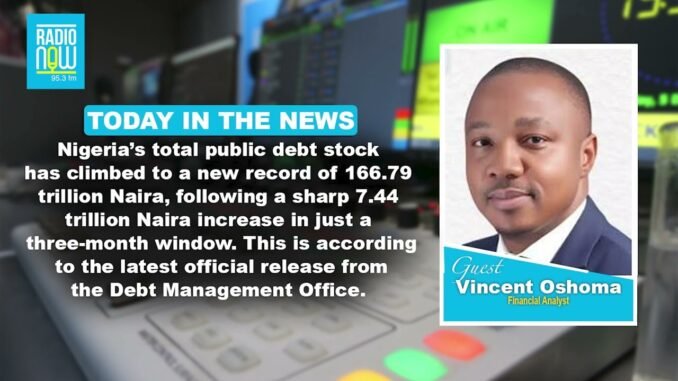
The Federal Government has entered into fresh discussions with the World Bank for three new loans totalling $1.5 billion, even as Nigeria’s total public debt has surged to a record-breaking N166.79 trillion as at the end of June 2026.
This latest borrowing push signals that Abuja’s appetite for external financing remains strong, despite mounting pressure from economists, civil society groups, and ordinary Nigerians who are already feeling the weight of a struggling economy.
What We Know So Far
According to documents sighted by financial analysts, the Federal Government is seeking the fresh World Bank facilities across three separate loan arrangements. The move comes at a time when Nigeria’s debt stock has hit an all-time high, painting a picture that many fiscal experts describe as deeply worrying.
To put this into perspective, Nigeria’s public debt has grown astronomically in recent years — from what was considered manageable levels just a decade ago to a figure that now exceeds the annual budgets of several African nations combined.
Breaking Down Nigeria’s Debt Mountain
Nigeria’s N166.79 trillion debt burden is a combination of both domestic and external obligations. This includes:
– Federal Government domestic debt — money borrowed locally through bonds and treasury bills
– External debt — loans from multilateral institutions like the World Bank, IMF, and African Development Bank, as well as bilateral creditors
– State government debts — borrowings by the 36 states and the FCT
The World Bank, historically one of Nigeria’s biggest creditors, has been a consistent source of development financing for the country, funding projects in agriculture, education, health, and infrastructure.
Why Is the Government Borrowing Again?
The Tinubu administration has consistently argued that borrowing is necessary to fund critical infrastructure and social investment programmes that will stimulate economic growth. The government maintains that the loans are tied to specific developmental projects rather than recurrent expenditure — a distinction it considers important.
However, critics are not entirely convinced. Many Nigerians recall how previous administrations also justified loans on developmental grounds, only for the funds to be swallowed by poor project execution, corruption, and bureaucratic inefficiency.
As one Lagos-based economist put it bluntly: “The problem is not just that we are borrowing — every serious country borrows. The problem is what we are doing with the money and whether we can sustainably pay it back.”
The Debt Servicing Nightmare
Perhaps more alarming than the raw debt figure is Nigeria’s debt servicing situation. For several consecutive years, Nigeria has spent a significant portion — sometimes exceeding 90 percent — of its retained revenue on servicing existing debts. This leaves frighteningly little room for actual governance, welfare programmes, and capital investment.
With the naira having depreciated sharply against the dollar following the 2023 foreign exchange reforms, the local currency equivalent of Nigeria’s external debt has ballooned even further, making the numbers look even grimmer.
Reactions From Experts and Nigerians
Financial analysts and economic commentators have largely expressed concern about the trajectory of Nigeria’s debt profile. Many are calling on the government to:
– Aggressively expand its revenue base by widening the tax net and blocking leakages
– Reduce the cost of governance, including trimming the bloated federal bureaucracy
– Improve transparency in how borrowed funds are deployed and tracked
– Prioritise debt sustainability in all future borrowing decisions
For everyday Nigerians — market traders in Onitsha, okada riders in Kano, civil servants in Abuja, and tech workers in Yaba — the debt conversation often feels distant and abstract. But its consequences are very real: higher taxes, reduced government services, currency weakness, and the spectre of handing a crippling financial burden to future generations.
The Bigger Picture
Nigeria is not alone in navigating rising debt levels. Across Africa, many governments took on significant debt during and after the COVID-19 pandemic to keep their economies afloat. However, Nigeria’s situation is particularly sensitive given its large population — over 220 million people — and its status as the continent’s largest economy.
The World Bank, for its part, typically attaches reform conditions to its loans, which can sometimes be politically painful but are designed to improve long-term economic governance.
Whether these fresh $1.5 billion in loans will translate into tangible improvements in the lives of Nigerians remains the central question — and one that millions of citizens across the country will be watching very closely.
As Nigeria’s debt clock keeps ticking, the conversation about fiscal responsibility, economic reform, and the future our children will inherit has never been more urgent.
For more information, check buzzUp9ja
Be the first to comment