
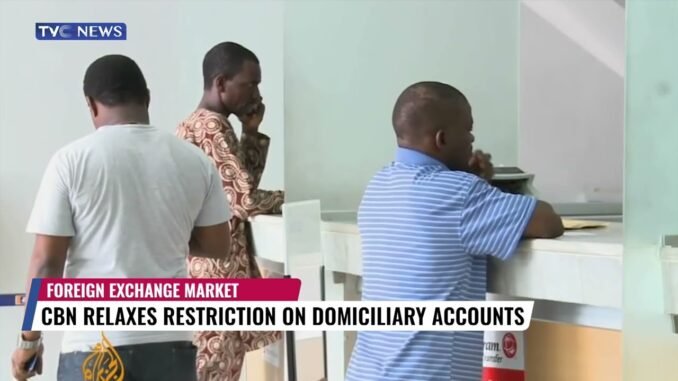

Summary: The Central Bank of Nigeria is stepping in to protect Nigerians from banks that have been blocking access to foreign currency in domiciliary accounts. Here’s what you need to know.
If you have ever walked into your bank to withdraw dollars, pounds, or euros from your domiciliary account — only to be told some version of “the system is down,” “we don’t have forex available,” or simply given the runaround — you are not alone. And it appears the Central Bank of Nigeria (CBN) has had enough.
CBN Steps In as Nigerians Cry Out Over Blocked Forex Access
The CBN is reportedly putting together strong measures to stop commercial banks from restricting customers’ access to foreign currencies held in their domiciliary accounts. This follows a wave of complaints from frustrated Nigerians who say their banks have been making it nearly impossible to access their own hard-earned foreign currency.
Let that sink in — your money, sitting in your account, and you cannot touch it.
What Is Actually Happening?
Domiciliary accounts are designed to allow Nigerians to save and transact in foreign currencies like the US Dollar, British Pound, and Euro. Many Nigerians — from business owners importing goods, to diaspora families receiving remittances, to freelancers getting paid in foreign currency — rely on these accounts heavily.
However, in recent times, several commercial banks have been placing restrictions on how customers can access funds in these accounts. Some customers have reported being unable to make cash withdrawals, while others say transfers from their domiciliary accounts have been blocked or severely limited without clear explanation.
For a country already dealing with serious forex scarcity challenges, this situation has only added salt to injury.
Why Are Banks Doing This?
While the banks have not been entirely forthcoming with explanations, analysts point to Nigeria’s ongoing foreign exchange crisis as a likely driver. Banks, caught between regulatory pressures and limited forex liquidity, appear to have taken matters into their own hands — at the expense of ordinary customers.
But here is the thing: your domiciliary account funds are your money. Whether you received it as payment for a remote job, a transfer from a relative abroad, or proceeds from an export transaction — restricting your access to it without legal backing is simply unacceptable.
What the CBN Is Planning to Do
According to reports, the apex bank is now investigating these practices and is preparing regulatory measures that would compel banks to grant customers unrestricted access to funds in their domiciliary accounts. The CBN’s move signals a tougher stance on banks that have been using forex scarcity as an excuse to gatekeep customers’ own money.
This is coming at a time when the CBN, under its current leadership, has been pushing for greater transparency and accountability in Nigeria’s financial system.
What This Means for You
If you are a domiciliary account holder, this is potentially very good news. Here is what you should be aware of going forward:
– Your rights matter: You are entitled to access funds you have legitimately deposited in your account.
– Document everything: If your bank has been restricting your access, keep records — screenshots, complaint references, dates of visits.
– File complaints: You can report issues to the CBN’s Consumer Protection Department through their official channels.
– Stay informed: Watch out for the CBN’s official circulars that will follow this probe, as they may contain directives that directly benefit you.
The Bigger Picture
This development is part of a broader conversation about trust in Nigeria’s banking system. Nigerians work incredibly hard — both at home and in the diaspora — to earn foreign currency. The idea that a bank can simply decide to sit on your dollars while you struggle to access them is not only frustrating, it undermines confidence in the entire financial system.
The CBN’s intervention, if followed through decisively, could be a significant win for everyday Nigerians and a strong message to banks that customer rights are non-negotiable.
Have you experienced restrictions on your domiciliary account? Share your experience in the comments below and let us know how your bank has been handling forex withdrawals.
For more information, check buzzUp9ja
Be the first to comment