
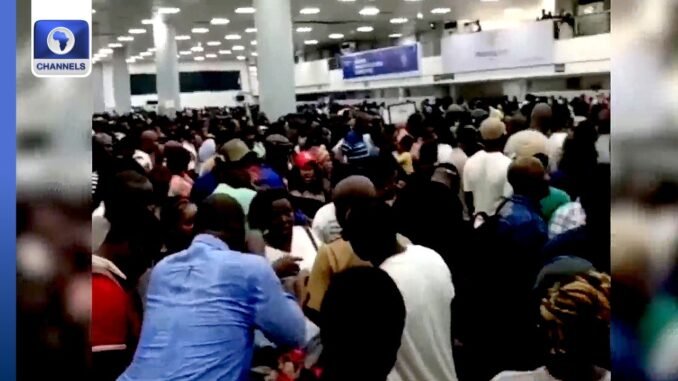

If you had plans to catch a flight out of Abuja on Tuesday morning, e be like say your day no go as planned. Passengers at the Nnamdi Azikiwe International Airport found themselves in a frustrating situation as aviation workers embarked on an industrial action that effectively grounded airline operations and threw the entire airport into disarray.
What Happened?
In the early hours of Tuesday, aviation workers at the Abuja airport downed tools, triggering widespread disruption to flight schedules. Travellers who had arrived at the airport — some as early as the crack of dawn — were met with confusion, long queues, and zero clear information about when normalcy would return.
For many passengers, the situation was nothing short of a nightmare. Imagine waking up at 4 AM, battling Abuja traffic, paying through your nose for a cab, only to arrive at the airport and discover say nobody dey work. That na real pain.
The Human Cost of the Strike
Beyond the inconvenience, the strike had very real consequences for ordinary Nigerians:
– Business travellers missed critical meetings and risk losing deals worth millions
– Medical patients travelling for treatment faced dangerous delays
– Students and families with time-sensitive travel plans were left stranded with no alternatives
– Those with connecting flights risked missing international departures
The scenes at the airport reportedly mirrored the kind of organised chaos Nigerians have sadly grown accustomed to whenever industrial disputes spill into the public space.
A Familiar Story?
This is unfortunately not the first time Nigerian travellers have been caught in the crossfire of labour disputes within the aviation sector. Nigerian aviation workers have periodically embarked on strike actions over issues ranging from unpaid salaries and poor working conditions to disagreements with airport management and regulatory bodies.
While every Nigerian worker has the constitutional right to withdraw their labour, the timing and impact of such actions on everyday passengers often raises serious questions about how industrial disputes are handled in the sector.
What Should Travellers Do?
If you have an upcoming flight through Abuja or any Nigerian airport, here are a few practical tips:
1. Monitor your airline’s official channels — check their website and social media pages for real-time updates
2. Call ahead before leaving for the airport — no need to add unnecessary stress to an already bad situation
3. Keep your travel documents handy — rescheduling may require quick action
4. Know your passenger rights — airlines are typically obligated to offer rebooking or refunds during disruptions beyond your control
The Bigger Picture
This incident once again shines a spotlight on the need for better conflict resolution mechanisms within Nigeria’s aviation industry. Passengers — who are neither party to the dispute nor responsible for the grievances of workers — consistently bear the heaviest burden whenever these situations arise.
The Nigerian Civil Aviation Authority (NCAA) and relevant stakeholders must do more to ensure that essential services like air travel are not held to ransom, while also ensuring that the legitimate concerns of aviation workers are addressed promptly and fairly.
As at the time of this report, it remains unclear how long the industrial action will last or when full flight operations will resume at the Nnamdi Azikiwe International Airport.
Are you one of the affected passengers? Share your experience in the comments below. And if you found this article helpful, don’t forget to share it with your fellow travellers.
Discover more on buzzUp9ja
Be the first to comment