
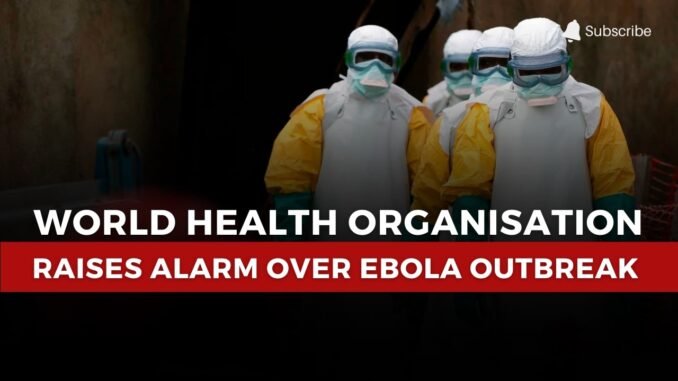

The Director-General of the World Health Organization (WHO) has sounded a serious warning about the alarming rate at which a rare strain of Ebola is spreading across eastern Democratic Republic of Congo, with health authorities now confirming 134 suspected cases of the deadly virus.
A Rare and Dangerous Strain
The outbreak involves the Bundibugyo strain of Ebola, a less common variant of the virus that has health experts deeply worried. Unlike the more frequently encountered Zaire ebolavirus, Bundibugyo Ebola virus represents only the third known species of the disease to cause major outbreaks in humans since its discovery in Uganda in 2007.
The WHO chief’s statement highlights growing international concern about both the scale—referring to the number of people affected—and the speed at which new cases are emerging in the region. Eastern Congo has long been a hotspot for infectious disease outbreaks due to its challenging terrain, ongoing security issues, and limited healthcare infrastructure.
Why Nigerians Should Pay Attention
While this outbreak is currently centered in Congo, Nigeria’s experience with Ebola in 2014 taught us that infectious diseases respect no borders. The swift action taken by Nigerian health authorities during that crisis, which limited the outbreak to just 20 cases, demonstrated the importance of early detection and rapid response.
The proximity of Congo to other African nations and the interconnected nature of modern travel mean that vigilance remains essential across the continent. Nigerian health officials have historically maintained strong surveillance systems at our ports of entry, particularly airports, and this outbreak serves as a reminder of why such measures remain crucial.
What Makes This Outbreak Particularly Concerning
Several factors contribute to the seriousness of this situation:
Remote Location: Eastern Congo’s difficult terrain makes it challenging for health workers to reach affected communities and trace contacts of infected individuals.
Rare Strain: The Bundibugyo variant is less studied than other Ebola strains, which can complicate treatment approaches and vaccine deployment strategies.
Humanitarian Crisis: The region is already dealing with displacement due to conflict, making disease control efforts significantly more complex.
Speed of Transmission: The rapid increase in suspected cases suggests the virus may have been spreading undetected for some time before being identified.
Ebola: A Continuing African Challenge
Ebola hemorrhagic fever remains one of Africa’s most feared infectious diseases, with a fatality rate that can reach up to 90% in some outbreaks, though the Bundibugyo strain typically shows a lower mortality rate of around 25-40%.
The virus spreads through direct contact with bodily fluids of infected individuals or contaminated materials. Symptoms include sudden fever, intense weakness, muscle pain, headache, and sore throat, followed by vomiting, diarrhea, rash, and in severe cases, internal and external bleeding.
International Response and Support
The WHO’s public expression of concern typically signals the mobilization of international resources and expertise to support local response efforts. This includes deploying epidemiologists, providing personal protective equipment for healthcare workers, and potentially facilitating vaccine distribution if supplies are available.
Neighboring countries are likely strengthening their border surveillance and preparing their health systems to detect and respond to any imported cases quickly.
Lessons From Nigeria’s Success Story
Nigeria’s handling of the 2014 Ebola outbreak remains a model for rapid disease containment in Africa. Through aggressive contact tracing, isolation of suspected cases, and public education campaigns, Nigerian health authorities successfully prevented widespread transmission.
This experience built capacity within our health system that continues to serve the nation well during subsequent health emergencies, including the COVID-19 pandemic.
Staying Informed and Prepared
While there is currently no immediate threat to Nigeria from this outbreak, staying informed about infectious disease developments across Africa helps individuals and authorities remain alert to potential risks.
The WHO and African Centers for Disease Control and Prevention continue to monitor the situation closely and coordinate with Congolese health authorities to bring the outbreak under control.
For now, the focus remains on supporting Congo’s response efforts and ensuring that regional surveillance systems remain robust enough to detect any spread beyond current outbreak zones.
This is a developing story. Health authorities continue to monitor the situation, and updates will be provided as more information becomes available.
For more information, check buzzUp9ja
Be the first to comment