
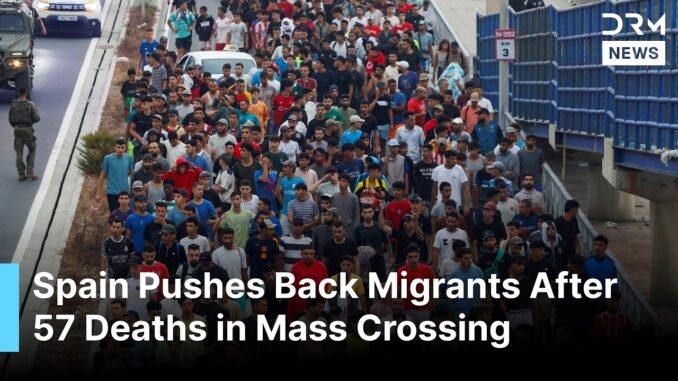

On Saturday, August 1, a massive operation went down at Spain’s Ceuta enclave — that tiny but strategically important piece of Spanish territory sitting right on the northern tip of Africa, sharing a border with Morocco. Police and military personnel rounded up a large group of migrants and marched them straight to the El Tarajal border crossing, sending them back into Moroccan territory.
What Exactly Happened in Ceuta?
For those who might not be familiar, Ceuta is like a small island of European Union territory sitting on African soil. It shares a land border with Morocco, which makes it one of the most sought-after entry points for migrants — many of them from Sub-Saharan Africa, including fellow Nigerians and other West Africans — who are desperately trying to reach Europe.
On that Saturday, Spanish security forces — both police and military — mobilised in significant numbers to escort the migrants from inside Ceuta all the way to the El Tarajal border crossing, effectively pushing them back into Morocco.
Why Should Nigerians Care About This?
Brother, this issue is closer to home than many people realise. A significant number of migrants making that dangerous journey through the Sahara Desert and into North Africa in search of a better life in Europe are Nigerians. Many of our people — young men and women driven by economic hardship, insecurity, and the hunger for opportunity — end up in exactly these kinds of situations.
The road from Nigeria to Ceuta is one of the most brutal migration routes on earth:
– Through Niger or Mali, braving bandits, extreme heat, and dehydration across the Sahara
– Into Libya or Morocco, where migrants often face detention, abuse, and exploitation
– Across or around the Mediterranean, risking their lives on overcrowded rubber boats
– Finally reaching Ceuta or the Canary Islands, only to potentially face deportation
When Spain deploys its military to push migrants back, many of those affected are our brothers and sisters.
The Bigger Picture: Europe’s Migration Crackdown
Spain has been increasingly hardening its stance on irregular migration in recent years. The Ceuta enclave has been a flashpoint multiple times — most famously in May 2021, when over 8,000 migrants entered Ceuta in a single day after Morocco temporarily relaxed its border controls, causing a full-blown diplomatic crisis between Madrid and Rabat.
The deployment of military personnel alongside police signals that Spain is treating this not just as a law enforcement issue, but as a national security matter. The European Union has also been pushing member states to strengthen their external borders, with billions of euros allocated to border management.
What Happens to Migrants Sent Back to Morocco?
This is where the story gets even more painful. Being sent back to Morocco does not mean these migrants are safe or that their journey is over. Human rights organisations have documented numerous cases of:
– Migrants being abandoned in remote desert areas near the Algerian border by Moroccan authorities
– Violence and mistreatment at the hands of security forces
– Detention in overcrowded and inhumane conditions
– Migrants simply regrouping and attempting the crossing again
For many, returning to their home countries is not seen as an option — the conditions they fled from remain unchanged.
A Message Worth Reflecting On
As Nigerians, we must have an honest conversation about why our young people are willing to risk everything — including their lives — to cross into Europe through such dangerous and degrading routes. The answer lies in the work that needs to be done back home: job creation, security, functional governance, and real economic opportunity.
At the same time, we must not lose our humanity when discussing migration. Behind every statistic is a person with a family, a dream, and a story. The young man from Edo State or Delta who ends up being escorted at gunpoint across a border in North Africa deserves our empathy, even as we acknowledge the complex politics of migration.
The situation in Ceuta continues to develop. Stay with us for further updates as more details emerge.
Check buzzUp9ja for more updates
Be the first to comment