
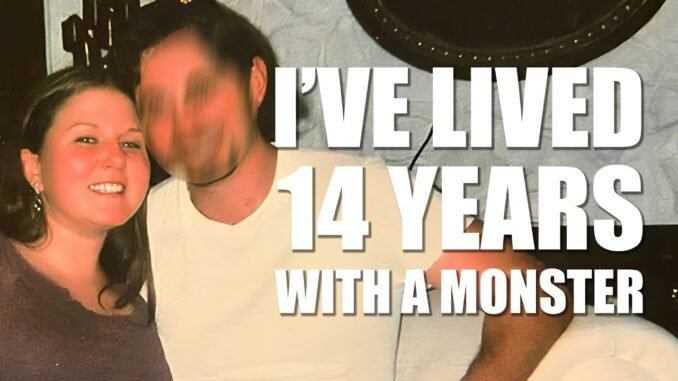

A Cleveland woman’s harrowing account of domestic violence has sparked outrage online, as she reveals how her husband allegedly fractured her face in a vicious attack.
—
Tay Yousamad Sanders, a Cleveland, Ohio resident, has taken to social media to share the horrifying details of what she describes as a brutal assault by her husband, claiming he fractured the entire left side of her face.
In a heartbreaking Facebook post that has since gone viral, Tay didn’t mince words about her experience or her feelings toward her alleged attacker. With raw emotion, she declared that his parents “raised a monster, not a man” – a statement that has resonated with thousands of Nigerians and people worldwide who have witnessed or experienced domestic violence.
The Devastating Injuries
According to Tay’s account, the injuries she sustained were severe and life-altering. She reportedly suffered fractures across the entire left side of her face – injuries that typically require extensive medical intervention and can take months to heal properly.
Medical experts say facial fractures of this magnitude often result from significant force and can affect multiple facial bones including the cheekbone, eye socket, and jaw. Such injuries don’t just cause physical pain; they leave lasting psychological scars that many survivors carry for years.
A Cry That Echoes Across Borders
While this incident occurred in Cleveland, Ohio, the conversation it has sparked is global. Nigerian women, in particular, have been sharing Tay’s story, with many drawing parallels to the domestic violence crisis within our own communities.
“This could be any Nigerian woman,” commented one Twitter user. “We need to stop sweeping these things under the carpet and start holding abusers accountable.”
Indeed, domestic violence remains a persistent issue in Nigeria, where cultural factors and inadequate legal enforcement often allow perpetrators to escape consequences. According to recent studies, approximately one in three Nigerian women have experienced physical violence, with intimate partners being the most common perpetrators.
The Power of Speaking Out
Tay’s decision to share her story publicly demonstrates the courage it takes for survivors to break their silence. In many African cultures, including Nigerian society, women are often pressured to remain silent about abuse, to “protect the family name,” or to avoid bringing shame to their households.
But stories like Tay’s remind us that the real shame belongs to the abusers, not the survivors.
Her pointed statement about her husband’s upbringing – that his parents raised “a monster, not a man” – raises important questions about how we raise our boys. Are we teaching them to respect women? Are we modeling healthy relationships? Are we addressing toxic masculinity in our homes?
What Real Manhood Looks Like
In Nigerian culture, we often pride ourselves on strong family values and respect. Yet, when a man raises his hand against his wife, he violates everything that true manhood represents.
A real man protects; he doesn’t harm. A real man uplifts; he doesn’t tear down. A real man resolves conflicts with words, not fists.
As one Nigerian relationship expert puts it: “Any man who beats his wife is not demonstrating strength – he is revealing his weakness, his insecurity, and his inability to control himself.”
The Road Ahead for Survivors
For women like Tay, the journey toward healing involves more than just physical recovery. The emotional and psychological trauma of being assaulted by someone you trusted and loved can be devastating.
Support systems, counseling, and legal action are all crucial components of recovery. In Nigeria, organizations like Women at Risk International Foundation (WARIF) and the Mirabel Centre provide critical support services for survivors of domestic and sexual violence.
What Can We Do?
If you or someone you know is experiencing domestic violence:
1. Reach out for help – Contact local authorities or organizations like the National Human Rights Commission
2. Document everything – Keep records of injuries, threatening messages, and incidents
3. Create a safety plan – Have a plan for leaving safely if the situation escalates
4. Don’t blame yourself – The abuse is never your fault
5. Speak up – Break the silence when you feel safe to do so
As a community, we must:
– Believe survivors when they share their stories
– Hold abusers accountable regardless of their status
– Teach our children about healthy relationships
– Support legislation that protects victims and punishes perpetrators
– Stop making excuses for violence
A Call to Action
Tay Yousamad Sanders’ story is a stark reminder that domestic violence knows no boundaries – not geographical, not economic, not cultural. It happens in Cleveland, it happens in Lagos, it happens in Abuja, and it happens in villages across Nigeria.
But it doesn’t have to continue.
Every time we speak up, every time we refuse to look away, every time we support a survivor, we take a step toward a society where no woman has to fear the person who promised to love and protect her.
As Tay’s powerful words remind us: when parents raise their sons without teaching respect, accountability, and emotional intelligence, they may indeed be raising “monsters” instead of men.
The question is: what are we going to do about it?
For immediate help with domestic violence in Nigeria, contact the National Agency for the Prohibition of Trafficking in Persons (NAPTIP) helpline or your local police station. Remember: your safety comes first.
For more information, check buzzUp9ja
Be the first to comment