
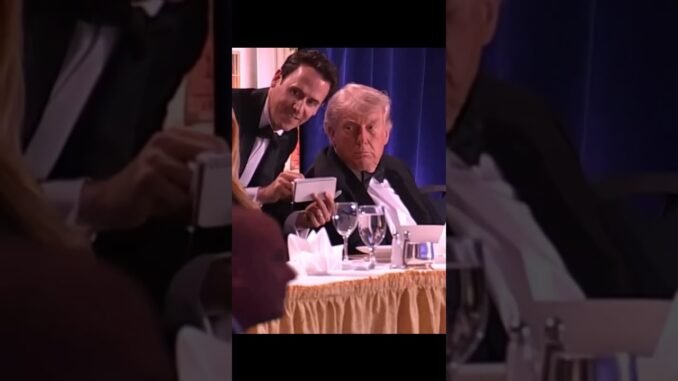

Summary: President Trump reveals the surprising reason behind the 20-second delay during his emergency evacuation at the White House Correspondents’ Dinner. His own curiosity played a major role.
In a revelation that has gotten people talking across social media, US President Donald Trump has finally explained why his Secret Service detail took approximately 20 seconds to remove him from a potentially dangerous situation at the White House Correspondents’ Dinner.
The answer? Trump’s own curiosity.
The President’s Admission
According to Trump, while his highly-trained Secret Service agents were ready to whisk him away to safety immediately after detecting a threat, he himself wanted to understand what was happening before leaving the room. This moment of presidential curiosity added those crucial seconds to his evacuation time.
“They were ready to move me out instantly,” Trump explained, “but I wanted to know what was going on. I was asking questions.”
What This Tells Us About Presidential Security
For Nigerians familiar with how our own security protocols work—whether at high-profile events or when protecting VIPs—this incident raises interesting questions about the balance between security procedures and the natural human instinct to want to understand a dangerous situation.
The Secret Service, known worldwide as one of the most elite protective agencies, operates on split-second timing. Every moment counts when a potential threat emerges. Yet, even with all their training and readiness, they must still work with a protectee who has his own will and questions.
The Human Element in Security
This incident reminds us that no matter how sophisticated security arrangements may be, the human element always plays a role. Just as we’ve seen in Nigeria where dignitaries sometimes resist immediate evacuation to maintain composure or gather information, Trump’s response shows that even American presidents aren’t immune to that impulse.
Security experts often emphasize that the biggest challenge in executive protection isn’t always external threats—it’s sometimes managing the person you’re protecting.
Lessons for High-Profile Security
The 20-second delay, while seemingly brief, could be critical in a genuine emergency. This incident serves as a reminder that:
– Clear communication protocols are essential between security teams and those they protect
– Pre-event briefings should emphasize the importance of immediate compliance during emergencies
– Trust in security personnel must be established before crisis moments occur
For a country like Nigeria, where security challenges require constant vigilance at public events, these lessons resonate deeply.
The Takeaway
Trump’s candid admission about his role in the evacuation delay offers a rare glimpse into the reality of presidential security—and human nature. While the Secret Service did their job professionally, the president’s natural curiosity added those extra seconds.
In the end, it’s a reminder that whether you’re in Washington or Abuja, protecting high-profile individuals requires not just tactical expertise, but also the ability to manage very human reactions under pressure.
What do you think? Should leaders trust their security completely and move without question, or is it reasonable to want to understand the situation first? Share your thoughts in the comments below.
Get more details on buzzUp9ja
Be the first to comment