
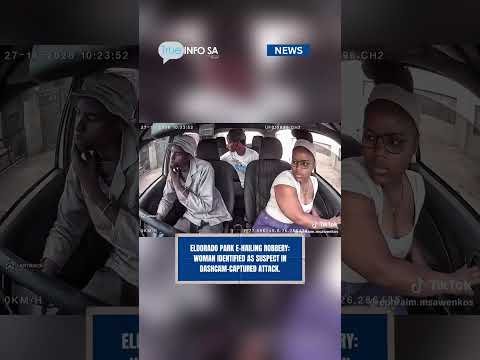

Safety concerns for ride-hailing drivers across Africa are growing — and this chilling dashcam footage is a stark reminder of why.
A dashcam recently captured a terrifying moment that no driver ever wants to experience — an e-hailing driver was brutally ambushed and robbed in Eldorado Park, Johannesburg, South Africa. The footage, which has since been making rounds online, lays bare the dangerous realities faced by ride-hailing drivers who risk their lives every single day just to earn a living.
What Happened?
According to reports, the driver was going about his normal work day when he was suddenly ambushed by robbers in Eldorado Park, a township located in the south of Johannesburg. The dashcam — that small but mighty device mounted on the windscreen — recorded the entire frightening encounter, leaving viewers shaken.
The details of the incident serve as a chilling reminder that beyond the five-star ratings and convenient app bookings, e-hailing drivers operate in environments that can turn dangerous without warning.
Why This Hits Close to Home for Nigerians
Here in Nigeria, the e-hailing industry has exploded in recent years. From Lagos to Abuja, platforms like Bolt and Uber have become part of everyday life — both for passengers seeking affordable transport and for drivers looking to make ends meet in a tough economy.
But just like their South African counterparts, Nigerian e-hailing drivers face their own share of security risks:
– Fake trip requests used to lure drivers into isolated areas
– Armed passengers who turn violent during trips
– Carjackings targeted at drivers with newer or well-maintained vehicles
– Late-night rides that significantly increase exposure to criminal activity
Many Nigerian drivers have shared their own harrowing experiences on social media, with some narrowly escaping robbery or assault while on duty.
The Role of Dashcams in Driver Safety
One major takeaway from this South African incident is the value of dashcam technology. While the camera could not prevent the attack, it:
– Documented evidence that can aid law enforcement investigations
– Provided a visual record that helps tell the driver’s story accurately
– Serves as a deterrent — criminals are less likely to act when they know they are being recorded
For Nigerian e-hailing drivers, investing in a dashcam is increasingly becoming a matter of survival, not just convenience. Devices are now more affordable than ever, and the peace of mind they offer is priceless.
What Can Be Done?
Both drivers and platform companies have roles to play in making e-hailing safer:
For Drivers:
– Always share your trip details with a trusted contact
– Avoid accepting late-night trips in unfamiliar or high-risk areas
– Install a dashcam and ensure it is always recording
– Trust your instincts — if something feels wrong, cancel the trip
For Platforms Like Bolt and Uber:
– Strengthen passenger verification processes
– Provide real-time emergency response features
– Offer driver safety training and resources
– Maintain open channels for drivers to report suspicious activity
The Bigger Picture
The ambush of this Johannesburg driver is not just a South African problem — it is an African problem. As e-hailing services continue to grow across the continent, the safety of drivers must be treated as a top priority, not an afterthought.
To every Oga driver hustling on the streets of Lagos, Abuja, Port Harcourt, and beyond — your safety matters. Stay alert, stay connected, and never hesitate to prioritise your life over any trip.
Have you or someone you know had a frightening experience as an e-hailing driver or passenger? Share your story in the comments below.
Catch more breaking news on buzzUp9ja
Be the first to comment