
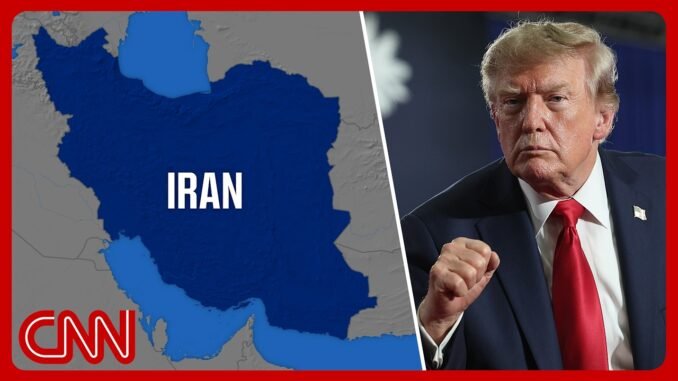

The United States government don officially signal a major shift in how dem plan to handle their long-standing wahala with Iran. According to recent reports, US Secretary of State Marco Rubio don quietly inform several of his foreign counterparts that America is, “for the time being,” stepping back from the option of launching fresh military strikes against Iran.
In simple terms: Washington don swap the bomb for the bank — and this is a development that every Nigerian following global affairs needs to understand.
So Wetin Really Happen?
Secretary of State Marco Rubio, who serves as America’s chief diplomat under the current administration, has been making rounds of calls and meetings with foreign ministers across the world. His message has been consistent — the United States is currently not expected to initiate new military strikes against Iran.
Instead, the Americans are doubling down on economic sanctions as their primary tool to pressure Tehran into changing its behaviour, particularly around its nuclear programme and its support for various militia groups across the Middle East.
Why This Matters — Even for Naija People
You might be wondering, “How does this affect me in Lagos, Abuja, or Kano?” The answer is — more than you think.
1. Oil Prices and Your Fuel Pump:
Iran is one of the world’s major oil producers. Any military escalation in that region tends to send crude oil prices shooting through the roof. When oil prices spike globally, countries like Nigeria — which still depends heavily on fuel imports for day-to-day living — feel the pain at the pump. A diplomatic approach keeps oil markets calmer, which is better for our economy.
2. Global Trade and the Dollar:
Nigeria conducts most of its international trade in US dollars. Geopolitical instability between America and Iran creates dollar volatility, which directly affects the naira exchange rate. A shift towards sanctions rather than bombs means slightly more predictable global markets — at least in the short term.
3. Nigeria’s Position on the World Stage:
As Africa’s largest economy and most populous nation, Nigeria has always advocated for peaceful resolution of international conflicts. This American shift aligns more closely with Nigeria’s foreign policy position of dialogue over warfare.
Sanctions — Sharp Weapon or Slow Poison?
Now, let’s not deceive ourselves — sanctions are not a soft option. Economic sanctions can be absolutely devastating. Just look at how sanctions have crippled various economies over the decades.
For Iran, additional sanctions could mean:
– Further collapse of the Iranian rial
– Restrictions on Iranian oil exports
– Cutting Iranian banks off from the international financial system
– Blocking technology transfers
The idea is to squeeze Iran’s economy so tight that its government has no choice but to come to the negotiating table.
However, critics — including many African and developing nations — have long argued that sanctions often hurt ordinary citizens more than the governments they are meant to pressure. The average Iranian going about their daily business suffers more than the politicians in power. This is a legitimate concern that Nigeria and other African Union members have raised in various international forums.
Is This Peace or Just Strategy?
Make no mistake — this is not America suddenly becoming a peaceful nation. This is strategic calculation. Military strikes carry enormous risks: they could trigger a wider regional war, draw in other powers like Russia and China, and destabilise the entire Middle East — a region that still supplies a significant portion of the world’s oil.
Sanctions, on the other hand, allow America to maintain pressure on Iran without risking the lives of its soldiers or the catastrophic consequences of open warfare.
The shift also comes amid ongoing diplomatic back-and-forth, with reports suggesting that indirect negotiations between Washington and Tehran are still quietly happening behind closed doors.
The Bigger Picture
For Nigerians who are tired of hearing about Western powers throwing their weight around the world, this development is worth monitoring closely. The Middle East remains a powder keg, and how America manages its relationship with Iran will continue to shape global oil markets, refugee flows, and international security — all of which ripple down to affect everyday life in Nigeria and across Africa.
As we say in Nigeria — the fire wey dey burn for your neighbour’s compound, e fit reach your own fence. Global events are never truly far away.
Stay informed. Stay sharp.
Follow our blog for more breaking international news decoded for the Nigerian reader.
Connect moreon buzzUp9ja
Be the first to comment