
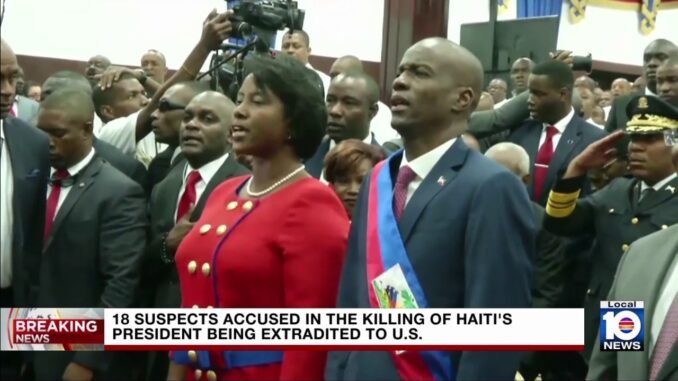

Summary: Five years after Haitian President Jovenel Moïse was killed in cold blood at his home, the United States has extradited 18 suspects to face justice. Here is everything you need to know.
Five years after the shocking assassination of Haitian President Jovenel Moïse sent shockwaves across the world, the United States has taken a major step toward justice — extraditing 18 suspects to stand trial on American soil.
Moïse, who was 53 years old at the time of his death, was gunned down on July 7, 2021, inside his private residence in Haiti. The brazen killing of a sitting head of state in the dead of night left the entire world stunned, and threw the already fragile Caribbean nation into deeper political chaos.
A Long Road to Justice
For many Nigerians and Africans who followed this story closely, the assassination of a sitting African-Caribbean leader felt deeply personal. It raised uncomfortable questions about the safety of leaders in developing nations and the vulnerability of Black-majority countries to political violence and foreign interference.
Now, after years of investigations, legal back-and-forth, and diplomatic negotiations, American authorities have finally moved — extraditing 18 individuals connected to the plot to face the full weight of United States law.
Why the US?
You might wonder — why is the US handling this case and not Haiti itself? The answer lies in the complexity of the plot. Investigations revealed that much of the planning and financing for the assassination allegedly ran through networks connected to the United States. This gave American prosecutors the legal standing to bring charges on their own turf.
It is a similar logic to how international financial crimes targeting Nigerians are sometimes prosecuted abroad — jurisdiction follows the money and the connections.
What Happens Next?
With 18 suspects now on US soil, prosecutors are expected to lay out what many believe was a carefully coordinated conspiracy. The trial is anticipated to finally shed full light on who ordered the killing, who financed it, and who pulled the trigger.
For Haiti — a nation still struggling with gang violence, political instability, and a humanitarian crisis — this development offers a rare, if fragile, glimmer of hope that justice may still be possible.
As Nigerians, we understand too well what it means when political violence goes unpunished. The world will be watching closely as this case unfolds.
Stay ahead with buzzUp9ja
Be the first to comment