
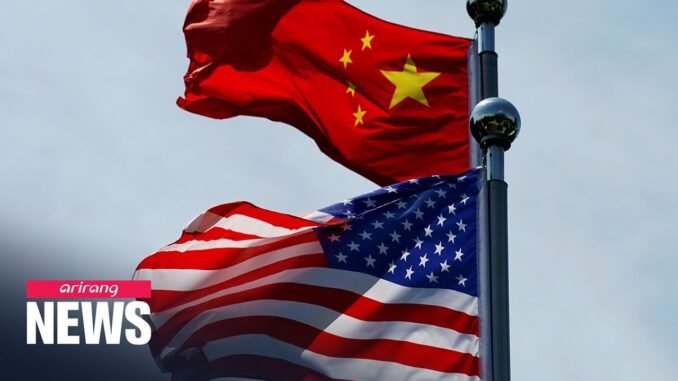

Summary: The United States has taken a strong stance against China’s aggressive moves in the South China Sea. Here’s a breakdown of what’s happening and why it matters beyond Western borders.
The tension dey rise between two of the world’s biggest superpowers — and this time, the flashpoint is a stretch of water in Southeast Asia that many Nigerians may not have heard much about. The United States has publicly called out China over its increasingly aggressive behaviour in the South China Sea, specifically around a contested area known as the Scarborough Shoal — and the implications stretch far beyond the Philippines.
So, What Is Actually Going On?
Washington has slammed Beijing over its escalating territorial dispute with the Philippines, warning that China’s actions around the Scarborough Shoal are crossing dangerous lines. For context, the Scarborough Shoal is a small but strategically significant reef that both China and the Philippines lay claim to — and China has been flexing its muscles there in ways that the US considers deeply provocative.
Think of it like two neighbouring communities in Lagos both claiming the same piece of land along the waterfront — except in this case, one of them has a navy, coast guard vessels, and enough firepower to rearrange the coastline.
Why Should Nigerians Care?
You might be wondering — “This one concerns us how? Na their wahala.” But here is the thing: what happens between global superpowers never stays in their backyard.
Nigeria, like many African nations, has growing economic ties with both the United States and China. From Chinese-funded infrastructure projects across the country to American diplomatic and trade relationships, Nigeria sits right in the middle of this ongoing rivalry. When these two giants clash, the ripple effects touch:
– Oil prices and global markets — Instability in major shipping lanes affects crude oil pricing
– Foreign investment flows — Investors get nervous when superpowers are at loggerheads
– Nigeria’s diplomatic positioning — Abuja will need to continue carefully balancing its relationships with both Washington and Beijing
The US Position
America has made it clear that it stands firmly behind its treaty ally, the Philippines. Washington’s message to Beijing has been blunt — back off. The US views China’s manoeuvres around the Shoal as not just a bilateral issue between China and the Philippines, but as a direct challenge to international maritime law and the broader rules-based global order.
For the US, allowing China to bully a smaller nation into submission in the South China Sea sets a dangerous precedent — one that could embolden similar behaviour elsewhere in the world.
China’s Playbook
China, on its part, has consistently maintained that the South China Sea falls largely within its sovereign territory — a claim that an international tribunal already ruled against in 2016, but which Beijing flatly rejected. The Chinese government sees American involvement as interference and has pushed back strongly against what it calls Washington’s “provocative” presence in the region.
This is classic big-power chess — and the Philippines, much like smaller nations across the Global South, finds itself caught in the middle.
The Bigger Picture
As Nigeria continues to chart its own independent foreign policy path, situations like this serve as a reminder that global politics is never truly far away. The South China Sea dispute is not just about fish and reefs — it is about who controls the future of global trade routes, military dominance, and international influence.
Whether you are a business owner in Aba tracking import costs, a student in Abuja studying international relations, or a trader in Kano whose goods pass through global supply chains — the power struggles playing out thousands of kilometres away can land right on your doorstep.
One thing is clear: the world is watching, and Nigeria cannot afford to look away.
Stay informed. Stay ahead. Follow us for more global news decoded for the Nigerian reader.
Discover more updates on buzzUp9ja
Be the first to comment