

Meta Description: The United States and Hamas meet face-to-face in Cairo for the first time since October 2025 ceasefire, as efforts intensify to save the fragile Gaza peace agreement from total collapse.
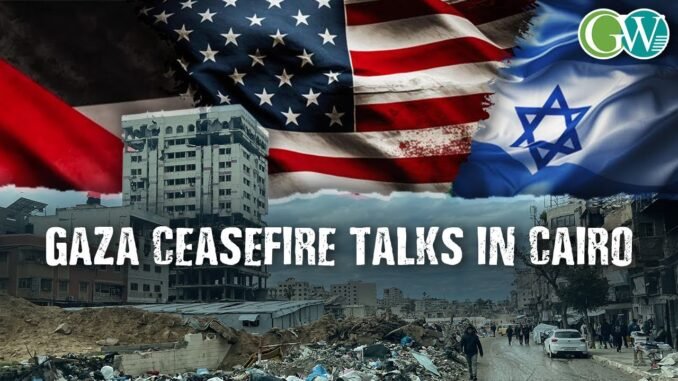
In a dramatic diplomatic development that could reshape the future of the Middle East, American officials and Hamas representatives sat across from each other in Cairo this Tuesday night for their first direct negotiations since the October 2025 Gaza ceasefire. The high-stakes meeting comes as the fragile peace agreement, painstakingly brokered by the United States, teeters on the edge of collapse.
A Historic Encounter in Cairo
This face-to-face engagement marks a significant shift in Washington’s approach to the Palestinian militant group. For years, the US has maintained a policy of refusing direct contact with Hamas, which it designates as a terrorist organization. However, the urgency of preventing a return to full-scale conflict in Gaza has apparently pushed American diplomats to take this unprecedented step.
The talks, held behind closed doors in the Egyptian capital—long known as a neutral ground for Middle Eastern negotiations—signal just how serious the situation has become. Egypt, which shares a border with Gaza and has historically played the role of mediator between Israeli and Palestinian factions, is hosting these critical discussions.
Why the Ceasefire Is Crumbling
The October 2025 ceasefire brought temporary relief to millions of Palestinians in Gaza who had endured months of devastating conflict. However, like many agreements before it, implementation has proven far more difficult than the initial handshake.
Sources close to the negotiations indicate that the peace process has stalled over several contentious issues, including the pace of humanitarian aid delivery, reconstruction efforts, and the terms of prisoner exchanges. Both sides have accused each other of failing to honor commitments made during the ceasefire negotiations.
For Nigerians who remember our own experiences with conflict resolution—from the Biafran War to ongoing security challenges in various regions—the difficulties of maintaining peace after guns fall silent will feel all too familiar. The hard truth is that signing a ceasefire is often just the beginning of an even more challenging journey.
What’s at Stake?
The consequences of a complete breakdown in the ceasefire would be catastrophic. Gaza’s 2.3 million residents, many of whom are still displaced and living in makeshift shelters, would face renewed bombardment. The humanitarian situation, already described by international organizations as dire, would deteriorate further.
For the United States, failure to maintain the ceasefire would represent a significant diplomatic setback in a region where American influence has been increasingly questioned. President Biden’s administration invested considerable political capital in brokering the October agreement, and its collapse would reverberate through Washington’s relationships across the Middle East.
The Nigerian Perspective
As Nigerians, we understand the complexity of peace negotiations better than most. Our nation’s history has taught us that sustainable peace requires more than just stopping the shooting—it demands addressing root causes, building trust, and ensuring that agreements benefit ordinary people, not just power brokers.
The international community, including Nigeria through its role in various African Union and United Nations peacekeeping missions, has consistently advocated for dialogue over violence. Nigeria’s own “no victor, no vanquished” approach after the civil war offers lessons that could be relevant to the Israeli-Palestinian conflict.
What Happens Next?
The Cairo talks represent a critical test of whether diplomacy can still work in one of the world’s most intractable conflicts. American negotiators are reportedly pushing for concrete timelines on aid delivery and reconstruction, while Hamas is demanding guarantees that Israel will fulfill its ceasefire obligations.
Egyptian mediators are working around the clock to bridge the gap between the parties, knowing that failure could plunge the region back into chaos and potentially trigger wider instability.
The Bottom Line
As these negotiations continue in Cairo, the eyes of the world are watching. For the people of Gaza, these talks represent hope—perhaps their last, best chance for peace after years of suffering.
The willingness of the United States to engage directly with Hamas, whatever one thinks of the politics involved, shows that when the stakes are high enough, even the most rigid diplomatic positions can bend. Whether this flexibility will translate into a lasting peace remains to be seen.
For now, all we can do is hope that wisdom prevails in those Cairo meeting rooms, and that the negotiators remember they’re not just discussing political positions—they’re deciding the fate of millions of ordinary people who simply want to live in peace.
What do you think about the US decision to hold direct talks with Hamas? Should dialogue always be an option, even with groups considered hostile? Share your thoughts in the comments below.
Check buzzUp9ja for more information
Be the first to comment