
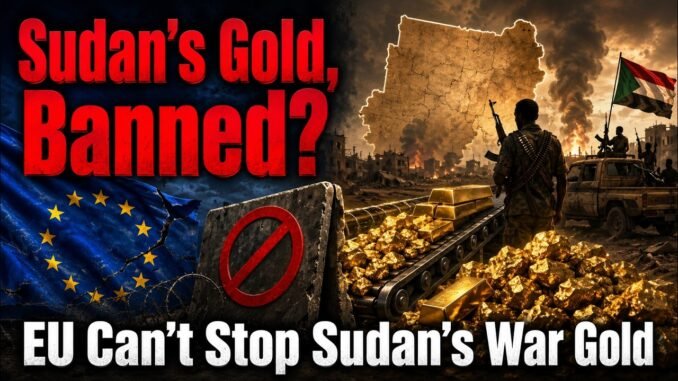

Summary: Britain has sanctioned 11 individuals and organisations linked to illegal gold trading that is fuelling Sudan’s brutal civil war. Find out why this matters and what it means for Africa.
The United Kingdom has taken a bold step in the fight against conflict financing in Africa, imposing heavy sanctions on 11 individuals and organisations accused of bankrolling Sudan’s devastating civil war through shady gold deals and underground financial networks.
The announcement, made on Thursday, July 16, signals Britain’s growing resolve to cut off the money supply keeping the guns blazing in one of the world’s most ignored — yet deadliest — conflicts.
So, What Exactly Is Going On in Sudan?
For those who may not be following closely, Sudan has been engulfed in a brutal civil war since April 2023, when fighting broke out between the Sudanese Armed Forces (SAF) and the powerful paramilitary Rapid Support Forces (RSF). The conflict has triggered one of the worst humanitarian crises on the planet, with millions of Sudanese people displaced — many of them fleeing to neighbouring African countries.
But wars are expensive. And someone has to be paying for the bullets, the weapons, and the warlords. According to the UK government, a big part of that money is coming from illicit gold trading — smuggling Sudan’s vast gold reserves through back-channel networks to fund the fighting.
Why Gold? Sudan’s Liquid Gold Problem
Nigeria knows a thing or two about how natural resources can become a curse rather than a blessing. Sudan’s situation is not entirely different. The country sits on enormous gold deposits, and for years, shadowy networks have been exploiting these resources — bypassing official channels, avoiding taxes, and funnelling profits straight into conflict.
Think of it like this: while ordinary Sudanese people are running for their lives, certain powerful individuals and entities are making serious money from the chaos — and using that money to make the chaos worse.
Britain’s Response: Targeted Sanctions
The UK’s sanctions package targets 11 individuals and organisations believed to be key players in this illicit gold economy. The measures are designed to:
– Freeze assets held in the UK
– Ban travel to Britain for sanctioned individuals
– Block financial transactions flowing through UK-linked institutions
The British government was clear that these sanctions are intentional and strategic — aimed at choking the financial lifelines that keep the conflict alive.
Why Should Nigerians Care?
You might be wondering — this is Sudan’s problem, why does it concern us here in Nigeria?
Here’s the thing: Africa’s peace is everybody’s business. When conflicts drag on in one part of the continent, the ripple effects are felt everywhere — from refugee crises, to regional instability, to the image of Africa on the global stage.
Beyond that, illicit gold networks don’t respect borders. The same underground financial systems used to smuggle Sudanese gold often overlap with criminal networks operating across West and East Africa. Nigeria, as Africa’s largest economy and a major player in the gold trade, has a stake in how these shady systems are dismantled.
There’s also the bigger conversation around how Africa’s mineral wealth is being weaponised — a story that resonates deeply from the Niger Delta to the DRC’s cobalt mines.
The Bigger Picture
The UK’s move is part of a wider international push to hold war financiers accountable. It sends a strong message that hiding behind gold bars and offshore accounts will no longer provide easy cover for those profiting from African bloodshed.
Whether these sanctions will be enough to shift the situation on the ground in Sudan remains to be seen. But one thing is clear — the world is slowly waking up to the fact that ending wars means following the money.
Stay informed. Africa’s story is your story.
Discover more details for buzzUp9ja
Be the first to comment