
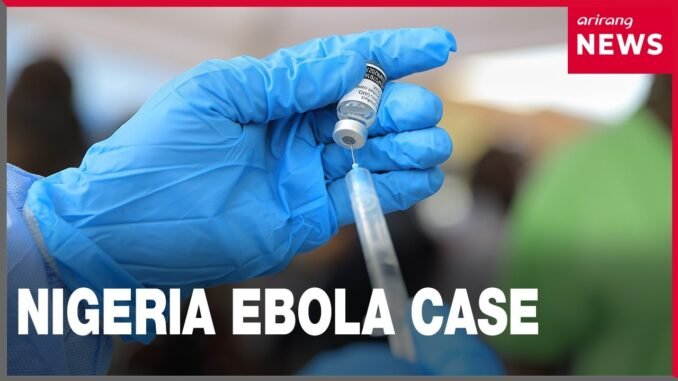

Summary: Uganda’s Ministry of Health has declared no active Ebola cases in the country following reports linked to a Nigerian woman who recently travelled through the region. Here’s what you need to know.
The Nigerian community and health-conscious Nigerians across the country can breathe a little easier today, as Uganda’s Ministry of Health has officially confirmed that there are no active Ebola cases within its borders — and this comes on the heels of a report involving a Nigerian woman whose travel history through the East African nation had sparked serious concern.
What Happened?
News began circulating just a few hours ago about a Nigerian woman who had reportedly travelled to the Democratic Republic of Congo (DRC) — a country that has battled Ebola outbreaks before — passing through Uganda in the process. As expected, this set off alarm bells across health circles and social media timelines alike.
We all remember how quickly fear can spread — sometimes faster than the virus itself — and Nigerians, having lived through the 2014 Ebola scare that tested our health system to its limits, are understandably vigilant when stories like this emerge.
Uganda Steps In to Clarify
Uganda’s health authorities wasted no time addressing the situation. The Ministry of Health moved swiftly to issue a statement ruling out any confirmed Ebola cases in the country, providing some much-needed reassurance to both Ugandans and the wider African community watching closely.
This kind of rapid, transparent communication from health officials is exactly what public health experts always advocate for — especially when dealing with a virus as deadly and fear-inducing as Ebola.
Why This Matters for Nigerians
If you recall, Nigeria made global headlines back in 2014 when Ebola landed on our shores through Patrick Sawyer*, a Liberian-American man who flew into Lagos. What followed was a nerve-wracking period, but Nigeria ultimately *defeated the outbreak — earning praise from the World Health Organisation (WHO) for our swift response.
That experience left a mark. Nigerians know better than most how quickly things can escalate when a virus crosses borders via air travel. So naturally, any story involving a Nigerian national and a potential Ebola exposure will command serious attention here at home.
What Should Nigerians Do?
While Uganda has given the all-clear for now, here are a few reminders to keep in mind:
– Stay informed through credible sources like the Nigeria Centre for Disease Control (NCDC) and WHO — not just WhatsApp forwards
– Avoid unnecessary panic, but do not be complacent either
– If you or anyone you know recently travelled to the DRC or surrounding regions and is experiencing symptoms like fever, severe headache, vomiting, or unexplained bleeding, contact the NCDC immediately on their toll-free line: 0800-970000-10
– Always declare your travel history honestly at ports of entry
The Bottom Line
For now, there is no confirmed Ebola threat linked to this incident, and Uganda has made that crystal clear. Nigerian health authorities have yet to make a formal statement on the matter, but it is expected that the NCDC will be monitoring the situation closely.
As always, the best weapon against any disease outbreak — Ebola or otherwise — is accurate information, early detection, and calm, coordinated action. Nigeria has proven before that we have what it takes. Let us stay alert, stay informed, and trust the process.
Stay updated on this developing story as more details emerge. Follow us for the latest health and news updates affecting Nigerians at home and abroad.
Visit buzzUp9ja for the full story
Be the first to comment