
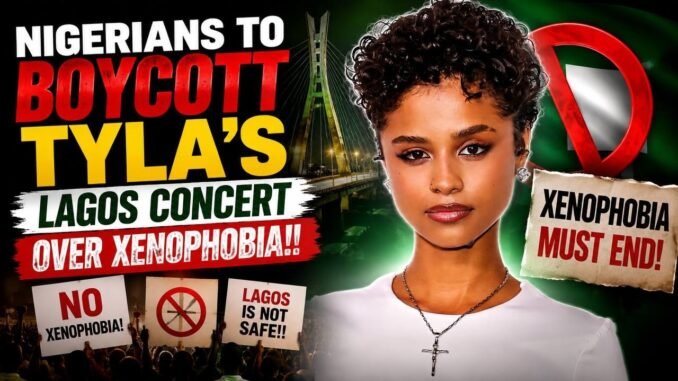

Summary: Nigerian writer Solomon Buchi has called on Nigerians to boycott South African singer Tyla’s upcoming performance in Nigeria, citing her silence during xenophobic attacks on Nigerians in South Africa. Here’s everything you need to know.
South African Afropop sensation Tyla may have conquered global charts and won a Grammy, but her planned performance in Nigeria is stirring serious controversy — and Nigerians on the internet are ready to talk about it.
Nigerian writer and social commentator Solomon Buchi has thrown his weight behind a potential boycott of the singer’s upcoming Nigerian show, and his reasons have struck a nerve with many across the country.
Solomon Buchi Calls Out Tyla’s Silence
Buchi, known for his sharp and often unapologetic takes on social issues, did not mince words. His argument is simple but cuts deep: Tyla never said a word when Nigerians were being attacked, harassed, and displaced in South Africa during the wave of xenophobic violence that has repeatedly targeted foreign nationals — with Nigerians often bearing the brunt of the brutality.
Now that she wants to come to Nigeria to perform — presumably to tap into the country’s massive, energetic, and deeply loyal entertainment market — Buchi is asking a very valid question: Why should Nigerians spend their hard-earned naira supporting an artiste who couldn’t spare even one tweet for their people when it mattered most?
The Xenophobia Issue Is Not New — But the Silence Stings
Let’s be honest — this conversation did not start today. For years, Nigerians living in South Africa have faced horrifying attacks. Shops owned by Nigerians have been looted and burned. Lives have been lost. Families have been torn apart. The images that came out of those attacks were gut-wrenching.
During those dark moments, many looked to South African public figures — especially those with large platforms and international influence — to speak up. Most stayed quiet. That silence was noted. It was filed away. And now, as Tyla prepares to step onto a Nigerian stage, that file has been reopened.
For many Nigerians, it is not just about Tyla personally. It is about a pattern — of enjoying Nigerian culture, Nigerian music, Nigerian audiences, and Nigerian money, while having nothing to say when Nigerians are suffering at the hands of South Africans.
“Our Market Is Not a Favour” — The Bigger Conversation
Nigeria’s entertainment market is one of the most powerful on the African continent. Nigerian audiences have launched careers, broken streaming records, and turned local artistes into global superstars. When Nigeria embraces you, the whole world takes notice.
But that power comes with an expectation — reciprocity and respect.
Buchi’s call to boycott taps into a growing sentiment among Nigerians who feel that the country’s cultural and economic influence is sometimes taken for granted. You cannot enjoy the warmth of Nigerian hospitality while staying cold when Nigerians are in pain.
What Do You Think?
This is clearly a conversation that goes beyond one singer or one concert. It touches on African solidarity, accountability, and the responsibility that comes with having a platform.
Should Tyla have spoken up about xenophobic attacks on Nigerians? Does her silence disqualify her from performing in Nigeria? Or should we separate the artiste from the politics?
One thing is clear — Nigerians are not just fans, they are a community with memory and standards. And right now, that community is asking some very tough questions.
Drop your thoughts in the comments. This one needs to be discussed.
Check buzzUp9ja for more updates
Be the first to comment