
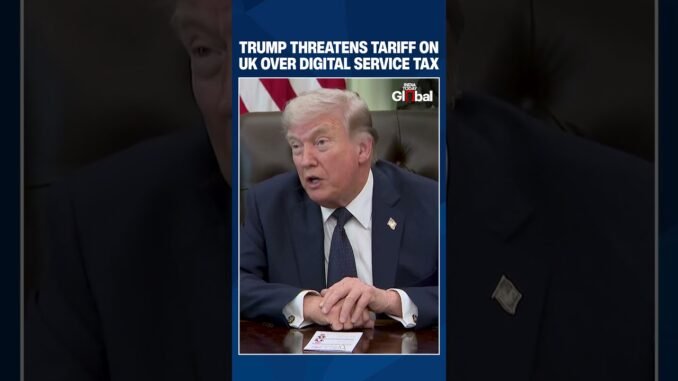

Summary: President Donald Trump has threatened to impose substantial tariffs on the United Kingdom over its Digital Services Tax targeting American tech companies. Here’s what this means for global trade and Nigeria.
As trade tensions rise between Washington and London, Nigerian businesses and consumers could feel the ripple effects of a potential US-UK trade war
—
US President Donald Trump has issued a stern warning to the United Kingdom, threatening to slap “a big tariff” on British goods as tensions escalate over the UK’s Digital Services Tax, which he claims unfairly targets American technology companies.
Speaking during a White House press briefing, the visibly frustrated President accused Britain of deliberately going after “great American companies” with what he described as a discriminatory tax policy.
What’s Behind the Dispute?
The controversy centres on the UK’s Digital Services Tax (DST), a 2% levy on revenues generated by large technology companies operating in Britain. The tax primarily affects American tech giants like Google, Amazon, Facebook (Meta), and Apple – companies that have long been criticized for paying minimal taxes in countries where they generate substantial revenue.
The British government introduced the tax in 2020 as a way to ensure that multinational tech companies contribute fairly to the UK economy, particularly as they profit significantly from British consumers while booking much of their revenue in low-tax jurisdictions.
However, the Trump administration sees it differently. The President and his trade officials argue that the tax specifically targets American businesses and violates international trade agreements.
A Familiar Pattern
This isn’t Trump’s first rodeo when it comes to threatening tariffs. Throughout his presidency, the former and current leader has used tariff threats as a negotiating tool against various countries, from China to Mexico, and from the European Union to Canada.
For Nigerians watching this development, it may feel like déjà vu. Similar tax disputes have played out globally as countries grapple with how to tax digital services in an increasingly online economy. Nigeria itself has been exploring ways to generate more revenue from digital transactions and foreign tech companies operating within its borders.
What This Means for Nigeria
While this may seem like a distant dispute between two Western powers, the implications could reach our shores in several ways:
1. Global Trade Uncertainty: Any major trade dispute between economic powerhouses creates uncertainty in global markets. This can affect currency exchange rates, including the naira, and impact the cost of imported goods.
2. Digital Tax Precedent: Nigeria has been considering similar digital service taxes. How this dispute plays out could influence Nigeria’s approach to taxing multinational tech companies like Google and Facebook, which generate significant revenue from Nigerian users and advertisers.
3. Tech Service Costs: If American tech companies face increased costs due to tariffs and taxes in multiple countries, they may pass those costs on to users globally, including Nigerian businesses that rely on platforms like Google Ads, Amazon Web Services, or Meta’s advertising tools.
4. Trade Relations: As Nigeria seeks to strengthen its trade relationships with both the US and UK, watching how these two allies navigate their dispute offers valuable lessons in international trade diplomacy.
The Bigger Picture: Digital Taxation Goes Global
The UK is not alone in implementing digital services taxes. France, Italy, Spain, and several other countries have introduced or proposed similar measures. The Organisation for Economic Co-operation and Development (OECD) has been working on a global framework for taxing digital services, but progress has been slow.
For African nations like Nigeria, where tech companies are experiencing explosive growth but tax revenues remain a challenge, the question of digital taxation is particularly relevant. Should a company like Netflix or Spotify, which earns millions from Nigerian subscribers, pay taxes here? Most Nigerians would say yes – but implementing such taxes without triggering trade disputes requires careful diplomacy.
The UK’s Response
British officials have defended the Digital Services Tax as a legitimate revenue measure that applies to all large tech companies meeting certain thresholds, not just American ones. They argue that the tax will remain in place until a comprehensive international agreement on digital taxation is reached.
Prime Minister’s office has reportedly indicated that Britain remains committed to its “special relationship” with the United States but will not back down on what it considers a matter of sovereign tax policy.
What Happens Next?
Trump’s tariff threat may be a negotiating tactic designed to pressure the UK into rolling back or modifying its digital tax. Whether he follows through remains to be seen. Trade wars, however, rarely have clear winners – both countries could suffer economic damage if tariffs are actually imposed.
For UK exporters to the United States, the threat is serious. British goods ranging from automobiles to whisky, fashion to pharmaceuticals could become more expensive for American consumers, potentially reducing demand.
Lessons for Nigeria
As Nigeria continues to develop its digital economy and seeks ways to maximize tax revenue, this dispute offers several takeaways:
– Sovereignty vs. Relations: Countries must balance their sovereign right to tax economic activity within their borders against maintaining good relations with powerful trading partners.
– Multilateral Solutions: Working through international organizations to develop agreed-upon tax frameworks may be preferable to unilateral action that triggers retaliation.
– Strategic Communication: How governments frame and communicate tax policies matters enormously in preventing or managing disputes.
The Bottom Line
Trump’s threat to impose tariffs on the UK over digital services tax is the latest chapter in the ongoing global debate about how to tax the digital economy. For Nigeria, it’s a reminder that in our interconnected world, tax and trade disputes between major economies can have far-reaching effects.
As our own digital economy grows – with Nigerian fintech, e-commerce, and streaming services booming alongside international platforms – we’ll need smart, strategic approaches to taxation that support government revenue without stifling innovation or triggering costly trade conflicts.
For now, all eyes are on whether Trump will make good on his threat, and how the UK will respond. The outcome could set important precedents for how countries around the world, including Nigeria, approach the taxation of digital services in the years ahead.
—
What do you think? Should Nigeria implement similar taxes on foreign tech companies? Share your thoughts in the comments below.
Follow for more news on buzzUp9ja
Be the first to comment