
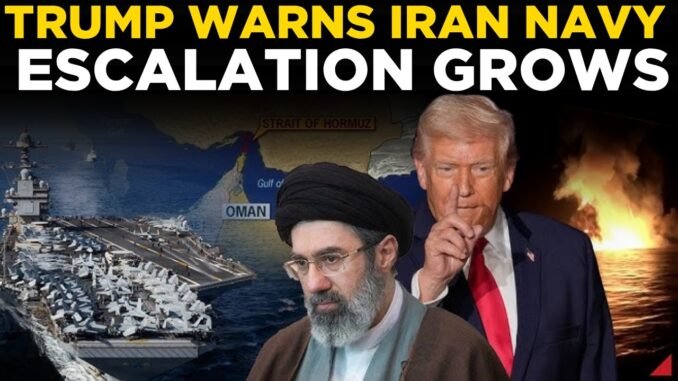

Summary: President Donald Trump issues stern warning to Iran as US implements naval blockade, threatening to destroy any Iranian military vessels that challenge American forces in strategic waters.
The tension between the United States and Iran has reached a new boiling point as President Donald Trump issued a chilling warning to Tehran: any Iranian naval vessels approaching the US blockade zone will be “eliminated.”
In a statement that has sent shockwaves across the international community, Trump revealed devastating losses already suffered by Iran’s naval forces. “Iran’s Navy is laying at the bottom of the sea, completely obliterated – 158 ships,” the President declared, painting a grim picture of the military confrontation unfolding in Middle Eastern waters.
What This Means for Global Oil Markets
For Nigerians watching these developments closely, the implications extend far beyond the Persian Gulf. Iran controls the strategic Strait of Hormuz, through which roughly one-fifth of the world’s oil supply passes daily. Any disruption to this critical waterway could send global oil prices soaring – a development that would have immediate effects on pump prices across Nigeria.
As Africa’s largest oil producer, Nigeria has complex interests in this crisis. While higher global oil prices could boost government revenue, they would also increase the cost of refined petroleum products imported into the country, potentially leading to fuel scarcity and price hikes that Nigerian consumers know all too well.
The Rising Military Confrontation
The US naval blockade represents a dramatic escalation in the long-running standoff between Washington and Tehran. While details of the 158 destroyed Iranian vessels remain unconfirmed by independent sources, the claim – if accurate – would represent one of the most significant naval defeats in modern military history.
Trump’s uncompromising stance leaves little room for diplomatic maneuvering, raising concerns among international observers about the potential for wider regional conflict that could draw in other powers and further destabilize an already volatile region.
Regional and Global Implications
The confrontation comes at a time when global security is already stretched thin, with multiple flashpoints demanding attention from world powers. For Nigeria and other African nations, the crisis serves as a reminder of how quickly events in distant regions can impact local economies and daily life.
Many Nigerians will remember the economic disruptions caused by previous Middle Eastern conflicts, from long queues at filling stations to increased transportation costs that ripple through the entire economy.
As this situation continues to develop, Nigerians – like concerned citizens worldwide – will be watching closely to see whether diplomacy can pull the two nations back from the brink, or whether the world is witnessing the opening chapter of a broader military conflict with far-reaching consequences.
The coming days will be critical in determining whether cooler heads prevail or whether the showdown in the Gulf escalates into something far more dangerous for global stability and economic security.
Follow for more news on buzzUp9ja
Be the first to comment