
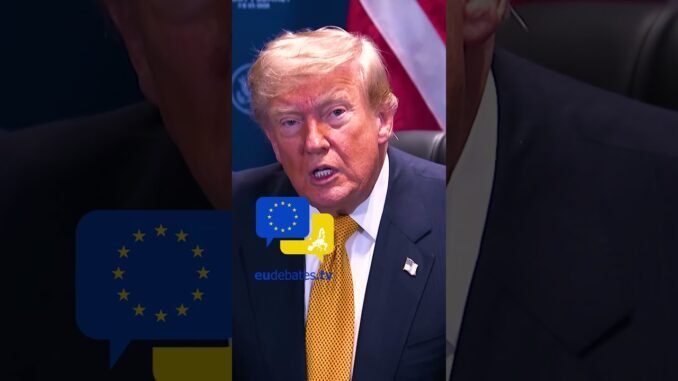

As the NATO summit kicks off, the US President is once again shaking the table — and this time, Europe is sweating.
—
US President Donald Trump has once again turned up the heat on America’s allies, doubling down on his demand for the United States to take control of Greenland — and this time, he is using American military presence in Europe as a bargaining chip.
As the latest NATO summit got underway, Trump made it crystal clear: if America’s NATO partners continue to resist or ignore Washington’s ambitions over Greenland, the United States may reconsider its military commitments to the alliance entirely.
In plain language? “Play ball — or we pack our bags.”
—
What Is Really Going On Here?
For those who may be wondering why an American president is fixated on a giant island covered in ice, here is the short version:
Greenland, though it is an autonomous territory under Denmark, sits in one of the most strategically important locations on the planet. With Arctic resources opening up due to climate change, and with military and shipping routes becoming increasingly significant in the region, whoever controls Greenland holds serious geopolitical leverage.
Trump has had his eyes on Greenland since his first term in office — but now he is back, bolder, and seemingly more serious than ever.
—
Europe Is Not Finding This Funny
European leaders, many of whom depend heavily on the American military umbrella that NATO provides, are understandably rattled. The idea that Washington could withdraw or reduce its troops from the continent — especially at a time when the war in Ukraine continues to drag on — is not a small threat to brush aside.
Think of it this way: imagine ECOWAS threatening to pull peacekeeping forces from a conflict zone unless a neighbouring country handed over a piece of its territory. The uproar would be deafening. That is essentially the kind of pressure Trump is applying — just on a much larger, global stage.
—
Nigeria and Africa: Why Should We Care?
You might be asking — what does this have to do with us?
Quite a lot, actually.
When the world’s biggest military and economic power starts rattling the foundations of its most important alliance, the ripple effects touch everyone. Global oil prices, trade agreements, foreign aid flows, and even the strength of the dollar — all of these can shift when Washington and Europe are at loggerheads.
Nigeria, as Africa’s largest economy, is deeply tied into global financial systems. Any serious instability in the transatlantic alliance could affect everything from the naira’s performance against the dollar to investor confidence in emerging markets like ours.
Beyond economics, there is also the question of global security norms. If powerful nations begin openly threatening to seize territories and bully allies, it sets a dangerous precedent — one that smaller or less powerful nations on the African continent know all too well from painful historical experience.
—
The Bigger Picture
Trump’s latest moves are a reminder that in international politics, alliances are never truly unconditional. Every partnership has its breaking point, and powerful nations will always use their leverage when it suits them.
For Nigeria and the rest of Africa, the lesson is familiar: self-reliance, regional solidarity, and strategic independence matter. The more Africa can build its own institutions — from the African Union to the African Continental Free Trade Area (AfCFTA) — the less vulnerable the continent becomes when the big powers decide to play their games.
As for Greenland? Denmark and the Greenlandic people have already made it clear they are not interested in becoming the 51st state of America. But with Trump in the White House, expect this conversation to remain loud, messy, and unresolved for a while yet.
—
Stay with buzzUp9ja for more breaking international news and analysis — told through a lens that speaks directly to you.
Be the first to comment