
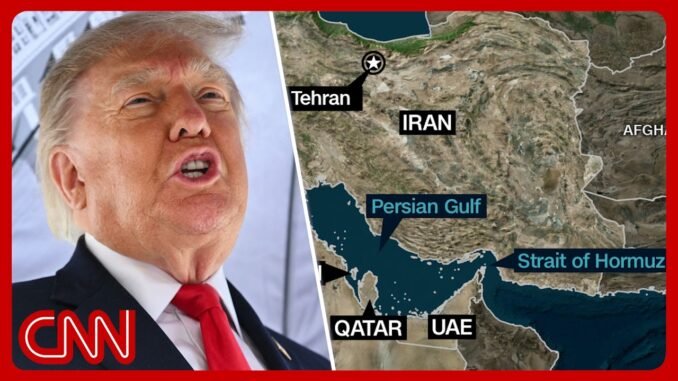

As tensions simmer in the Middle East, the U.S. President signals a cooling of hostilities with Tehran
—
U.S. President Donald Trump has poured cold water on fears of a fresh military confrontation with Iran, declaring that any renewed conflict between the two nations is “highly unlikely” — and the world is paying close attention.
The statement comes at a time when global eyes remain fixed on the Middle East, a region whose instability has historically sent shockwaves far beyond its borders — affecting everything from oil prices at filling stations in Lagos to international trade routes that touch Nigerian shores.
What Did Trump Actually Say?
Speaking ahead of ongoing diplomatic developments, Trump struck a noticeably measured tone — a shift from the kind of fiery rhetoric that has previously rattled international markets and kept foreign policy analysts on edge. His message was clear: the guns are unlikely to blaze again anytime soon between Washington and Tehran.
Why Should Nigerians Care?
You might be wondering — why does this matter to someone in Abuja, Port Harcourt, or Kano?
The answer is simple: oil.
Nigeria, as a major oil-producing nation and OPEC member, is deeply connected to whatever happens in the Persian Gulf. Any military flare-up between the U.S. and Iran has the potential to spike global crude prices, disrupt supply chains, and send the naira on another uncomfortable rollercoaster ride. When the Middle East sneezes, oil markets catch a cold — and Nigeria feels it.
Beyond oil, a more stable geopolitical climate generally means better conditions for global trade, foreign investment, and the kind of economic stability that developing nations like Nigeria badly need to thrive.
A Cautious Optimism
While Trump’s words offer some relief, seasoned observers know better than to pop the champagne just yet. U.S.-Iran relations have been a game of push and pull for decades, and diplomatic winds can shift quickly. What sounds like a peace signal today could change with a single tweet or a flashpoint incident tomorrow.
For now, however, the temperature appears to be dropping — and that is at least worth noting.
The Bigger Picture
As Nigeria continues to navigate its own economic and security challenges, developments like these serve as a reminder that we do not exist in isolation. The decisions made in Washington, Tehran, or Brussels eventually find their way to our markets, our fuel pumps, and our everyday lives.
Staying informed is not just for diplomats and economists — it is for every Nigerian who wants to understand the forces shaping the world they live in.
Stay with us for more updates as this story develops.
For more information, check buzzUp9ja
Be the first to comment