
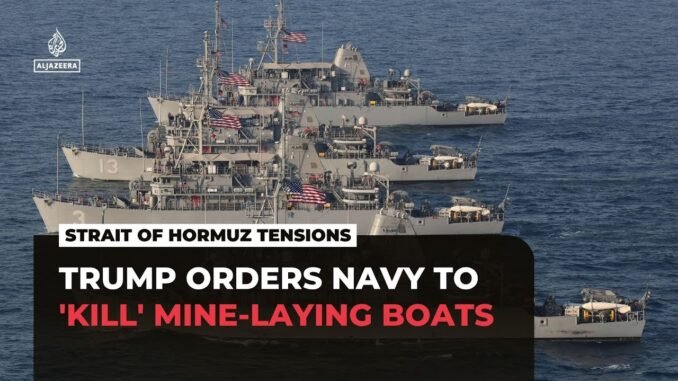

In a decisive show of military authority, former U.S. President Donald Trump issued a controversial order directing the United States Navy to engage and neutralize any vessel caught laying mines in the strategically vital Strait of Hormuz.
The Presidential Directive
“I have ordered the United States Navy to shoot and kill any boat caught putting mines in the Strait of Hormuz,” Trump declared, marking one of the most aggressive military postures adopted by an American leader regarding the narrow waterway.
This directive represents a significant escalation in U.S. military policy concerning the protection of international shipping lanes in the Middle East.
Why the Strait of Hormuz Matters to Nigeria
For Nigerians, this development carries particular significance. As Africa’s largest oil producer and a major player in the global energy market, Nigeria’s economic interests are deeply intertwined with the stability of international oil trade routes.
The Strait of Hormuz, located between the Persian Gulf and the Gulf of Oman, serves as the world’s most important oil chokepoint. Approximately 21% of global petroleum passes through this narrow passage daily. Any disruption to shipping in this area directly impacts global oil prices—affecting everything from petrol prices at Nigerian filling stations to the country’s oil export revenues.
Regional Tensions and Security Concerns
The order came amid heightened tensions in the Persian Gulf region, where various incidents involving commercial vessels had raised alarm bells across the international community. Maritime security experts have long warned about the vulnerability of this critical passage to hostile actions, including mine-laying operations that could cripple global trade.
For Nigeria’s National Petroleum Corporation (NNPC) and private oil marketers, stability in the Strait of Hormuz means predictable pricing and steady revenue streams. Any conflict or blockage in the region could trigger price volatility that would ripple through Nigeria’s economy.
International Response and Implications
The aggressive stance taken in this directive sparked debate among international relations experts and military analysts worldwide. While some praised the clear deterrent message, others expressed concern about potential escalation and the rules of engagement in international waters.
Nigeria, as a member of OPEC and a country with substantial stakes in global oil stability, would naturally monitor such developments closely through its diplomatic channels and energy sector leadership.
What This Means Going Forward
This military order underscores the fragility of global energy security and the willingness of major powers to use force to protect vital economic interests. For Nigerian policymakers and business leaders, it serves as a reminder of how distant geopolitical events can have immediate local consequences.
As Nigeria continues to diversify its economy beyond oil dependence, incidents like these highlight both the opportunities and vulnerabilities that come with being a major player in the global energy market.
The situation in the Strait of Hormuz remains a critical concern for international commerce, with Nigeria’s prosperity partially dependent on the free flow of oil through this and other strategic passages worldwide.
For more information, check buzzUp9ja
Be the first to comment