
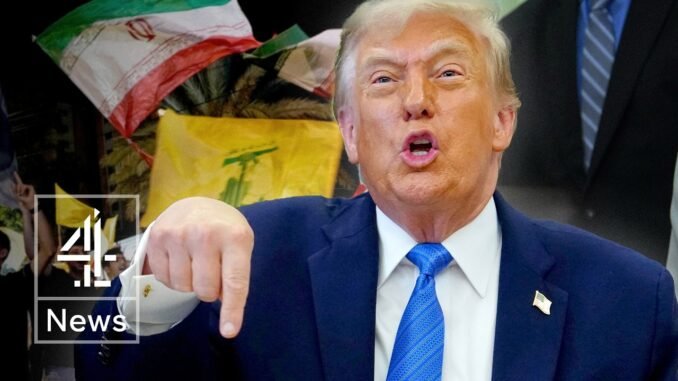

Summary: President Trump invokes Defense Production Act to boost weapons manufacturing after Iran conflict depletes critical US military stockpiles. What this means for global security.
The United States is facing a serious military supply challenge following its recent confrontation with Iran, prompting President Donald Trump to take extraordinary measures to replenish the nation’s weapons stockpiles.
In a move that underscores the severity of the situation, Trump has invoked the Defense Production Act (DPA) – a powerful Cold War-era law that allows the president to compel private companies to prioritize national defence needs over commercial interests.
What Happened?
The recent military engagement with Iran has significantly drained America’s reserves of critical weapons systems, including precision-guided missiles, drones, and other advanced munitions. These aren’t the kind of weapons you can manufacture overnight – they require sophisticated technology, specialized components, and time.
Think of it this way: it’s like a wealthy man who discovers his generator has run out of fuel during a blackout. No matter how much money he has, if NEPA doesn’t bring light and fuel isn’t available immediately, he’s in trouble.
The Defense Production Act: What Does It Mean?
The DPA, first enacted in 1950 during the Korean War, gives the US President sweeping powers to:
– Force companies to accept and prioritize government contracts for defence materials
– Allocate materials and facilities deemed necessary for national defence
– Control the distribution of scarce resources
– Expand production capacity of critical industries
By invoking this act, Trump is essentially telling defence contractors: “Your government orders come first, everything else comes second.”
Why This Matters for Nigeria and the World
For those of us watching from Nigeria, this development has several implications:
Global Security Dynamics
When the world’s largest military power is scrambling to restock its arsenal, it signals that modern warfare consumes weapons at an alarming rate. This is a wake-up call for nations everywhere about the importance of defence preparedness.
Arms Market Impact
Nigeria, which imports military equipment for its ongoing fight against insurgency in the Northeast, may find the global arms market tighter and potentially more expensive as US companies focus on domestic orders first.
Regional Stability Concerns
A depleted US military stockpile could embolden adversaries in various regions, including those who threaten stability in West Africa and the Sahel. America’s ability to support allies and project power globally may be temporarily reduced.
The Iran Conflict: A Costly Engagement
While details of the conflict remain partially classified, defence analysts suggest that modern precision weapons were expended at unprecedented rates. Unlike the wars in Iraq and Afghanistan that stretched over years, a concentrated conflict with a near-peer adversary like Iran can burn through stockpiles in weeks.
The situation is reminiscent of what happened during the Russia-Ukraine war, where Western nations discovered their weapon production couldn’t keep pace with consumption rates in modern warfare.
What Defence Companies Must Do Now
American defence giants like Lockheed Martin, Raytheon, and Northrop Grumman will be required to:
– Increase production shifts and expand factory operations
– Source materials and components with urgency
– Delay or reduce commercial contracts if necessary
– Meet government-mandated production quotas
The Bigger Picture
This development exposes a vulnerability that many defence experts have warned about: the US defence industrial base isn’t scaled for sustained, high-intensity conflict with major powers.
For decades, American weapons manufacturers optimized for profit margins and efficiency rather than surge capacity. The result? When weapons are needed urgently and in large quantities, the system struggles to respond quickly.
Lessons for Nigeria
As Nigeria continues to battle security challenges across multiple fronts – from Boko Haram in the Northeast to banditry in the Northwest and separatist agitations in the Southeast – this situation offers valuable lessons:
1. Self-reliance matters: Over-dependence on foreign weapons suppliers leaves nations vulnerable
2. Domestic production: Investing in local defence industries, even at a smaller scale, provides strategic flexibility
3. Stockpile management: Maintaining adequate reserves of critical equipment is essential
4. Regional cooperation: Working with neighboring countries on shared security challenges becomes even more important
What Happens Next?
Defence production doesn’t turn on like a light switch. Even with the DPA invoked, it could take months or even years to fully replenish depleted stockpiles. The process involves:
– Securing raw materials (some sourced globally)
– Ramping up specialized manufacturing
– Quality testing and certification
– Delivery and integration into military units
Meanwhile, the US military will need to carefully manage its remaining stockpiles and potentially adjust its global commitments and contingency plans.
Final Thoughts
Trump’s invocation of the Defense Production Act is more than just a policy decision – it’s an admission that America’s recent military engagement with Iran was more costly than initially projected and that the country’s defence industrial capacity needs immediate bolstering.
For Nigeria and other nations, this serves as a reminder that in our increasingly uncertain world, military preparedness isn’t just about having soldiers – it’s about having the tools they need and the ability to replace them when necessary.
As the situation develops, the world will be watching to see how quickly American industry can respond and what this means for global power dynamics in the months and years ahead.
What are your thoughts on this development? How should Nigeria be positioning itself in terms of defence preparedness? Share your views in the comments below.
Check buzzUp9ja for more details
Be the first to comment