
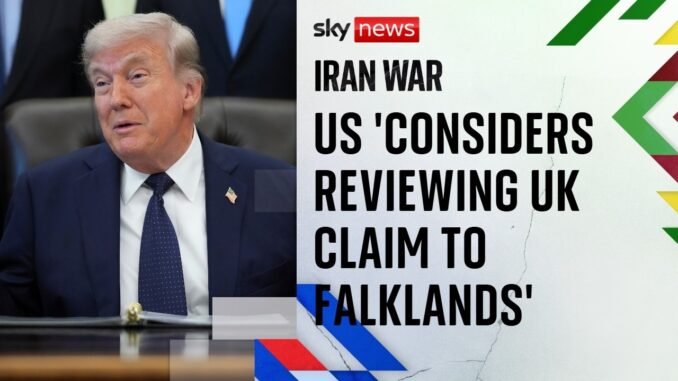

Trump Administration Eyes Controversial Retaliation Against European Allies
The United States under President Donald Trump is reportedly contemplating dramatic diplomatic moves that could shake the foundations of transatlantic relations, with Britain and Spain potentially facing significant consequences for their positions on Iran sanctions.
According to leaked internal Pentagon documents, the Trump administration is exploring options to “punish” traditional allies who have not fully aligned with Washington’s hardline approach toward Tehran.
Falklands Sovereignty: A 42-Year-Old Wound Reopened?
In what would mark a stunning shift in American foreign policy, Trump’s team is reportedly reviewing US support for Britain’s sovereignty claim over the Falkland Islands—known as Las Malvinas in Spanish-speaking countries. The South Atlantic archipelago has been a contentious issue since the 1982 war between Britain and Argentina, which left nearly 1,000 soldiers and civilians dead.
For decades, successive American administrations have maintained a careful but clear backing of London’s position that the Falklands are British territory. Any withdrawal or review of this support would represent a seismic diplomatic earthquake, potentially emboldening Argentina to renew its claims over the islands.
Spain Faces NATO Expulsion Threat
Even more dramatically, the Trump administration is reportedly considering the unprecedented step of expelling Spain from NATO—the North Atlantic Treaty Organization that has served as the bedrock of Western military cooperation since 1949.
This nuclear option in diplomatic terms has never been seriously contemplated before and would mark the first time a member nation has been forcibly removed from the alliance.
The Iran Factor: What’s Really Behind These Moves?
The catalyst for these controversial proposals appears to be frustration within the Trump administration over European cooperation—or lack thereof—with America’s “maximum pressure” campaign against Iran.
Both Britain and Spain, along with other European Union members, have been reluctant to fully embrace Trump’s approach to Iran, particularly after the US withdrew from the Iran nuclear deal (JCPOA) in 2018. European nations have attempted to maintain diplomatic and economic channels with Tehran, much to Washington’s displeasure.
For Nigerian observers, this dispute may seem distant, but it reflects broader tensions in international relations that affect global oil markets, security cooperation, and the multilateral system that many developing nations rely upon.
What This Means for Global Diplomacy
These reported considerations—whether ultimately implemented or not—signal a dramatic departure from traditional American foreign policy, which has generally prioritized alliance cohesion over bilateral disputes.
The potential moves also raise questions about:
– The reliability of American security guarantees: If the US can reconsider support for Britain over a policy disagreement, what does this mean for other allies?
– The future of NATO: Can the alliance survive if membership becomes conditional on agreement with every US policy position?
– Multilateral cooperation: How will countries respond to what some see as diplomatic bullying?
Nigerian Perspective: Why This Matters
Nigeria, as Africa’s largest economy and a significant player in global affairs, has strong interests in maintaining a stable international order. Our nation has benefited from multilateral institutions and has often positioned itself as a voice for developing countries.
The potential weaponization of diplomatic relationships and security arrangements by major powers could set dangerous precedents that might eventually affect African nations navigating between competing global interests.
Additionally, any instability in the Atlantic region or within NATO could have ripple effects on global security cooperation, including counter-terrorism efforts that directly impact the Sahel region and West Africa.
Expert Reactions
Foreign policy experts have expressed alarm at these reported considerations, with many calling them counterproductive to American interests. Critics argue that alienating close allies over disagreements about Iran policy could weaken the Western alliance precisely when unity is most needed.
Supporters of a hardline approach, however, contend that European nations have been “free-riding” on American security guarantees while undermining US foreign policy objectives.
The Bigger Picture
Whether these measures move beyond the consideration stage remains to be seen. Presidential administrations often explore various policy options internally that never see implementation. However, the mere fact that such dramatic steps are reportedly being discussed reflects the depth of transatlantic tensions over Iran and other issues.
For Britain, the Falklands remain a matter of national pride and principle—a “red line” that no government could cross without severe domestic political consequences. For Spain, NATO membership is a cornerstone of its security policy and European integration.
What Happens Next?
As this story develops, diplomatic channels will likely be working overtime to prevent these scenarios from materializing. The international community will be watching closely to see whether cooler heads prevail or whether Trump’s administration follows through on what would be unprecedented diplomatic retaliation against close allies.
For Nigeria and other nations observing from afar, this episode serves as a reminder of the unpredictable nature of contemporary international relations and the importance of diversifying diplomatic and economic partnerships.
What do you think about these developments? Should allies always agree on foreign policy, or is disagreement part of healthy international relations? Share your thoughts in the comments below.
Get more information on buzzUp9ja
Be the first to comment