
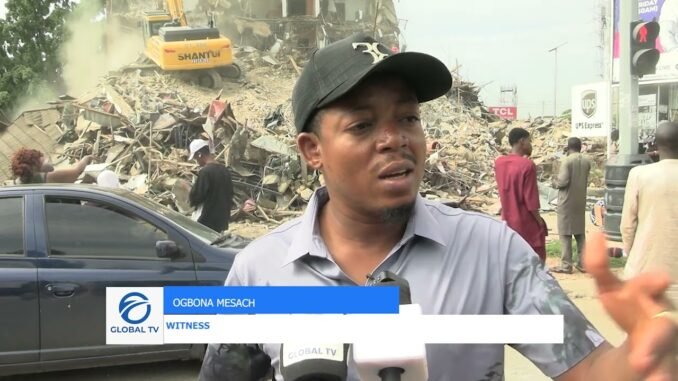

A commercial building in the heart of Abuja has collapsed, raising fresh concerns about building safety and regulatory enforcement in Nigeria’s capital city.
In what many are already calling a disaster waiting to happen, a three-storey commercial building located in Wuse Zone 4, Abuja, came crashing down on Monday, September 7 — and the timing could not be more alarming. The building collapsed just hours after officials from the FCT Administration’s Development Control Department had reportedly sealed the structure.
What Happened?
The building, a commercial property in one of Abuja’s busiest and most prominent districts, gave way on that fateful Monday morning, sending shockwaves through the Nigerian capital. The collapse came shortly after Development Control officials had moved in to seal the building — a move that suggests the authorities were already aware that something was seriously wrong with the structure.
Why This Should Worry Every Nigerian
This incident is not an isolated one. Building collapses have become an uncomfortable recurring headline across Nigeria — from Lagos Island to Port Harcourt, and now again in Abuja. Every time a building falls, we ask the same questions:
– Where was the supervision?
– Were proper building approvals obtained?
– Why was action not taken sooner?
The fact that this building was sealed by Development Control officials and still collapsed the same day raises serious questions about how long the structure had been in a dangerous condition and why it was allowed to remain accessible to the public for so long.
Wuse Zone 4 — A High-Traffic Area
For those familiar with Abuja, Wuse Zone 4 is no quiet backstreet. It is a bustling commercial hub filled with offices, banks, businesses, and daily foot traffic. The collapse of a three-storey building in such a densely populated area could have resulted in catastrophic loss of life.
Nigerians are right to demand answers — and more importantly, action.
The Bigger Picture: Nigeria’s Building Collapse Crisis
According to data from various safety monitoring bodies, Nigeria records one of the highest rates of building collapses in Africa. Experts consistently point to the same root causes:
– Use of substandard building materials
– Lack of proper structural engineering oversight
– Corruption in the approval process
– Negligence by property developers chasing profit over safety
Until these systemic issues are addressed head-on, stories like this will continue to fill our timelines.
What Needs to Change
The FCT Administration and the Development Control Department must go beyond sealing buildings after the damage is already done. A more proactive inspection regime is urgently needed — one that identifies at-risk structures before they become death traps.
Nigerians deserve to live, work, and do business in buildings that will not cave in on them. That is not too much to ask.
Have you noticed any structurally questionable buildings in your area? Let us know in the comments below — your observation could save lives.
Check buzzUp9ja for more details
Be the first to comment