
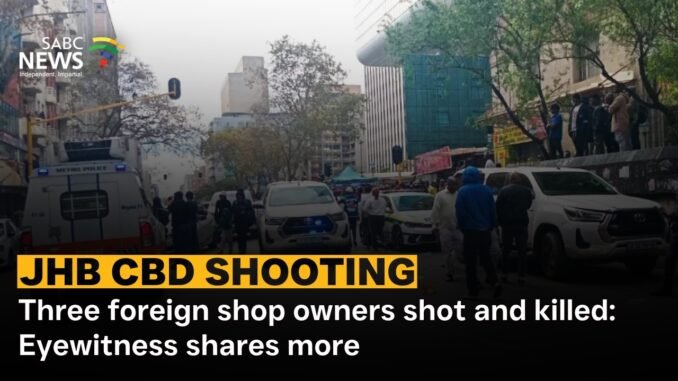

In a tragic incident that has reignited concerns about xenophobic violence in South Africa, three foreign nationals lost their lives in a broad daylight shooting at a Johannesburg McDonald’s.
The South African metropolis of Johannesburg witnessed another grim chapter in its ongoing struggle with xenophobic violence as three foreign shop owners were gunned down in the city’s central business district. The attack, which occurred inside a McDonald’s restaurant during daylight hours, has sent shockwaves through immigrant communities across the Rainbow Nation.
According to police reports, armed gunmen stormed the fast-food establishment and opened fire on the victims, who were believed to be shop owners operating businesses in the area. The brazen nature of the attack—carried out in broad daylight in a busy commercial district—has raised serious questions about the safety of foreign nationals living and working in South Africa.
A Troubling Pattern
This latest incident adds to a disturbing pattern of violence targeting foreign nationals in South Africa, particularly those from other African countries. For many Nigerians and other West Africans who have established businesses in South African cities, such attacks represent an ever-present threat to their livelihoods and lives.
The xenophobic sentiment, often fueled by economic frustrations and competition for jobs and business opportunities, has periodically erupted into violence over the years. Foreign-owned spaza shops (small convenience stores) and other businesses have frequently been targets of both organized attacks and spontaneous mob violence.
Implications for Nigerian Communities
The Nigerian community in South Africa, one of the largest groups of foreign nationals in the country, has been particularly affected by xenophobic attacks over the years. Many Nigerians have built successful businesses in South Africa, contributing to the local economy while pursuing better opportunities abroad.
This incident serves as a stark reminder of the risks faced by our compatriots living in the diaspora. It also highlights the need for stronger diplomatic engagement between Nigeria and South Africa to ensure the protection of Nigerian citizens and their property.
Regional Concerns
The attack has broader implications for African unity and the vision of free movement across the continent. As African nations work toward greater integration through initiatives like the African Continental Free Trade Area (AfCFTA), incidents like these threaten to undermine trust and cooperation between African peoples.
South African authorities have faced repeated criticism for their handling of xenophobic violence, with many arguing that perpetrators often escape justice, emboldening further attacks.
What Needs to Change
For African migrants to feel safe in South Africa—and for the promise of pan-African solidarity to become reality—several things must happen:
– Swift Justice: Authorities must thoroughly investigate this attack and bring perpetrators to justice
– Preventive Measures: Enhanced security for foreign-owned businesses in high-risk areas
– Community Dialogue: Programs that foster understanding between local South Africans and immigrant communities
– Economic Opportunities: Addressing the root causes of resentment through job creation and economic development
As investigations continue into this tragic incident, the thoughts of many Nigerians turn to the victims’ families and the broader community of Africans living in South Africa. This attack is not just a South African problem—it’s an African problem that demands an African solution.
This is a developing story. More details will be provided as information becomes available.
Visit buzzUp9ja for more details
Be the first to comment