
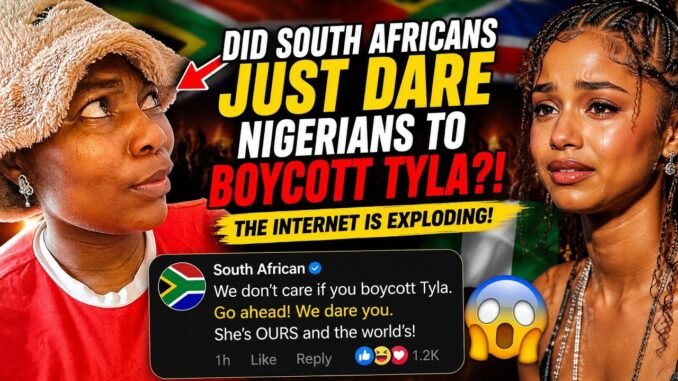

Summary: Internet personality Oyemkke has raised a critical alarm about the proposed boycott of South African singer Tyla’s Nigeria performance — and why it could backfire badly for Nigerians living in South Africa.**
—
We Nigerians are passionate people. When something upsets us, we mobilize fast — social media trends, hashtags fly, and before you know it, a movement is born. But as the saying goes, “Before you throw stone, check who dey near the mango tree.”
That is exactly the message internet personality Oyemkke* is sending to Nigerians currently pushing for South African Afropop sensation *Tyla to cancel her upcoming performance in Nigeria.
—
The Call for a Boycott — And Why It’s Trending
The proposed boycott is rooted in the ongoing tension between Nigeria and South Africa — a relationship that has historically been complicated, flaring up repeatedly over xenophobic attacks targeting Nigerians and other African nationals living in South Africa.
Many Nigerians online feel that allowing Tyla — a South African artist — to perform on Nigerian soil sends the wrong message, especially at a time when the wounds of xenophobia still feel fresh. The sentiment is understandable. Nigerians are fiercely protective of their dignity and national pride. Shege, who wouldn’t be?
But Oyemkke is urging everyone to slow down and think about the bigger picture.
—
“Millions of Nigerians Are Still in South Africa”
Oyemkke’s key warning is simple but sobering: there are still millions of Nigerians living in South Africa, and any aggressive move from this side could put those people directly in harm’s way.
When Nigeria-South Africa tensions escalate — whether through diplomatic spats, social media wars, or public boycotts — it is everyday Nigerians hustling in Johannesburg, Cape Town, and Durban who often bear the brunt of any backlash. These are traders, professionals, students, and families who have built their lives there. They are not faceless statistics — they are our brothers, sisters, aunties, and uncles.
Calling for Tyla to be banned from performing in Nigeria might feel like a power move online, but if it triggers anti-Nigerian sentiment on South African streets, the consequences could be devastating for our people there.
—
Passion Is Good — But Strategy Is Better
Nobody is saying Nigerians should swallow every insult or look the other way when injustice happens. Absolutely not. But there is a difference between righteous action* and *reactive action.
Before the keyboards start firing and the Twitter — sorry, X — fingers get itchy, it is worth asking:
– Who actually benefits from this boycott?
– Who could get hurt in the process?
– Is there a smarter way to make our voices heard without endangering Nigerians abroad?
As Oyemkke wisely pointed out, the stakes are too high for this to just be an online trend that dies in 48 hours after causing real-world damage.
—
The Bigger Conversation Nigeria Must Have
This situation is a reminder that in today’s interconnected world, our online actions have offline consequences — especially when geopolitics and diaspora communities are involved.
Nigeria and South Africa are both giants of the African continent. The relationship between these two nations matters — not just for diplomacy, but for the millions of Africans whose daily lives depend on peace and cooperation across borders.
We can demand respect. We can hold governments accountable. We can use our economic power — because trust me, Nigerian purchasing power is no joke. But we must do it wisely, with full awareness of who might be caught in the crossfire.
—
Final Thoughts
Tyla is talented — Water had all of us moving whether we admitted it or not. But beyond the music, this debate is really about something much deeper: how Nigeria asserts itself on the continental stage without putting its own people at risk.
Oyemkke has raised a valid and important point. Before we trend that hashtag or sign that petition, let us think about the Nigerians in Johannesburg waking up tomorrow morning. Their safety matters too.
What do you think? Should Nigerians push for the boycott, or is there a smarter approach? Drop your thoughts in the comments below.
Stay tuned on buzzUp9ja for more details
Be the first to comment