
The veteran Yoruba Nollywood actress opens up about the painful colourism she faced behind the scenes — and why she felt she had no choice
—
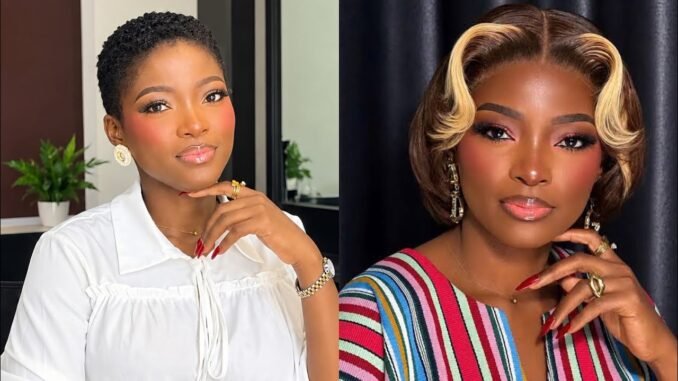
Veteran Yoruba Nollywood actress Habibat Jinadu has finally broken her silence on one of the most painful chapters of her career — revealing how deep-rooted discrimination against her dark complexion in the Nigerian movie industry ultimately pushed her to bleach her skin.
In a candid and emotional revelation that has sparked fresh conversations about colourism in Nollywood, Jinadu disclosed that directors repeatedly complained about her natural dark skin tone, with one even going as far as making a shocking comparison that no human being should ever have to hear.
—
“Someone Compared Me to a Monkey”
The actress did not mince words when recounting the humiliation she endured. According to Jinadu, the bias was not subtle — it was direct, cruel, and professionally damaging. Directors openly told her that her complexion was a problem, and the cruel remarks did not stop there.
For a woman simply trying to build her career and tell African stories on screen, the irony could not be more painful — being rejected in a predominantly Black industry for being too Black.
—
The Pressure That Broke Her
What makes Jinadu’s story particularly heartbreaking is what it reveals about the toxic beauty standards that have quietly plagued Nollywood for years. Rather than celebrating the rich, deep melanin that is the pride of our heritage, some gatekeepers in the industry have long pushed a narrow, Eurocentric idea of what a “marketable” actress should look like.
For Habibat, the professional exclusion became too much to bear. Roles dried up. Opportunities were denied. And like many Nigerian women who face this kind of systemic pressure daily — not just in entertainment, but in offices, markets, and social circles across the country — she made the difficult decision to alter her appearance.
It is a decision she has now chosen to speak about openly, and Nigerians are listening.
—
A Conversation Nigeria Needs to Have
Habibat Jinadu’s story is not an isolated one. Ask any dark-skinned Nigerian woman, and chances are she has a story — a relative who told her to “manage” her complexion, a job interview where she felt overlooked, a man who said she would be “fine if only she were a bit lighter.”
The bleaching cream industry in Nigeria is worth billions of naira, and it does not thrive on vanity alone. It thrives on pain. It thrives on moments exactly like the ones Habibat described.
Her courage in speaking out forces us to ask the hard questions:
– Why are we still equating lighter skin with beauty, success, and opportunity in 2024?
– Who is responsible for dismantling these standards — industry leaders, parents, or all of us?
– How many more talented actresses, models, and professionals have been quietly pushed out because of their God-given complexion?
—
The Bigger Picture
Nollywood is one of Nigeria’s greatest cultural exports — a global industry that tells our stories to the world. Yet if the very people telling those stories are being shamed for looking authentically African, something is deeply broken at the foundation.
Habibat Jinadu deserved better. She deserved a industry that celebrated her talent and her skin. Her story is a reminder that the fight against colourism is not just a social media conversation — it has real, life-altering consequences for real people.
We hope her speaking out marks the beginning of a more honest reckoning within Nollywood and Nigerian society at large.
—
What are your thoughts on Habibat Jinadu’s revelation? Do you think Nollywood has a colourism problem? Let us know in the comments below.
Get more news on buzzUp9ja
Be the first to comment