
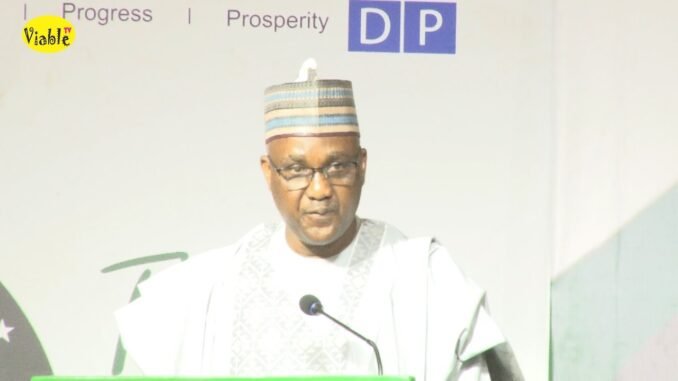

Summary: Speaker Abbas Tajudeen has assured Nigerians that the proposed State Police Bill contains strong constitutional safeguards to prevent governors from turning state police into tools of oppression. Here’s what you need to know.
If there is one topic that has kept Nigerians on edge in recent times, it is the proposed State Police Bill. Many Nigerians — from market women in Onitsha to civil society groups in Abuja — have raised serious concerns about whether introducing state-level police forces could hand power-hungry governors the keys to their own personal armies. But the Speaker of the House of Representatives, Rep. Abbas Tajudeen, wants to put those fears to rest.
What Did Speaker Abbas Say?
The Speaker has come out strongly in defence of the proposed State Police Bill, assuring Nigerians that the National Assembly did not sleep on the job. According to him, adequate constitutional safeguards have been carefully built into the bill to ensure that no governor — no matter how politically connected or influential — can weaponise state police forces against political opponents, ordinary citizens, or ethnic minorities.
In plain terms, Abbas is saying: “We have put checks and balances in place. This thing cannot be turned into a toy for any governor.”
Why Are Nigerians Worried?
The fear is real and understandable. Nigeria has a long and well-documented history of security forces being deployed for political purposes. Many Nigerians worry that giving governors direct control over police operatives in their states could lead to:
– Political witch-hunting — using police to harass opposition figures and activists
– Ethnic targeting — deploying officers against minority communities
– Electoral manipulation — intimidating voters during elections
– Silencing dissent — clamping down on journalists and protesters
These are not imaginary scenarios. Across the country, stories of how powerful politicians have allegedly manipulated security architecture for personal gain are almost as common as jollof rice at a Nigerian party. So, the scepticism is not surprising.
What Safeguards Are Being Proposed?
While the full details of the constitutional safeguards are still being widely discussed, the Speaker’s assurance points to provisions that would:
– Establish oversight mechanisms to monitor how state police forces are deployed
– Ensure that federal authorities retain supervisory powers to check abuses at the state level
– Create legal frameworks that hold governors and state authorities accountable for misuse of police powers
– Protect citizens’ rights from being trampled upon by overzealous state executives
The Bigger Picture: Why Nigeria Needs This Conversation
Nigeria’s security challenges are enormous. From the banditry ravaging the North-West to the separatist tensions in the South-East, and the farmer-herder conflicts tearing through the Middle Belt, it has become increasingly clear that a centralised police force based in Abuja simply cannot effectively respond to localised security crises across a country of over 200 million people.
Proponents of state police argue that local officers who understand the terrain, speak the languages, and know the communities they serve will be far more effective than officers posted from distant states who struggle to even communicate with locals.
The logic is sound. The concern, however, is in the execution.
The Bottom Line
Speaker Abbas’ assurances are a step in the right direction, but Nigerians — known for holding their leaders accountable with sharp tongues and sharper memories — will be watching closely. Words are one thing; the actual text of the legislation and how it is implemented is another matter entirely.
As the debate continues, one thing is certain: Nigerians deserve a police system that works for* them, not *against them — whether at the federal or state level.
The ball is now in the National Assembly’s court to ensure that whatever bill eventually becomes law truly serves the Nigerian people and not the political ambitions of those in power.
What do you think? Should Nigeria embrace state police, or are the risks too great? Drop your thoughts in the comments section below.
Visit buzzUp9ja for more details
Be the first to comment