
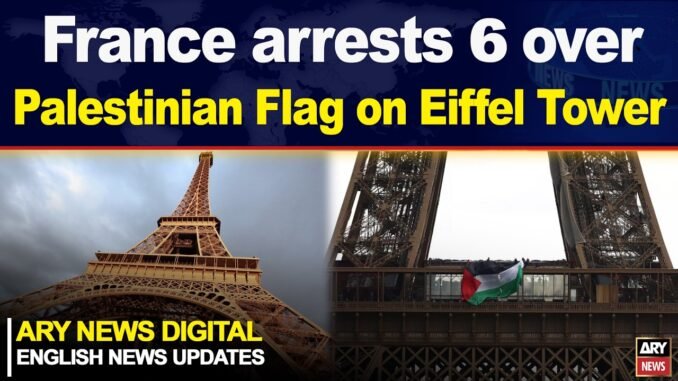

French police have arrested six individuals suspected of displaying a large Palestinian flag on the iconic Eiffel Tower without obtaining official authorization, according to security sources in Paris.
The unauthorized flag was dramatically draped from the famous monument, one of the world’s most recognizable landmarks and a powerful symbol of France. The incident has sparked conversations about protest methods, freedom of expression, and proper channels for political demonstrations in public spaces.
What Happened at the Eiffel Tower?
According to police reports, the group managed to display the Palestinian flag prominently on the structure, drawing immediate attention from tourists and locals alike. The Eiffel Tower, which attracts millions of visitors annually, is heavily monitored and secured, making the unauthorized action particularly notable.
Security personnel quickly responded to the incident, and French authorities launched an investigation that led to the six arrests. The suspects are being questioned about how they accessed the monument and their motivations for the display.
Growing Global Solidarity Movements
This incident reflects a broader pattern of public demonstrations and solidarity actions taking place across Europe and other parts of the world. From London to Berlin, and even in major Nigerian cities, people have been organizing protests, vigils, and displays of support related to ongoing conflicts in the Middle East.
In Nigeria, where many citizens follow international affairs closely and maintain strong positions on global justice issues, similar solidarity movements have emerged. Nigerian students, civil society groups, and faith-based organizations have organized peaceful demonstrations expressing support for various causes related to the Palestinian situation.
Legal Implications in France
Under French law, unauthorized displays on national monuments and public infrastructure can carry serious legal consequences. The Eiffel Tower, as a protected historical monument and major tourist attraction, has strict security protocols and regulations governing any kind of unauthorized activity.
Those arrested could face charges related to trespassing, unauthorized access to a protected monument, and potentially other security-related offences. French authorities take such incidents seriously, particularly given heightened security concerns across European capitals.
Freedom of Expression vs. Public Order
The arrests have reignited debates about the balance between freedom of expression and respect for public order and property. While many European nations, including France, pride themselves on protecting civil liberties and the right to peaceful protest, there are established legal frameworks for how and where such expressions should take place.
Supporters of the arrested individuals argue that dramatic public displays are sometimes necessary to draw attention to urgent humanitarian concerns. Critics, however, maintain that there are proper channels for expression that don’t involve unauthorized access to protected monuments or potential security risks.
What This Means for Future Protests
This incident may influence how activists and solidarity groups approach future demonstrations in France and beyond. It highlights the importance of understanding local laws and obtaining necessary permissions for public displays, even when motivated by deeply held convictions about international issues.
For Nigerians watching these events unfold, it serves as a reminder that while peaceful protest is a fundamental right in democratic societies, it must be exercised within legal boundaries. Nigeria itself has seen numerous debates about protest rights, public order, and the balance between security concerns and freedom of expression.
The Bigger Picture
As global interconnectedness continues to grow through social media and instant communication, local actions increasingly have international implications. What happens at the Eiffel Tower today becomes news in Lagos, Abuja, and Kano within minutes.
The incident underscores how international solidarity movements are finding creative—though not always legal—ways to express support for causes they believe in. Whether such methods are effective or counterproductive remains a subject of ongoing debate among activists, legal experts, and the general public.
This story continues to develop as French authorities proceed with their investigation. The legal proceedings against the six arrested individuals will be closely watched by civil liberties advocates and protest groups across Europe.
Check buzzUp9ja for more information
Be the first to comment