
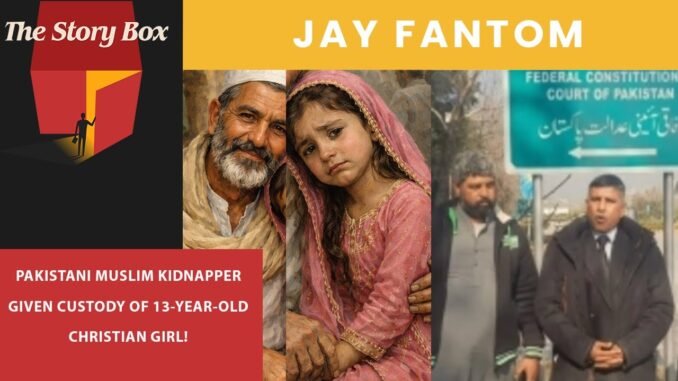

Summary: A Pakistani Sharia court’s decision to uphold the forced marriage of a kidnapped 13-year-old Christian girl to her 30-year-old Muslim abductor has ignited international condemnation and renewed concerns about religious minorities’ safety.
The world is once again confronting the disturbing reality of religious persecution and child abuse after a Sharia court in Pakistan delivered a shocking ruling that has left human rights advocates, religious leaders, and ordinary citizens in disbelief.
On March 25, 2026, the court made the controversial decision to validate the marriage between a 13-year-old Christian girl and the 30-year-old Muslim man who kidnapped her, forcefully converted her to Islam, and married her against her will and that of her family.
The Heartbreaking Details
The young girl, whose identity is being protected for safety reasons, was abducted from her Christian family by the much older man. Following the kidnapping, she was coerced into converting to Islam and forced into marriage—acts that would constitute serious criminal offences in most parts of the world.
Despite her family’s desperate pleas and the clear evidence of abduction and forced conversion, the Sharia court ruled in favour of the kidnapper, granting him legal custody of the minor. The court’s decision essentially legitimizes what many are calling a clear case of child abuse, kidnapping, and forced religious conversion.
Why This Matters to Nigerians
While this incident occurred in Pakistan, it resonates deeply with Nigerians who understand the complexities of religious coexistence in a multi-faith society. Nigeria, like Pakistan, is home to large Christian and Muslim populations who largely live in peace, but incidents of religious tension and violence still occur.
The case highlights critical issues that transcend borders:
Child Protection: At just 13 years old, this girl is legally a child under international law and the laws of most nations, including Nigeria, where the Child Rights Act sets the minimum age of marriage at 18. The concept that a child can legally consent to marriage with an adult remains deeply troubling.
Religious Freedom: The forced conversion aspect of this case strikes at the heart of religious liberty—a fundamental human right enshrined in Nigeria’s constitution and international human rights conventions.
Rule of Law: The decision raises questions about how religious and secular legal systems interact, particularly when religious rulings appear to contradict basic human rights protections and child welfare principles.
International Condemnation Mounts
The ruling has sparked outrage from human rights organizations, religious groups, and governments worldwide.
Christian leaders across the globe, including in Nigeria where the Christian Association of Nigeria (CAN) has historically spoken against religious persecution, are calling the decision an affront to human dignity and religious freedom.
International human rights groups have described the ruling as “legalizing kidnapping and child abuse” and are calling on the Pakistani government to intervene and overturn the decision.
Women’s rights advocates point out that such rulings perpetuate a culture where girls and women are treated as property rather than human beings with inherent rights and dignity.
The Broader Context
This case is unfortunately not isolated. Pakistan has long faced criticism for its treatment of religious minorities, particularly Christians and Hindus, who together make up less than 4% of the country’s population. Reports of forced conversions, abductions, and forced marriages of minority girls have been documented for years.
According to human rights organizations, hundreds of Christian and Hindu girls in Pakistan are kidnapped, forcibly converted, and married to Muslim men each year. Many families are too afraid to seek justice, fearing further persecution or retaliation.
The controversial blasphemy laws in Pakistan, which carry severe penalties including the death sentence, have also been used to target religious minorities, creating an environment of fear and vulnerability.
What Can Be Done?
The international community, including Nigeria, must continue to speak out against such injustices. As a nation that values religious freedom and the rule of law, Nigeria can:
1. Raise diplomatic concerns through appropriate channels about the protection of religious minorities and children’s rights in Pakistan and other countries where similar abuses occur.
2. Support international advocacy efforts through organizations like the United Nations, African Union, and Commonwealth that promote religious freedom and child protection.
3. Strengthen our own protections by ensuring that Nigeria’s Child Rights Act is implemented nationwide and that cases of child abuse, forced marriage, and religious coercion are prosecuted vigorously.
4. Promote interfaith dialogue to build understanding and respect between religious communities, preventing the kind of extremism that leads to such abuses.
A Call for Justice
This 13-year-old girl deserves justice. She deserves to be returned to her family, to practice her faith freely, and to have the childhood that has been stolen from her. Her case is a stark reminder that the fight for human rights, religious freedom, and child protection is far from over.
As Nigerians, we understand the importance of living peacefully with our neighbours of different faiths. We must continue to champion these values at home while speaking out against injustice wherever it occurs in the world.
The eyes of the world are now on Pakistan’s higher courts and government officials. The question remains: will they uphold justice and the rights of this vulnerable child, or will they allow this travesty to stand?
For now, prayers and advocacy continue for a young girl whose life has been forever changed by forces beyond her control, and whose story has become a rallying cry for the protection of children and religious minorities everywhere.
What are your thoughts on this case? How can the international community better protect vulnerable children and religious minorities? Share your views in the comments below.
For more information, visit buzzUp9ja
Be the first to comment