
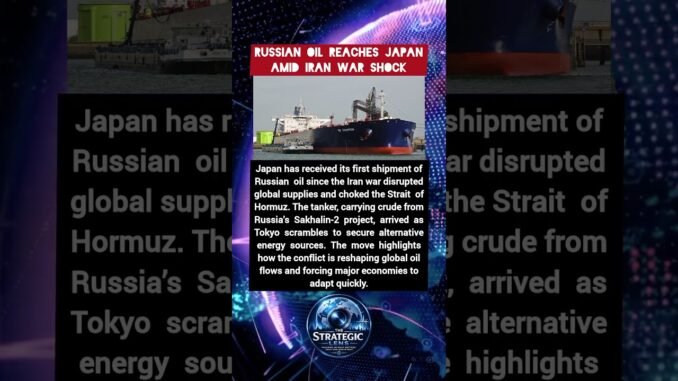

As the Strait of Hormuz remains closed due to escalating Middle East tensions, Japan turns to alternative energy sources to keep its economy running
In a significant development that highlights the dramatic reshaping of global energy markets, Japan has just received its first shipment of Russian crude oil since the outbreak of hostilities between Iran and a coalition of US and Israeli forces led to the closure of one of the world’s most critical oil transit routes.
The Strait of Hormuz Blockade: A Global Energy Headache
The Strait of Hormuz, that narrow waterway between Iran and the Arabian Peninsula, has long been considered the jugular vein of global oil supply. Roughly one-fifth of the world’s petroleum passes through this strategic chokepoint daily. Its closure has sent shockwaves through international energy markets, forcing nations to scramble for alternative supply sources.
For Japan, an island nation that imports nearly all of its energy needs, the situation is particularly precarious. The country has traditionally relied heavily on oil from Middle Eastern producers—nations whose exports now cannot reach Japanese shores through conventional routes.
Why This Russian Oil Shipment Matters
According to reports from local Japanese media, the arrival of this Russian tanker marks a watershed moment in Japan’s energy security strategy. It demonstrates Tokyo’s willingness to diversify its energy partnerships in response to geopolitical realities, even as Western sanctions on Russian energy exports remain a contentious issue.
The Nigerian Connection
For Nigerians watching these developments, the situation offers important lessons. Like Japan, Nigeria understands the critical importance of energy security—though from the opposite perspective. As Africa’s largest oil producer, Nigeria has historically benefited from global oil market disruptions that drive up prices.
However, the current crisis also exposes the vulnerability of nations dependent on specific trade routes. The Strait of Hormuz closure mirrors concerns about potential disruptions to Nigeria’s own oil export channels through the Gulf of Guinea, where piracy and militant activity have occasionally threatened operations.
What This Means for Global Oil Markets
The redrawing of global energy supply lines has several implications:
Price Volatility: With traditional supply routes disrupted, oil prices have experienced significant fluctuations. This affects everything from petrol prices at Nigerian filling stations to the cost of transporting goods across African markets.
New Alliances: Countries are forming unconventional energy partnerships based on necessity rather than traditional geopolitical alignments. Japan’s acceptance of Russian oil, despite Western pressure to isolate Moscow economically, illustrates how energy security often trumps political considerations.
Opportunity for Alternative Suppliers: Nations like Nigeria could potentially benefit if they can position themselves as reliable alternative suppliers to countries seeking to diversify away from Middle Eastern dependence.
The Bigger Picture: Iran, Israel, and America’s Middle East Entanglement
The conflict that triggered this energy crisis stems from escalating tensions between Iran and a coalition involving the United States and Israel. While the specific details of the confrontation continue to evolve, the impact on global commerce has been immediate and severe.
Iran’s strategic position along the Strait of Hormuz has long given it leverage over global energy supplies. The current closure—whether through military action, threat of attack, or insurance companies refusing to cover tanker passage—represents the worst-case scenario that energy analysts have warned about for decades.
What Nigerian Businesses and Consumers Should Watch
For everyday Nigerians, this development has practical implications:
1. Fuel Prices: Global oil supply disruptions typically lead to price increases at the pump, even in oil-producing nations like Nigeria. The NNPC and fuel marketers will likely adjust prices to reflect international market realities.
2. Transportation Costs: Higher fuel costs cascade through the economy, affecting everything from danfo fares to the price of tomatoes transported from the North.
3. Export Opportunities: Nigerian crude oil may find new markets as countries desperately seek alternatives to Middle Eastern supplies.
4. Foreign Exchange: Higher global oil prices could benefit Nigeria’s foreign exchange earnings, though this depends on maintaining production levels and finding buyers.
Looking Ahead: An Uncertain Energy Future
The arrival of Russian oil in Japan is not just a one-time event but potentially the beginning of a restructured global energy landscape. If the Strait of Hormuz remains closed for an extended period, the temporary arrangements countries are making today could become permanent features of tomorrow’s energy markets.
For Nigeria, this presents both challenges and opportunities. The challenge lies in maintaining stable domestic fuel supplies while global markets remain chaotic. The opportunity exists in potentially capturing market share from displaced Middle Eastern producers.
As this situation continues to unfold, one thing remains clear: energy security has once again proven itself to be a fundamental driver of international relations and economic stability. Nations that can adapt quickly to changing supply realities will be best positioned to weather this storm.
The world is watching to see whether this crisis will be resolved diplomatically or whether it represents a fundamental shift in how global energy markets operate. For now, that Russian tanker docking in Japan serves as a powerful symbol of how quickly geopolitical earthquakes can redraw the world’s economic map.
What are your thoughts on how this global energy crisis might affect Nigeria’s economy? Share your views in the comments below.
Check buzzUp9ja for more details
Be the first to comment