
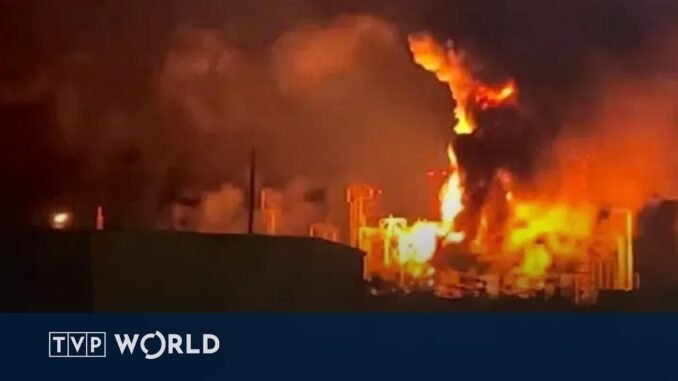

Summary: Russia has sharply rejected American claims that Ukraine’s drone attacks on Russian energy infrastructure could push both sides closer to a ceasefire. Here’s everything you need to know.
If you thought the war between Russia and Ukraine was heading toward a quick resolution, think again. Russia has come out swinging against the United States after American officials suggested that Ukrainian drone strikes targeting deep inside Russian territory — particularly hitting energy facilities — could somehow fast-track peace negotiations. Abeg, Russia is not having any of it.
What Exactly Did the US Say?
American officials floated the idea that by allowing — or at least not discouraging — Ukraine to carry out long-range drone strikes on Russian energy infrastructure, it could pressure Moscow to come to the negotiating table faster. The thinking, as Washington sees it, is simple: hit them where it hurts, and they will be more willing to talk.
It is the kind of strategy that sounds sharp on paper, like using economic pain to force someone’s hand. Nigerians who remember the era of fuel scarcity and how it forced policy changes at home will understand the logic — cut off the supply, create pressure, force action.
But Russia? Russia is not moving like that.
Russia’s Sharp Response
Moscow wasted no time firing back. Russian officials firmly rejected the American position, describing it as not just wrong, but dangerous. From the Kremlin’s perspective, strikes on Russian energy infrastructure are not a push toward peace — they are an escalation, plain and simple.
Russia’s stance is that these attacks do not weaken their resolve to continue military operations in Ukraine. If anything, officials in Moscow have consistently argued that such strikes only harden their position and give them more justification to intensify their own military campaigns.
Think of it this way: if someone burns down your generator hoping you will come to the table to negotiate the price of NEPA bills, you are more likely to reach for a weapon than a handshake.
Why This Matters Beyond Europe
Now, you might be asking yourself — why should this concern us here in Nigeria? The answer is straightforward.
Russia remains one of the world’s largest energy exporters. Any prolonged disruption to Russian energy infrastructure does not just affect Europe — it sends ripples across global oil and gas markets. Nigeria, as a major oil-producing nation and a country that imports refined petroleum products, is not insulated from these global energy shocks.
When energy markets get jittery, pump prices fluctuate, the naira feels more pressure, and the cost of doing business in Nigeria rises. We have seen this pattern before, and it is not a comfortable one.
Beyond energy, Nigeria has significant trade and diplomatic relationships to consider. The African continent has largely tried to maintain a position of dialogue rather than full alignment with either side in this conflict, with countries like South Africa and Senegal pushing for negotiated solutions.
The Bigger Picture: Is Peace Actually Possible?
The honest truth is that despite all the back-and-forth between Washington and Moscow, genuine peace negotiations between Russia and Ukraine remain extremely fragile. Both sides are still deeply entrenched in their positions.
Ukraine, backed by Western allies, insists on full territorial restoration. Russia continues to claim annexed Ukrainian territories as its own. With these two positions standing like immovable agbalumo seeds, any path to a ceasefire remains long and complicated.
The United States, under the current administration, has been trying to position itself as a broker for peace — but Russia’s sharp rejection of this latest narrative suggests that Washington’s leverage over Moscow remains limited.
The Bottom Line
Russia has made it crystal clear: Ukrainian drone strikes on its energy infrastructure will not push it toward peace talks. If anything, Moscow views such attacks as justification for continued and intensified military action.
For Nigerians and Africans watching from the sidelines, the lesson is familiar — conflicts rarely end because one side is pressured through pain alone. Sustainable peace requires genuine dialogue, compromise, and most importantly, the political will from all parties involved.
Until that political will materialises on both sides, this war — and its global consequences — is far from over.
Stay informed. Stay ahead. Follow us for the latest international news and what it means for Nigeria and Africa.
Uncover more on buzzUp9ja
Be the first to comment