
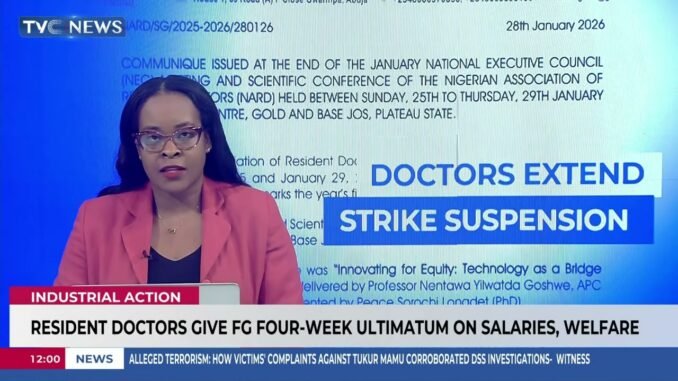

> Nigerian resident doctors have issued a stern warning to the Federal Government: resolve our welfare and professional concerns within two weeks or face a nationwide strike action.
The National Association of Resident Doctors (NARD) has put the Federal Government on notice, giving Abuja a two-week window to address long-standing welfare and professional issues affecting its members — or risk another round of crippling strike action in the nation’s public hospitals.
Another Storm Brewing in Nigeria’s Health Sector?
If you’ve ever sat in a government hospital waiting room — watching the ceiling fans spin slowly while the queue refuses to shrink — then you already understand the weight of this announcement. When resident doctors down their tools, it is ordinary Nigerians who feel it the most.
NARD’s ultimatum signals that despite repeated promises from government officials, the concerns of these medical professionals remain largely unaddressed. The association is now drawing a hard line in the sand.
What Are the Doctors Demanding?
While full details of every grievance are still emerging, NARD’s push centers around outstanding welfare and professional issues that have lingered without meaningful resolution. These are concerns that have reportedly been tabled before the relevant authorities multiple times — yet action has been slow, or in some cases, completely absent.
Resident doctors occupy a critical space in Nigeria’s healthcare delivery system. They are the backbone of teaching hospitals and federal medical centres across the country — from Lagos to Kano, Enugu to Maiduguri. Any disruption to their services sends shockwaves through an already fragile health system.
The Clock Is Ticking for the Federal Government
NARD has made its position clear: two weeks, and counting. The Federal Government now faces the familiar pressure of either fast-tracking negotiations and delivering on concrete commitments, or bracing for the fallout of yet another medical strike.
This is not Nigeria’s first rodeo with NARD-led industrial action. The association has previously embarked on strikes that lasted weeks — even months — leaving patients stranded, surgeries postponed, and families in anguish.
What This Means for Everyday Nigerians
For the average Nigerian who depends on public health facilities, this development is deeply unsettling. Private hospitals remain out of reach for millions, making government hospitals the only lifeline available. A strike at this level doesn’t just disrupt healthcare — it costs lives.
The government must treat this ultimatum with the seriousness it deserves. Paying lip service to healthcare workers while ignoring their legitimate demands is a pattern that Nigeria can no longer afford.
The Bigger Picture
Nigeria’s doctor-to-patient ratio remains alarmingly poor. The country continues to battle brain drain — with thousands of trained medical professionals relocating abroad in search of better conditions and pay. Failing to retain and properly compensate the doctors who remain is not just an administrative failure; it is a national emergency.
NARD’s ultimatum should serve as yet another wake-up call: invest in your doctors, or watch the healthcare system collapse under its own weight.
The two-week countdown has begun. All eyes are now on Abuja.
For more information, check buzzUp9ja
Be the first to comment