
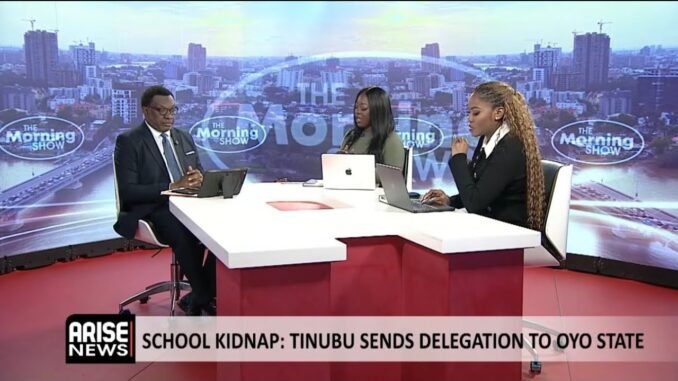

Summary: Presidential media aide Dada Olusegun defends President Tinubu’s handling of the Oyo State abduction, contrasting it with former President Jonathan’s response to the Chibok girls kidnapping.
Presidential media aide, Dada Olusegun, has come out strongly to defend President Bola Ahmed Tinubu’s response to the recent abduction of students and teachers in Oyo State, dismissing claims that the president is avoiding responsibility or shifting blame to Governor Seyi Makinde.
In what appears to be a pointed comparison with past administrations, Olusegun drew a stark contrast between President Tinubu’s approach and that of former President Goodluck Jonathan during the infamous 2014 Chibok schoolgirls abduction.
Tinubu’s Approach: Accountability Over Denial
According to Dada Olusegun, unlike the Jonathan administration which initially struggled with acknowledging the Chibok incident, President Tinubu has from the outset taken full responsibility for the Oyo State abduction and has never denied that it occurred.
“My boss has taken full responsibility for the incident and has never denied it happened,” Olusegun stated, emphasizing the administration’s transparent approach to the security challenge.
This statement comes amid criticism from various quarters regarding the federal government’s handling of security issues in the country, particularly kidnappings which have continued to plague several states.
The Chibok Comparison
The reference to former President Goodluck Jonathan is significant. Many Nigerians will remember the controversy that surrounded the April 2014 abduction of 276 schoolgirls from Government Secondary School in Chibok, Borno State.
The Jonathan administration faced intense criticism both locally and internationally for what many perceived as initial denial and delayed response to the kidnapping. The incident sparked the global #BringBackOurGirls movement and became a defining moment of that administration.
By invoking this comparison, Olusegun appears to be positioning the Tinubu administration as more proactive and accountable in handling security crises.
What We Know About the Oyo Incident
The recent abduction in Oyo State has once again brought national attention to the persistent security challenges facing Nigeria. While details continue to emerge, the incident has reignited debates about the safety of students in Nigerian schools and the effectiveness of security measures in place to protect them.
Federal vs State Responsibility
One of the ongoing debates in Nigeria’s security discourse centers on the division of responsibilities between federal and state governments. While security is listed in the Exclusive Legislative List (making it primarily a federal responsibility), state governors also bear constitutional responsibilities for the security of their states.
Olusegun’s statement suggests that the Tinubu administration is not engaging in blame games with state governors, but rather accepting its role in ensuring the safety of all Nigerians.
Moving Forward
As Nigerians await more concrete actions and results from security agencies, the question remains: will acknowledgment and acceptance of responsibility translate into effective solutions?
The country has experienced numerous abductions of students over the years – from Chibok to Dapchi, from Kankara to Kagara, and now Oyo. Each incident has prompted promises of improved security, yet the cycle continues.
What Nigerians truly desire goes beyond statements of responsibility – they want their children safe in schools, travelers secure on highways, and communities protected from bandits and kidnappers.
The true test of President Tinubu’s administration will not be in accepting responsibility for incidents, but in preventing them from occurring in the first place and swiftly resolving them when they do occur.
—
What do you think about the comparison between the current and past administrations’ handling of kidnapping incidents? Share your thoughts in the comments below.
More info is provided on buzzUp9ja
Be the first to comment