
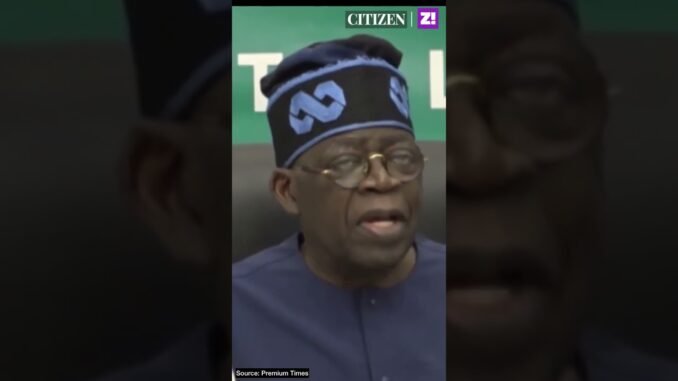

Summary: President Tinubu’s 2017 tweet about presidential responsibility for security resurfaces after APC chieftain attempts to shift blame. Nigerians are taking note of the contradiction.
The internet never forgets—and Nigerian Twitter is making sure of it.
An old tweet by President Bola Ahmed Tinubu has resurfaced online, creating a storm of controversy and putting the presidency in an uncomfortable spotlight. The timing? Impeccable. Just as All Progressives Congress (APC) member Obafemi George attempted to absolve the President of responsibility for Nigeria’s worsening security situation, Nigerians dug up receipts that tell a very different story.
What Did Tinubu Say Then?
In the now-viral post from his days in opposition, Tinubu made a statement that has come back with the force of a boomerang: “The buck stops at the table of the President on matters of security.”
This declaration, clear and unambiguous, was part of Tinubu’s critique of the then-administration’s handling of Nigeria’s security challenges. Like many opposition figures at the time, he held the sitting president directly accountable for the safety—or lack thereof—of Nigerian lives and property.
Fast forward to 2025, and those words are being quoted back to him by frustrated citizens who are experiencing one of the most challenging security periods in Nigeria’s recent history.
The Context: APC’s Defense and Public Backlash
The resurfacing of these tweets didn’t happen in a vacuum. APC chieftain Obafemi George recently made statements attempting to deflect blame from President Tinubu regarding the country’s ongoing security crises—from banditry in the Northwest to kidnappings along major highways, and insurgency in the Northeast.
George’s comments suggested that the President shouldn’t bear sole responsibility for security failures, pointing instead to governors, local government officials, and security agencies.
While technically there’s merit to the argument that security is a multi-level responsibility, Nigerians weren’t having it—especially not when Tinubu’s own words from the past painted a completely different picture of where ultimate accountability lies.
Social Media Erupts: “You Said It Yourself, Sir”
The reaction on Nigerian social media has been swift and unforgiving. The hashtags and commentary flooded in:
“Make una tell Obafemi George say we don see the old tweets o!”
“So when it was Buhari, the buck stopped at Aso Rock. Now wey e reach Tinubu, the buck don relocate to state level?”
“This is why screenshots are forever. You cannot run from your own words.”
The irony isn’t lost on anyone. Many Nigerians who supported Tinubu’s stance when he was in opposition now expect him to live up to his own standard. Others who opposed him then are using his words as ammunition now.
The Broader Security Picture
Beyond the political theatre, the underlying issue remains grave. Nigeria is grappling with:
– Persistent kidnappings along Abuja-Kaduna, Benin-Ore, and other major routes
– Banditry that has displaced thousands in Zamfara, Katsina, and Sokoto states
– Insurgency in Borno and neighboring states
– Separatist agitations in the Southeast
– Herder-farmer clashes across the Middle Belt
For everyday Nigerians, the question isn’t about political point-scoring—it’s about whether they can travel safely, sleep peacefully, or farm their land without fear.
Presidential Accountability: Then and Now
Tinubu’s old statement raises a fundamental question about leadership and accountability. When politicians are in opposition, they often set standards of accountability that become inconvenient when they assume power.
The principle Tinubu articulated—that the President bears ultimate responsibility for national security—is actually constitutional. As Commander-in-Chief of the Armed Forces, the President does hold the highest authority over Nigeria’s security architecture.
But governing is harder than criticizing. The same challenges that bedeviled previous administrations—underfunded security agencies, corruption, porous borders, and complex socio-economic factors—haven’t disappeared simply because there’s a new occupant at Aso Rock.
What Nigerians Are Saying
The streets and social media are speaking:
Chidi from Enugu: “I don’t care about APC or PDP. I just want to be able to visit my village without fear of kidnappers. If Tinubu said the buck stops with the President, then let him carry that responsibility.”
Amina from Kaduna: “We voted for change. We voted for security. The excuses are becoming too much. Our leaders must be held to their own standards.”
Tunde from Lagos: “Politics aside, let’s be fair. Security is complex. But you cannot absolve the President entirely—especially when he didn’t do that for others.”
The Path Forward
This controversy highlights a larger truth about Nigerian politics: citizens are becoming more sophisticated, more willing to hold leaders accountable using their own words and promises.
For the Tinubu administration, the message is clear: Nigerians expect results on security, and they’re not buying attempts to shift blame elsewhere—especially when those attempts contradict the President’s own past statements.
The buck, as the President himself once declared, stops at his table.
Now, the question is: what will he do with it?
What do you think? Should presidents be held to the same standards they set for others? Drop your comments below.
For more information, check buzzUp9ja
Be the first to comment