
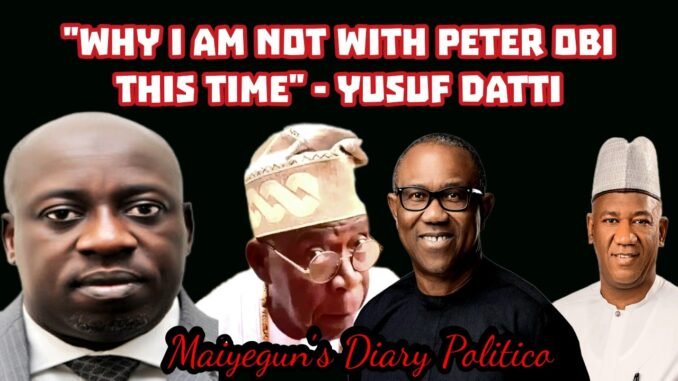

Summary: Former LP vice-presidential candidate Baba-Ahmed explains why Peter Obi and Kwankwaso may struggle to gain Northern support in future elections, highlighting regional political dynamics.
The political landscape of Nigeria continues to generate intense discussions, particularly regarding the 2023 presidential elections and what lies ahead. Baba-Ahmed, the former vice-presidential candidate of the Labour Party (LP), has made a candid assessment that is sure to spark debate across the nation.
The Reality of Regional Politics
In a recent statement, Baba-Ahmed expressed his view that it would be “highly unlikely” for Northern Nigeria to unite behind either Peter Obi or Rabiu Kwankwaso in future political contests. This observation comes from someone who stood shoulder-to-shoulder with Obi during the intense 2023 campaign season, making his perspective particularly significant.
The former running mate’s comments touch on a sensitive but crucial aspect of Nigerian politics: regional allegiances and voting patterns that have shaped our democracy since independence.
Understanding the Northern Political Calculus
Northern Nigeria, with its massive voting population, has historically played a decisive role in determining who occupies Aso Rock. The region’s political preferences are influenced by multiple factors including religion, ethnicity, economic interests, and established political networks.
Baba-Ahmed’s assessment reflects the complex reality that both Obi and Kwankwaso face. Despite Kwankwaso’s Northern roots as a former Kano State governor, and Obi’s growing national appeal following the 2023 elections, consolidating Northern support remains a formidable challenge.
The Labour Party Experience
The 2023 elections demonstrated both the potential and limitations of the Labour Party’s appeal. While the “Obidient” movement generated unprecedented youth enthusiasm and social media traction, translating this energy into votes across all regions proved difficult, particularly in the North.
Baba-Ahmed’s insider perspective provides valuable insight into the structural challenges facing opposition candidates seeking to break the traditional voting patterns that have favoured the All Progressives Congress (APC) and its predecessor parties in the region.
What This Means for 2027
As Nigerians begin looking toward the 2027 elections, this assessment raises important questions about coalition-building and the strategies opposition parties must employ. Will Peter Obi and Kwankwaso need to forge new alliances? Can they develop messages that resonate more deeply with Northern voters?
The path forward for any opposition candidate seeking to challenge the ruling party will require addressing the concerns and aspirations of Northern Nigeria in concrete, credible ways.
The Broader Implications
Baba-Ahmed’s statement is more than political commentary; it’s a reflection of Nigeria’s ongoing struggle to build truly national political movements that transcend regional, religious, and ethnic boundaries. Until political parties can successfully bridge these divides, our democracy will continue to grapple with the same predictable patterns.
For everyday Nigerians tired of “business as usual” politics, this reality may be frustrating. Yet understanding these dynamics is crucial for anyone hoping to see meaningful change in how our country is governed.
The conversation about Nigeria’s political future continues, and voices like Baba-Ahmed’s contribute to the honest dialogue we need about where we are and where we’re headed.
What do you think about Baba-Ahmed’s assessment? Can opposition candidates overcome regional barriers in future elections? Share your thoughts in the comments below.
For more information, check buzzUp9ja
Be the first to comment