
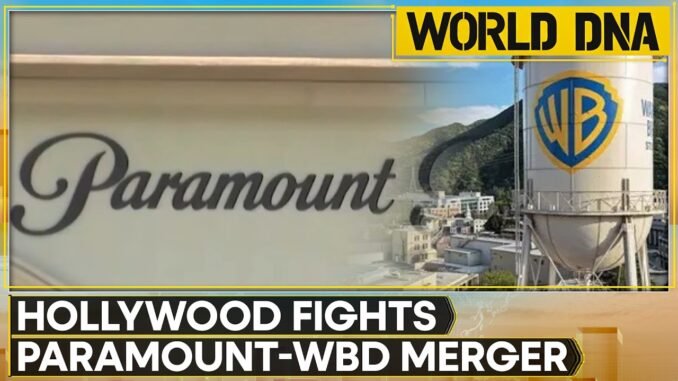

Summary: More than 1,000 filmmakers and actors, including top Hollywood names, have signed an open letter opposing the massive $110 billion merger between Warner Bros Discovery and Paramount. Here’s why this matters for the global film industry.
—
The entertainment world is buzzing with controversy as over 1,000 filmmakers, actors, and industry professionals have come together to publicly oppose what could be one of the biggest corporate takeovers in Hollywood history—a staggering $110 billion merger between Warner Bros Discovery and Paramount.
What’s This Mega-Deal About?
For those not following the Hollywood business side closely, Warner Bros Discovery (the company behind iconic franchises like DC Comics, Harry Potter, and Game of Thrones) is attempting to acquire Paramount (home to blockbusters like Top Gun, Mission Impossible, and Transformers). If successful, this deal would create an entertainment super-giant worth over $110 billion—that’s roughly ₦180 trillion in today’s exchange rate!
To put that in perspective, that’s more than Nigeria’s entire national budget for multiple years combined.
Why Are the Stars Fighting Back?
The open letter, signed by A-list celebrities and respected filmmakers, raises serious concerns about what this merger could mean for creativity, competition, and opportunities in the film industry.
The Main Concerns:
1. Death of Competition
When two major studios become one, there are fewer buyers for films, fewer production companies competing for talent, and ultimately, less variety in the stories that get told. As one Nigerian filmmaker pointed out on Twitter, “If America’s film industry becomes a monopoly, what hope do emerging markets like Nollywood have for international collaboration?”
2. Job Losses
Mergers of this size typically result in massive layoffs as duplicate positions are eliminated. Industry insiders estimate thousands of jobs could be at risk—from studio executives to production assistants, editors, and marketing teams.
3. Creative Control
Many fear that a mega-corporation of this size would prioritize safe, franchise-driven content over original, diverse storytelling. Think endless superhero sequels and remakes instead of fresh, innovative narratives.
4. Impact on Independent Filmmakers
Smaller, independent filmmakers—including many international creators from places like Nigeria—could find it even harder to break into the Hollywood system or secure distribution deals when there’s one less major studio to pitch to.
What This Means for Nollywood
You might be wondering: “Why should we care about Hollywood business drama here in Nigeria?” Fair question, but the answer is simple—the global film industry is more connected than ever.
Nigerian filmmakers increasingly collaborate with international studios, seek distribution through platforms owned by these companies (like HBO Max and Paramount+), and compete for the same streaming audiences. When Hollywood consolidates power, it affects everyone trying to tell stories on a global stage.
Already, Nollywood producers have expressed concerns about how streaming service mergers could limit their negotiating power and reduce opportunities for African content on international platforms.
The Star-Studded Opposition
While the full list of signatories hasn’t been publicly released, sources indicate the letter includes Oscar winners, directors of major franchises, respected character actors, and influential producers. These aren’t just people worried about their own careers—many are industry veterans concerned about the future of filmmaking itself.
The letter reportedly calls on regulatory authorities to carefully scrutinize the deal and consider blocking it on antitrust grounds.
What Happens Next?
The proposed merger still needs approval from various regulatory bodies, including the U.S. Federal Trade Commission and the Department of Justice. Given the size of the deal and the public opposition, expect months of hearings, investigations, and legal proceedings.
Some analysts believe the widespread industry opposition could influence regulators to block the deal or at least demand significant concessions, such as selling off certain assets or maintaining separate operations for specific divisions.
The Bigger Picture
This controversy highlights a growing tension in the entertainment world: the push toward bigger, more “efficient” corporate structures versus the need for diverse, competitive creative ecosystems.
As streaming wars intensify and media companies scramble to compete with giants like Netflix and Amazon, we’re likely to see more merger attempts—and more resistance from the creative community.
For those of us watching from Nigeria, it’s a reminder that the business of storytelling is truly global. What happens in Hollywood boardrooms can ripple across continents, affecting opportunities for African filmmakers, the diversity of content we see on our screens, and the future of cinema worldwide.
Your Thoughts?
What do you think? Should regulators block this mega-merger, or is consolidation inevitable in today’s media landscape? And how can Nollywood position itself to thrive regardless of what happens in Hollywood?
Drop your comments below—we’d love to hear from fellow film lovers across Nigeria!
—
Stay tuned for updates on this developing story as the merger review process unfolds on buzzUp9ja.
Be the first to comment