
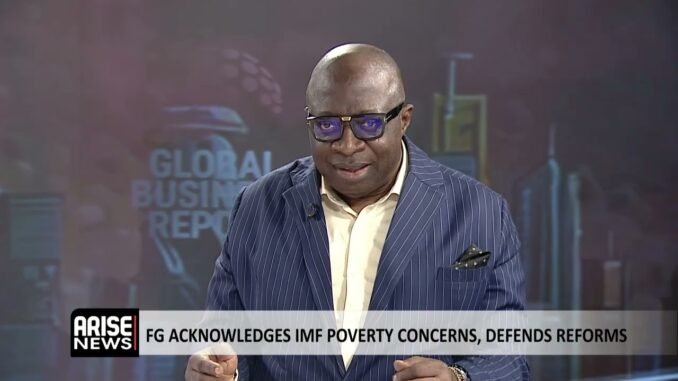

The International Monetary Fund (IMF) has delivered a bittersweet assessment of Nigeria’s economic trajectory, acknowledging that government reforms are yielding positive results while sounding the alarm on the nation’s worsening poverty crisis.
In a statement released on Tuesday, June 9, the global financial institution confirmed that recent policy measures implemented by the Nigerian government have indeed bolstered the country’s economic fundamentals. However, the IMF painted a sobering picture of the social cost, revealing that more than 60 percent of Nigerians continue to grapple with poverty despite these economic gains.
The Double-Edged Sword of Economic Reform
This paradox highlights a challenge familiar to many Nigerians: macroeconomic improvements that fail to translate into tangible benefits for ordinary citizens. While government statistics and international financial institutions may celebrate GDP growth and fiscal consolidation, the reality on Nigerian streets tells a different story—one of rising food prices, unemployment, and diminishing purchasing power.
The IMF’s acknowledgment of economic strengthening likely refers to reforms such as subsidy removal, exchange rate adjustments, and efforts to improve revenue collection. These measures, though potentially beneficial in the long term, have imposed immediate hardships on millions of Nigerian households already struggling to make ends meet.
The Poverty Puzzle
With more than six out of every ten Nigerians living in poverty, the question becomes increasingly urgent: who benefits from economic growth if the majority of citizens see their living conditions deteriorate? This disconnect between macroeconomic performance and lived experience remains one of Nigeria’s most pressing challenges.
The IMF’s report serves as both validation and warning—validation that difficult reforms are having their intended technical effects, but a stark warning that without inclusive policies addressing poverty and inequality, Nigeria’s economic recovery may remain hollow for most of its 200 million-plus population.
As policymakers chart the course forward, the challenge will be balancing fiscal prudence with social protection measures that ensure economic gains reach those who need them most.
—
Get more news on buzzUp9ja
Be the first to comment