
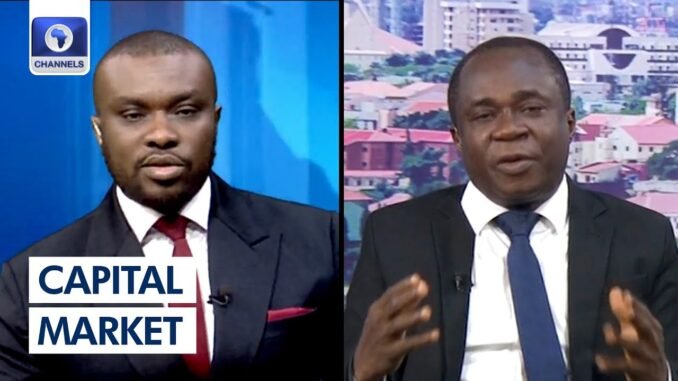

Summary: S&P Dow Jones Indices has placed Nigeria on its 2027 Country Classification Watchlist for a potential upgrade from Standalone Market to Frontier Market status — here’s what it means for you and the Nigerian economy.
—
If you’ve been following the Nigerian financial space, here’s some exciting news that deserves your full attention: S&P Dow Jones Indices (S&P DJI), one of the world’s most respected financial index providers, has placed Nigeria on its 2027 Country Classification Watchlist* for a possible upgrade from a *Standalone Market to a Frontier Market status.
This is not small chops, people. This is a significant milestone for Nigeria’s capital market — and it could have far-reaching consequences for everyday Nigerians, investors, and the broader economy.
—
So, What Does This Actually Mean?
For those who may not be deep in the world of financial indices, let’s break it down in plain terms.
S&P Dow Jones Indices regularly reviews and classifies countries based on the development and accessibility of their capital markets. These classifications range from Standalone* (the lowest rung) to **Frontier**, **Emerging**, and finally *Developed Market status.
Being placed on the watchlist means S&P DJI is seriously considering moving Nigeria up a level — from Standalone to Frontier Market status by 2027. Think of it like WAEC results: you’ve not yet collected your certificate, but the results are looking very promising.
—
Why Is This a Big Deal for Nigeria?
A Frontier Market classification would put Nigeria on the radar of a much larger pool of international investors who specifically track and invest in frontier market indices. Here’s what that could translate to:
– 💰 Increased foreign investment inflows into the Nigerian Stock Exchange (NGX)
– 📈 Greater liquidity in our capital markets
– 🏦 Stronger confidence from global financial institutions
– 🇳🇬 Enhanced reputation for Nigeria’s economic reform efforts
In simple terms, more money could flow into Nigeria — and that’s the kind of attention our economy needs right now.
—
The Road That Brought Us Here
This recognition didn’t fall from the sky like manna. It reflects the ongoing reforms in Nigeria’s financial and economic landscape. From the Central Bank of Nigeria’s (CBN) efforts to stabilise the foreign exchange market to the Securities and Exchange Commission (SEC) pushing for greater transparency and market accessibility, the groundwork has been quietly but steadily laid.
The NGX Exchange has also been working hard to modernise its infrastructure and improve market operations — efforts that are clearly catching the eye of global watchdogs like S&P DJI.
—
What Happens Next?
Being on the watchlist doesn’t guarantee an upgrade — Nigeria still needs to maintain and build on the reforms that earned this recognition in the first place. S&P DJI will continue to monitor market conditions, forex accessibility, and overall market infrastructure before making a final decision ahead of 2027.
The government, CBN, SEC, and all stakeholders in Nigeria’s financial ecosystem must treat this as both a validation and a call to action. The eyes of global investors are watching.
—
The Bottom Line
For a country that has faced its fair share of economic turbulence — from naira volatility to fuel subsidy removal shocks — this placement on the S&P DJI watchlist is a strong vote of confidence in Nigeria’s potential.
If we play our cards right, the Frontier Market upgrade in 2027 could be a turning point that opens the floodgates to foreign capital and puts Nigeria firmly on the global investment map.
As we like to say in this part of the world — e go better. And this time, the data is starting to agree.
—
Stay updated on Nigerian business and financial news by following our blog for the latest insights, analysis, and commentary tailored for the Nigerian reader on buzzUp9ja
Be the first to comment