
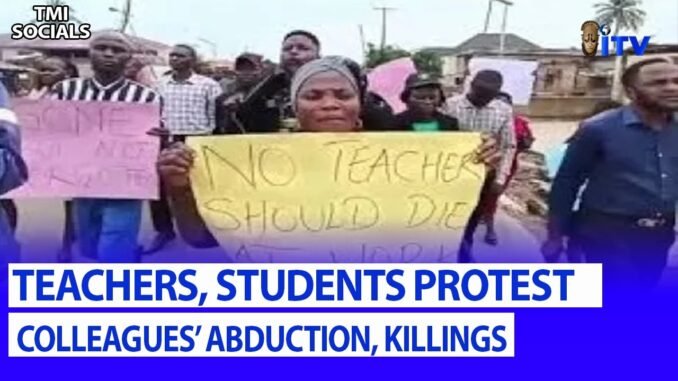

Summary: The Nigerian Union of Teachers (NUT) Oyo State chapter has called for a three-day fasting and prayer session for kidnapped teachers and students, sparking widespread reactions across social media platforms.
The Nigerian Union of Teachers (NUT), Oyo State chapter, has stirred controversy on social media after calling on its members to embark on a three-day fasting and prayer session for the safe return of abducted teachers and pupils. The statement, which quickly went viral, has generated mixed reactions from Nigerians who are divided on whether spiritual intervention alone is sufficient in addressing the country’s worsening security crisis.
The Call to Action
In a statement released by the union’s leadership, NUT Oyo State urged teachers across the state to join in collective prayers and fasting, seeking divine intervention for the release of their colleagues and students who remain in captivity. The union emphasized the power of faith and spiritual warfare in the face of what they described as “an evil threatening the education sector.”
Mixed Reactions Trail the Announcement
The call for fasting and prayers has sparked heated debates on platforms like Twitter (X), Facebook, and Instagram, with Nigerians expressing varying opinions on the approach.
Those Who Support the Initiative
Many Nigerians, particularly those with strong religious convictions, have backed the union’s decision, arguing that prayer is a powerful tool that should never be underestimated. Some social media users pointed out that spiritual battles require spiritual solutions, and that combining faith with other efforts could yield positive results.
“Prayer is not weakness. It’s acknowledging that we need God’s intervention in this country,” one Twitter user wrote.
Critics Call for Practical Action
However, a significant number of Nigerians have criticized the approach, describing it as inadequate in the face of a security crisis that requires concrete government action. Many argued that while prayers are important, they should not replace demands for improved security infrastructure, better welfare for security operatives, and accountability from government officials.
“We’ve been praying since 1960. When will we start demanding accountability from those in power?” one frustrated Nigerian tweeted.
Others questioned why the union isn’t simultaneously organizing protests, engaging with government officials, or demanding increased security presence in schools across the state.
“Is prayer now a substitute for action? Where are the protests? Where are the demands to the governor?” another social media user asked.
The Growing Insecurity in Nigeria’s Education Sector
The kidnapping of teachers and students has become an alarming trend in Nigeria, with bandits and terrorists increasingly targeting educational institutions. From the Chibok girls in 2014 to more recent abductions in Kaduna, Zamfara, Niger, and other northern states, the education sector has borne significant brunt of the country’s security challenges.
While Oyo State has been relatively safer compared to some northern states, the NUT’s statement highlights growing anxiety among teachers nationwide about their safety and that of their students.
What Experts Are Saying
Security analysts have repeatedly emphasized that tackling Nigeria’s kidnapping epidemic requires a multi-faceted approach that includes improving intelligence gathering, equipping security agencies with modern tools, addressing poverty and unemployment, and ensuring swift justice for perpetrators.
Education stakeholders have also called for increased funding for school security, installation of surveillance systems, and regular security audits of educational institutions, especially those in remote areas.
The Way Forward
As the debate rages on social media, many Nigerians are calling for a balanced approach that combines faith with action. They argue that teachers and concerned citizens should pray while simultaneously demanding concrete steps from government officials to address the security crisis.
The NUT Oyo State chapter’s call for fasting and prayers, while well-intentioned, has inadvertently opened up a larger conversation about how Nigerians respond to national crises and whether spiritual interventions should be complemented with more aggressive civic action.
As the three-day fasting and prayer period commences, all eyes will be on both the spiritual and physical efforts being made to secure the release of the abducted teachers and students, and more importantly, to prevent future occurrences of such tragic incidents in Nigeria’s education sector.
What do you think? Should teachers focus on prayers alone or combine it with protests and direct engagement with government? Share your thoughts in the comments below.
For more information, check buzzUp9ja
Be the first to comment