
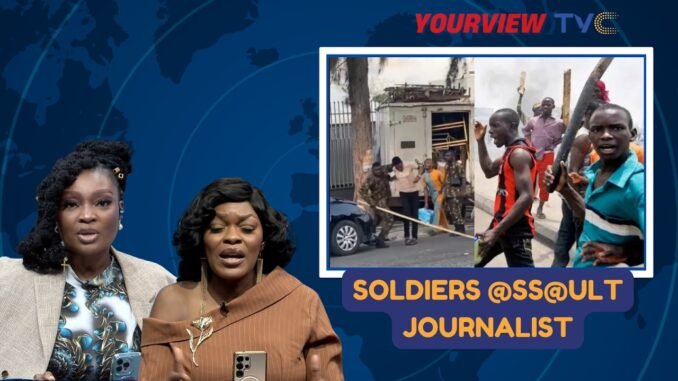

A disturbing incident has emerged from the streets of Ikeja, Lagos, where a Nigerian soldier physically assaulted a journalist during a routine traffic altercation, sparking widespread outrage across social media platforms.
The Incident
Olalekan Fakoyejo, an editor with TheCable, one of Nigeria’s leading online newspapers, became the victim of military highhandedness when what should have been a simple traffic disagreement escalated into physical violence. The incident, which occurred in Ikeja, the bustling commercial nerve center of Lagos State, was captured on video and has since gone viral.
The footage shows the moment the uniformed soldier confronted and attacked Fakoyejo, raising fresh concerns about the conduct of security personnel in civilian spaces and the increasing dangers journalists face while simply going about their daily lives.
Growing Pattern of Military Impunity
This unfortunate incident is not isolated. Nigerian roads have increasingly become theaters of confrontation between military personnel and civilians, with many service members reportedly abusing their positions of authority. From checkpoints to traffic holdups, stories of soldiers manhandling civilians over minor disagreements have become all too common.
For journalists like Fakoyejo, who work tirelessly to keep Nigerians informed, such attacks represent a disturbing threat not just to personal safety but to press freedom itself.
Lagos Traffic: A Tinderbox of Tensions
Anyone familiar with Lagos traffic knows that navigating the city’s congested roads requires patience, understanding, and restraint—qualities that should be even more pronounced in those tasked with maintaining law and order. Ikeja, as a major commercial hub, experiences some of the worst gridlock in the city, often testing the patience of even the most composed individuals.
However, wearing a uniform comes with the responsibility to de-escalate situations, not to use force against unarmed civilians over traffic disputes.
Reactions and Concerns
The video has generated significant reactions from Nigerians online, with many condemning the soldier’s actions and calling for accountability. Press freedom advocates and civil society organizations have also weighed in, demanding that the military authorities identify and discipline the officer involved.
This incident once again highlights the need for better training and accountability within Nigeria’s security forces, particularly regarding engagement with civilians in non-combat situations.
The Bigger Picture
As Nigeria continues to grapple with security challenges nationwide, incidents like this erode public trust in the institutions meant to protect citizens. When those in uniform become sources of fear rather than security, it undermines the social contract between the government and the governed.
For the media community, this assault serves as yet another reminder of the hazards Nigerian journalists face—not just in conflict zones or while covering sensitive stories, but even in everyday situations on Lagos streets.
This incident remains under observation as calls grow for the Nigerian Army to investigate and take appropriate action against the soldier involved.
Check buzzUp9ja for more details
Be the first to comment